Western Focus: Alberta, British Columbia, and the Northwest Territories
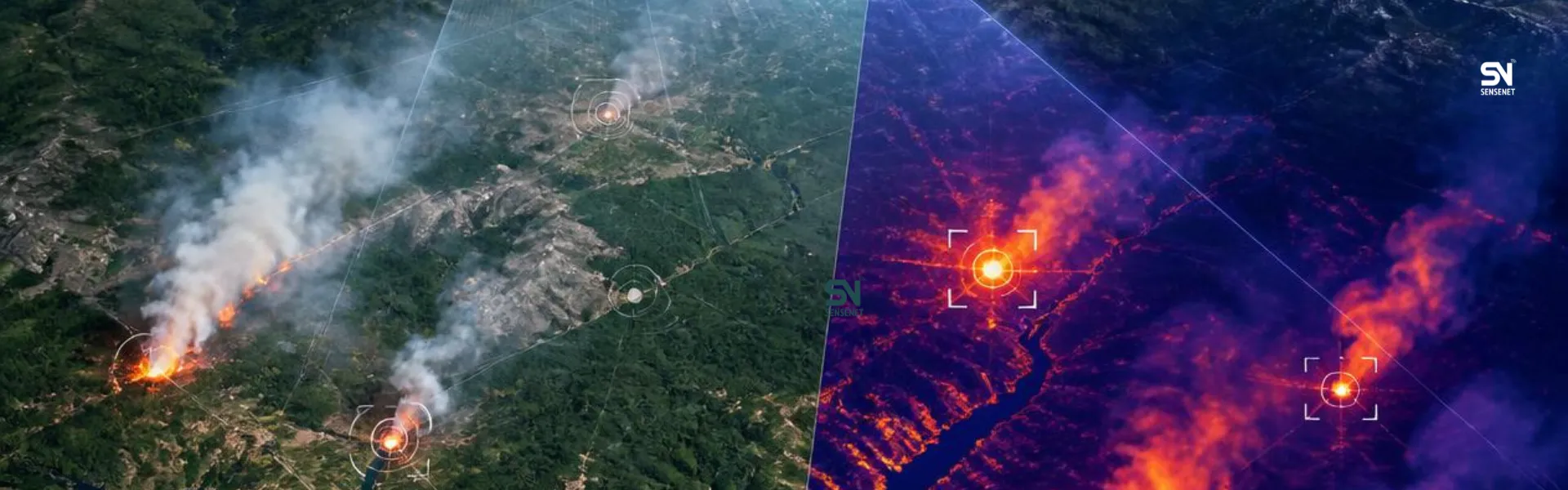
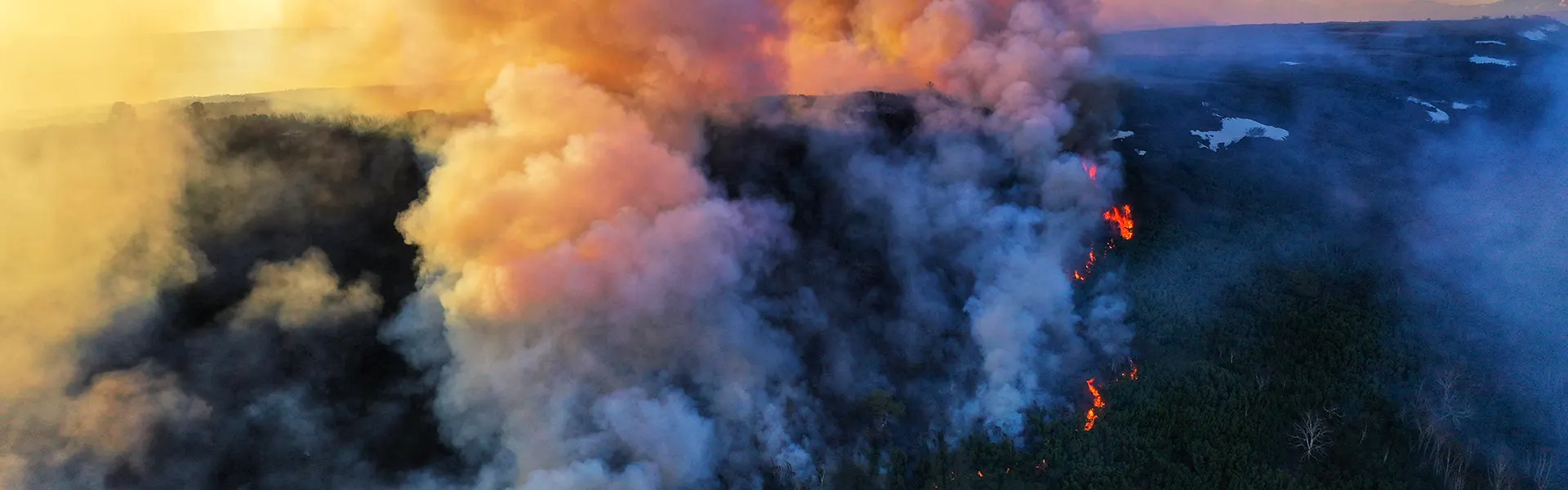
While the prairie provinces experienced the season’s most extreme fire activity, British Columbia, Alberta, and the Northwest Territories faced distinctive fire challenges driven by unique fuels, weather patterns, and geographic conditions. Figure 7 and 8 displays satellite imagery revealing fire scars distributed across western regions with markedly different patterns than the massive continuous burns of Saskatchewan and Manitoba.
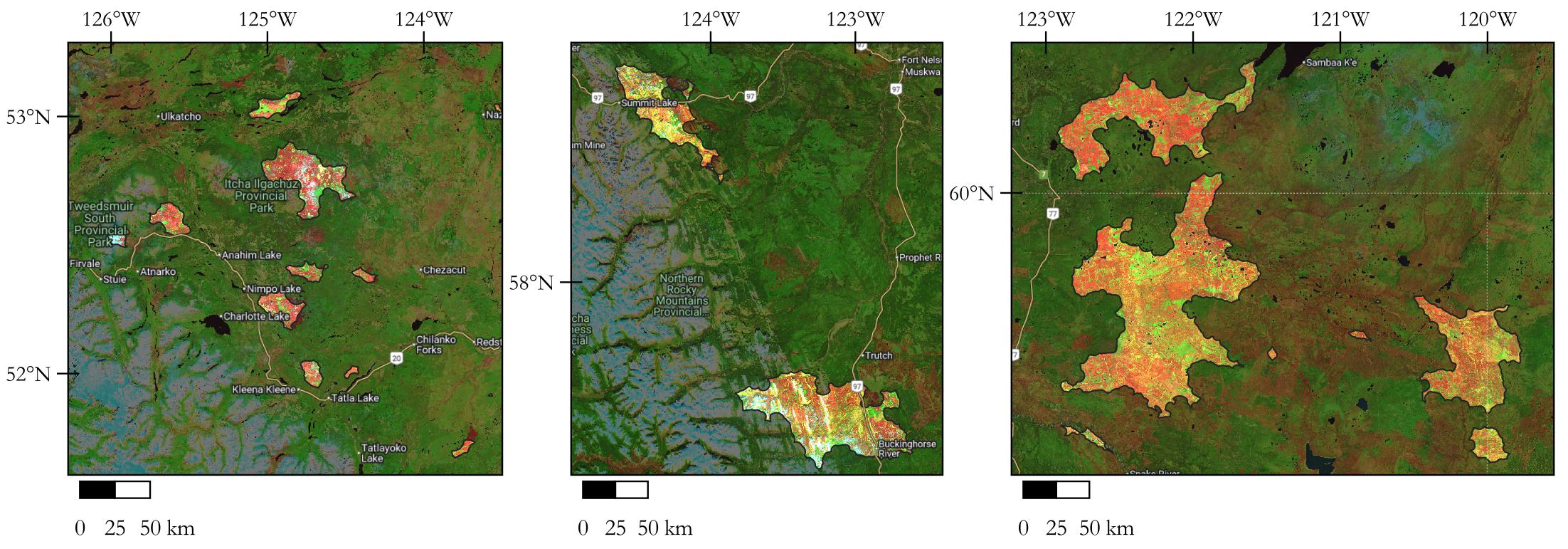
British Columbia’s 2025 season (Figure 7) was characterized by concentrated fire activity in the northeastern region. The Prince George Fire Centre, covering one-third of BC’s land base, accounted for approximately 80 percent of the province’s burned area, burning 819,877 hectares across 449 fires while the rest of BC burned only 66,483 hectares across 1,246 fires. This striking geographic concentration reveals that 2025 was a regional catastrophe in the northeast rather than province-wide disaster (BC Wildfire Services).
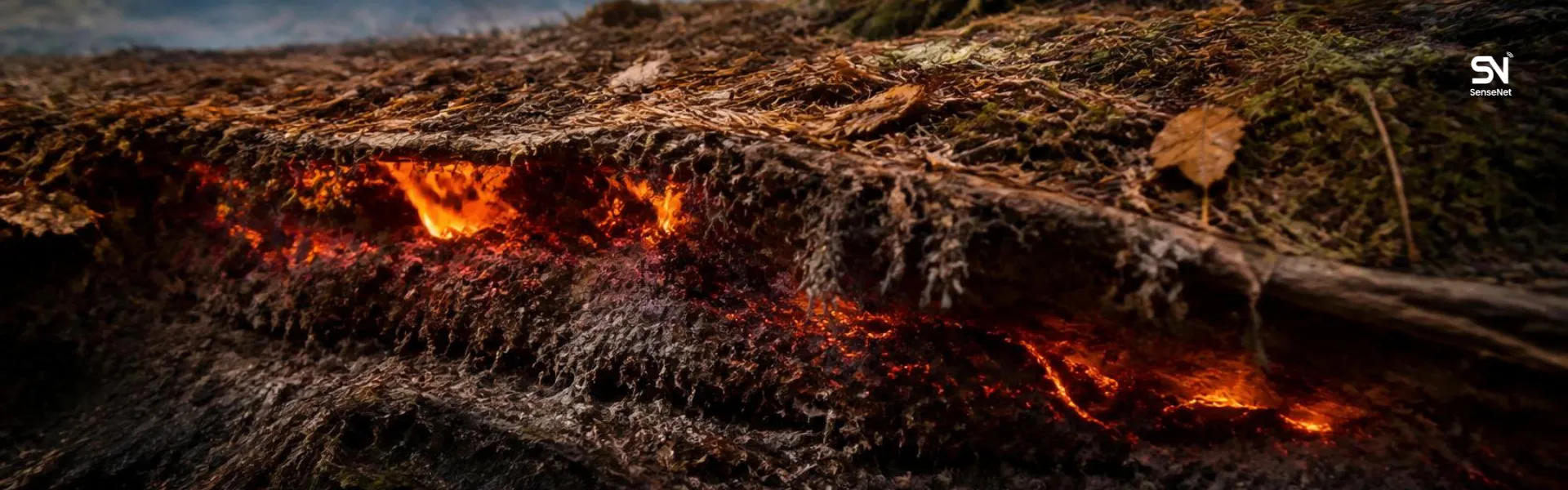
The most significant discovery was the phenomenon of zombie fires: 49 active fires detected in early June 2025 near Fort Nelson that had smoldered underground since the 2023 wildfire season, surviving nearly 22 months before reigniting in spring. Wildfire researcher Mike Flannigan stated this was “the first time I have observed such fires survive for over two years,” raising troubling questions about fire season definitions in a warming climate where fires may never truly end but simply transition between burning and smoldering phases (The National Observer).
The largest BC fire was the Pocket Knife Creek wildfire, ignited on May 19 and burning 151,000 hectares. Other major fires included Summit Lake (80,842 hectares) and Itcha Lake (57,885 hectares), with these three fires consuming 289,737 hectares or one-third of BC’s total 2025 burned area. A severe lightning storm on July 30 to August 1 produced over 35,000 strikes in 48 hours, igniting 65 new fires across the province. BC’s average fire size was 682 hectares in 2025 versus 516 hectares historically, a 32 percent increase substantially lower than prairie increases, suggesting varied topography and more aggressive initial attack prevented landscape-scale burns.
Alberta’s 2025 season showed dispersed fire activity across northern and central regions. The Kiskatinaw River wildfire ignited in late May, burned approximately 26,000 hectares, and forced evacuation of over 4,625 residents in the County of Grande Prairie with 30-minute notice. More significantly, fires threatened oil sands production operations north of Fort McMurray, forcing temporary shutdowns and worker evacuations that disrupted Canada’s largest export sector. Alberta burned 674,535 hectares across 1,155 fires with average fire size of 584 hectares in 2025 versus 418 hectares historically, a 40 percent increase (Government of Alberta).
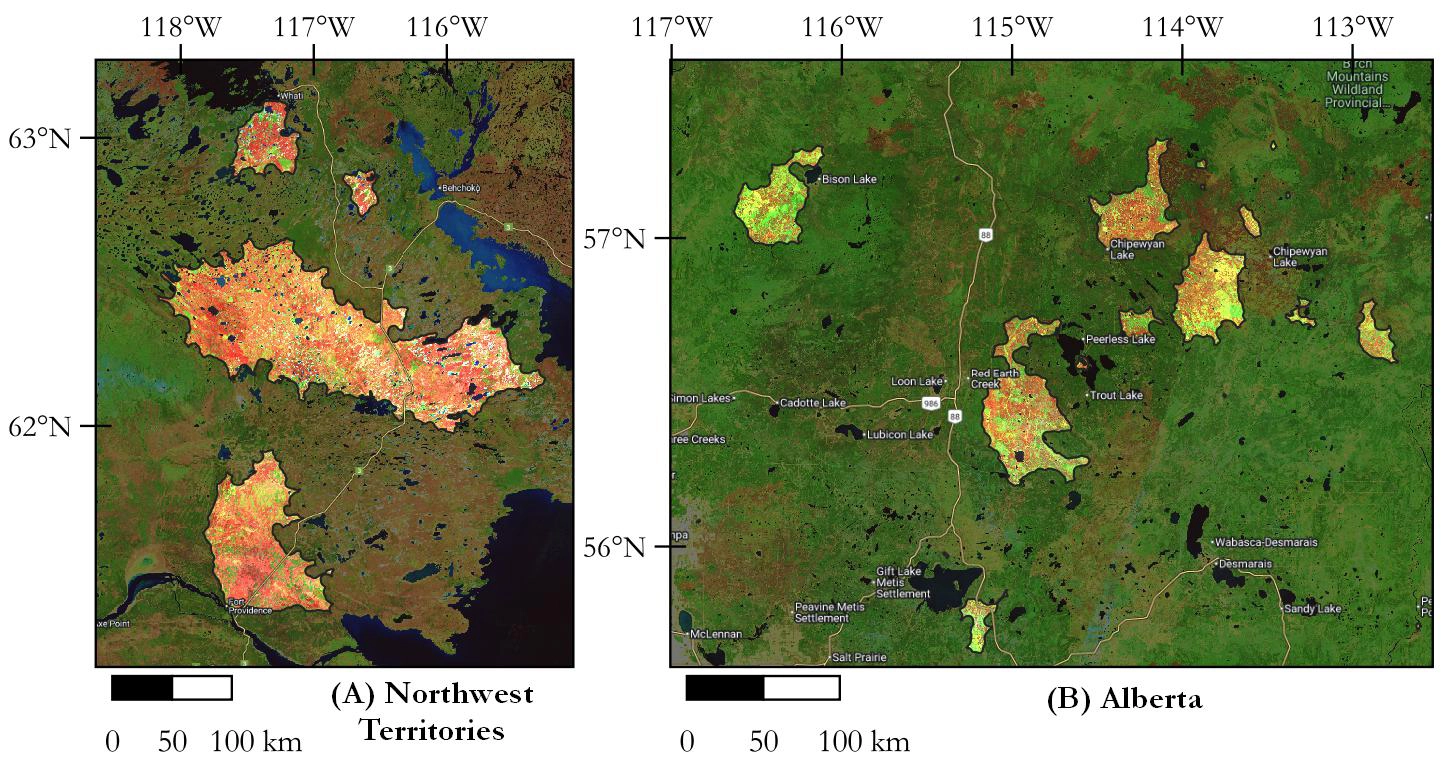
The Northwest Territories experienced one of its most active fire seasons on record. The territory burned 1,345 thousand hectares across 196 fires, with fire activity extended from May through October rather than the historical 8 to 10 week pattern. A concerning trend was fires burning up to one meter underground, indicating that permafrost is no longer effectively extinguishing subsurface fires. While Yellowknife was not directly threatened, smoke caused air quality advisories in August with residents instructed to limit outdoor activity. Jean Marie River issued evacuation alerts on July 7 when a fire approached within 24 kilometers. NWT fires averaged 6,867 hectares per fire in 2025 versus 4,812 hectares historically, a 43 percent increase reflecting how remote location and limited suppression resources allow fires to grow larger (Government of Northwest Territories). The geographic distribution of western fires reveals fundamental contrasts with prairie fires. BC and Alberta’s varied topography provides natural fire breaks absent in prairie grasslands. More aggressive initial attack in populated regions suppresses fires before reaching massive sizes. Remote NWT fires grow larger due to delayed detection and limited suppression resources. These geographic and infrastructural differences explain why 2025 produced regional variations in fire behavior across Canada, with prairie provinces experiencing extreme burning while western regions experienced elevated but more geographically distributed fire activity.
Canada 2025 Fire Season Analysis
- Canada 2025 Fire Season Part 1: Second largest in the past 40 years
- Canada 2025 Fire Season Part 2: The Prairie Epicenter, Saskatchewan and Manitoba
- Canada 2025 Fire Season Part 3: Western Focus, Alberta, British Columbia, and the Northwest Territories
- Canada 2025 Fire Season Part 4: Seasonal Dynamics and 10-Year Comparison
- Canada 2025 Fire Season Part 5: Response Operations and Resource Mobilization
- Canada 2025 Fire Season Part 6: Long-Term Trends and Historical Context