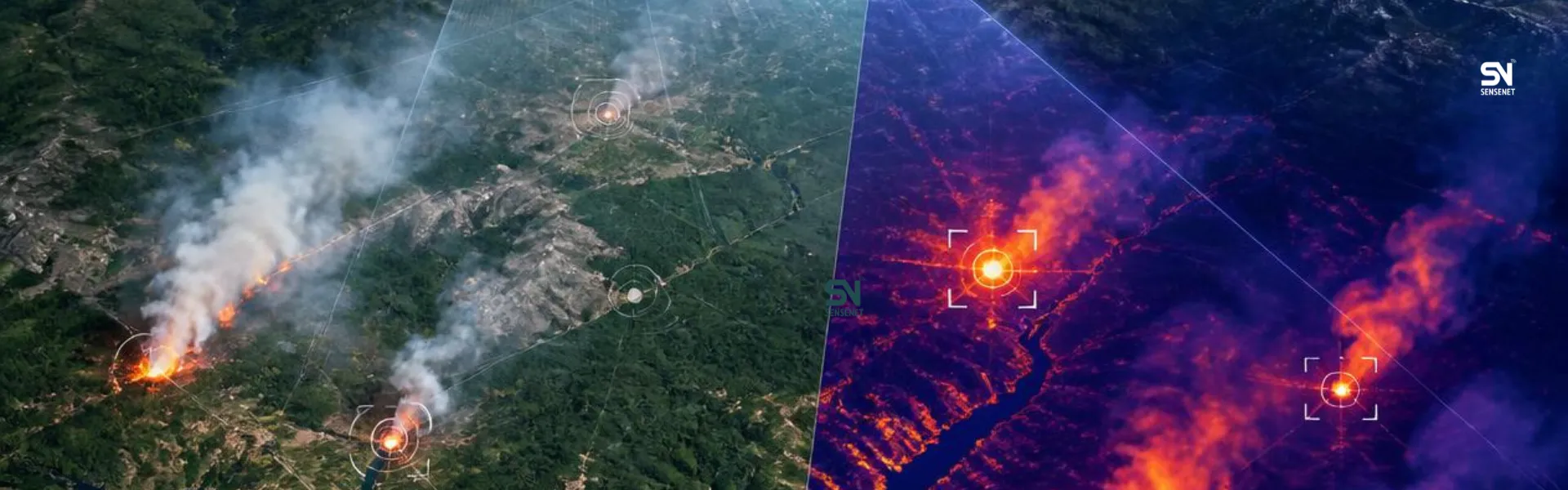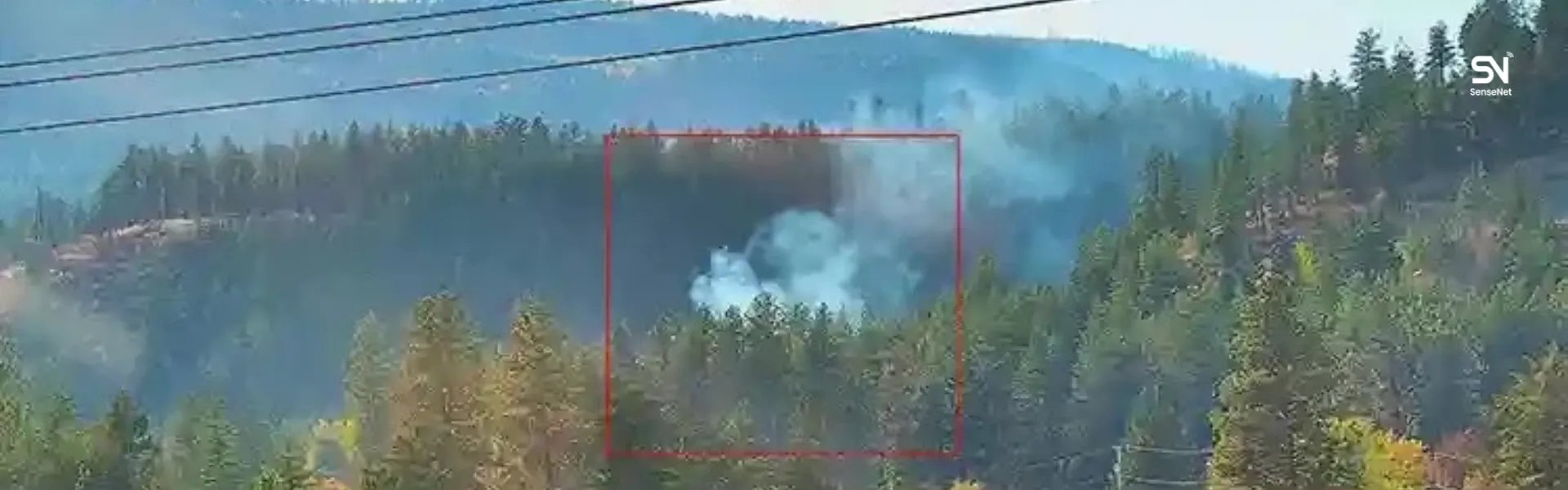
Solar-Powered Fire Detection
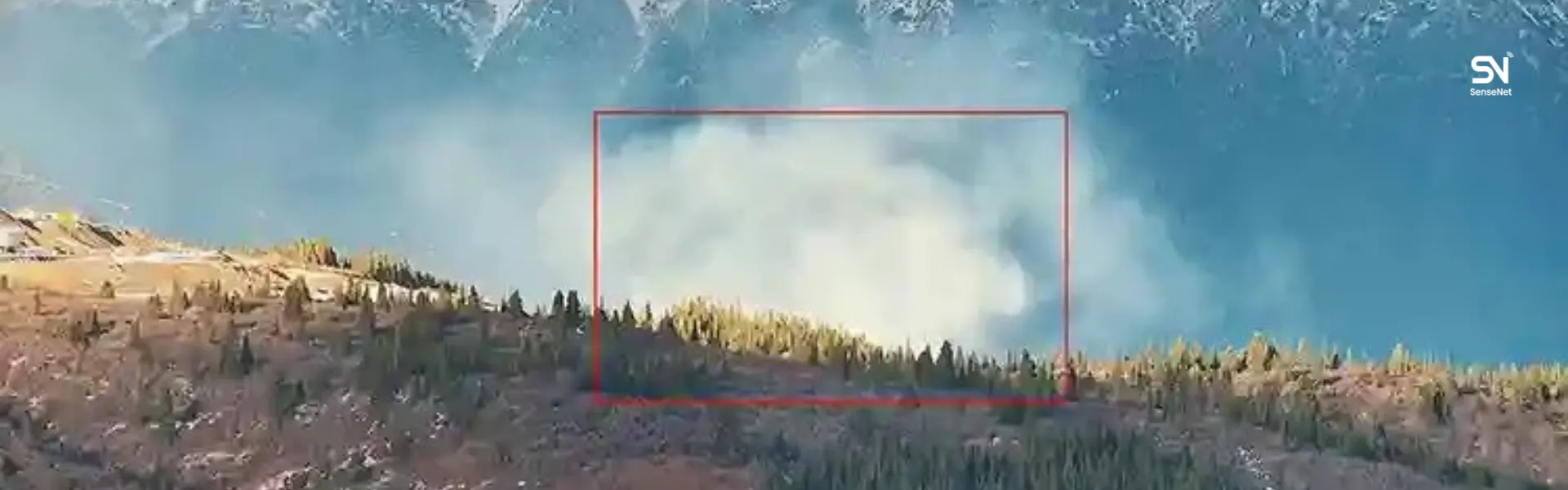
Most large wildfires are small in the first hour of their lives, and they don’t seem like a serious threat to nature. But if no one sees them, they quickly turn into huge fires that no one can stop. This is exactly where the main problem lies: the forests at greatest risk are usually the ones we can’t reach. They have no roads, no electricity, and sometimes no mobile signal either.
This is where forest fire detection with solar energy (Solar Powered Wildfire Detection) goes from a modern option to a necessity. When you can’t bring power to a location and would have to go there every week to replace batteries, the only practical solution is for the cameras and sensors to draw their own energy from the sun and run for years without human intervention.
In this article, we explain how these systems work, what challenges they face, and what SenseNet’s experience in the field has taught us.

Why is solar energy the first choice for forest fire detection?
There are three main reasons:
- No power infrastructure. Running a power line to a peak or a remote slope is expensive, and the line itself can become a source of sparks and fire.
- No permanent access. Maintenance teams can’t visit the stations constantly. A system that needs frequent battery replacement will, in practice, stop working.
- The need for continuous operation. An early warning system is only valuable if it’s active every hour of the day and night, not just when the battery happens to be charged.
Components of a solar-powered fire detection system
Solar panel and charge controller: The panel should be sized for the station’s consumption and the lowest solar radiation of the year (not the yearly average). MPPT controllers are more efficient than PWM controllers, especially in cloudy and cold weather.
Battery: In forest projects, lithium iron phosphate (LiFePO4) batteries are common because of their long life and better safety. What matters is how the battery behaves in the cold. Many batteries shouldn’t be charged below zero degrees, and the battery management system (BMS) has to account for this.
Sensors and cameras: Optical and thermal cameras detect smoke and flames, while environmental sensors (temperature, humidity, wind, gas) assess risk. The lower the energy consumption, the more stable the system. That’s why on-device intelligent processing (Edge AI) matters: only the result is sent to the control stations, so there are no heavy, raw images to transmit.
Communications: Depending on the region, LoRa, mobile networks, radio, or satellite is used. Communication is the most power-hungry part of the system, and the choice directly affects the energy design.

SenseNet’s field experience
At SenseNet, we’ve seen many times in the field how early detection can make the difference between a small incident and a major disaster. These lessons come from our team’s practical experience:
- Design for the worst month of the year. A station that works great in summer may lose its charge in the short, cloudy days of Azar and Dey (late autumn and winter). We calculate panel and battery capacity based on the dimmest period of the year, not ideal conditions.
- Installation location matters more than panel power. In the field, we’ve seen that the shade of foliage, or even a single rock, can reduce panel efficiency more than you’d think. Surveying the site and studying the sun’s path before installation is cheaper and more effective than adding a bigger panel.
- The real problem is usually maintenance, not technology. Stations with dust, fallen branches, or bird droppings on their panels gradually lose charge. That’s why we build the mounting angle and easy access for periodic cleaning into the design from the start.
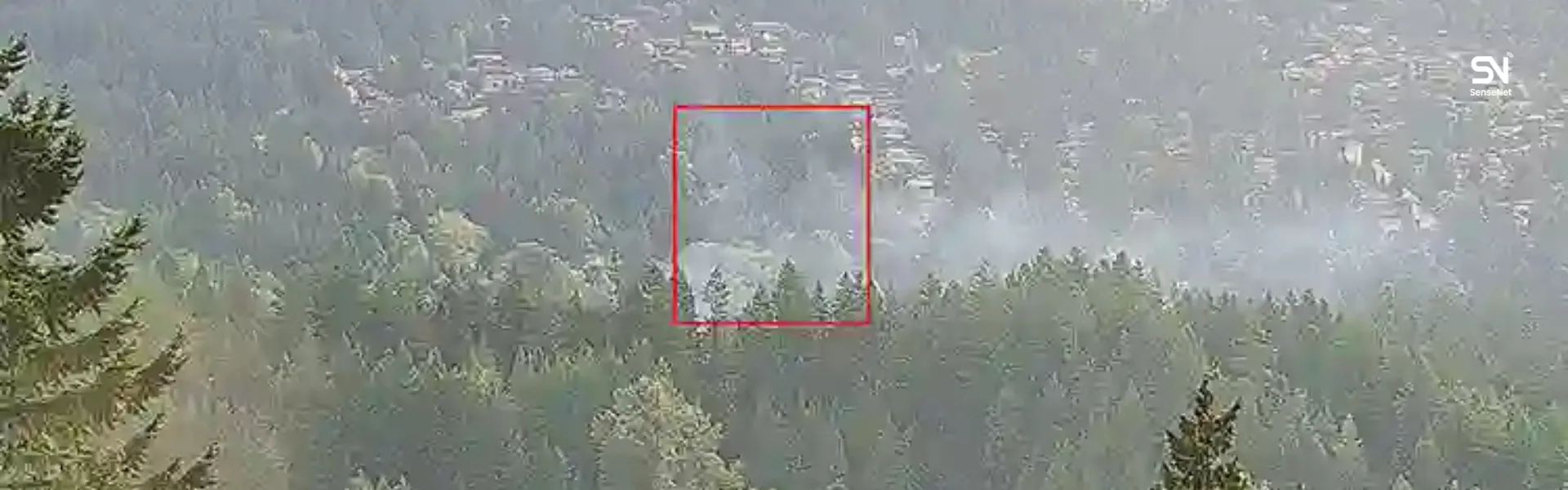
- A fast alert is more valuable than a more precise one, as long as false alarms are controlled. A team that faces too many false alarms stops trusting the system. We’ve learned that the smoke detection algorithm must be tuned to the conditions of each region (fog, dust, light reflections).
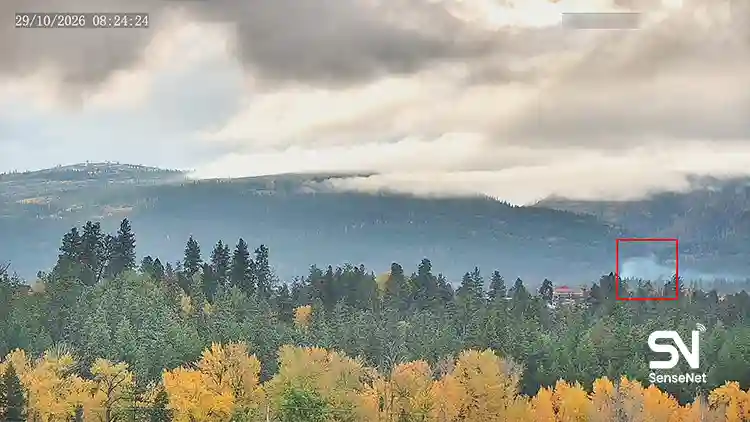
- Early detection really does stop big fires. In many cases, we’ve seen alerts reach response teams in the first few minutes, and the fire was contained before it spread. If you haven’t heard news of these fires, it means the system did its job properly and didn’t let the fire spread.
Technical challenges of solar-powered fire detection, and their solutions
| Challenge | Common solution |
| Cloudy days and short winters | Calculate for the dimmest month, store energy for several consecutive days without sun |
| Extreme cold and its effect on the battery | BMS with temperature protection, battery suited to cold weather |
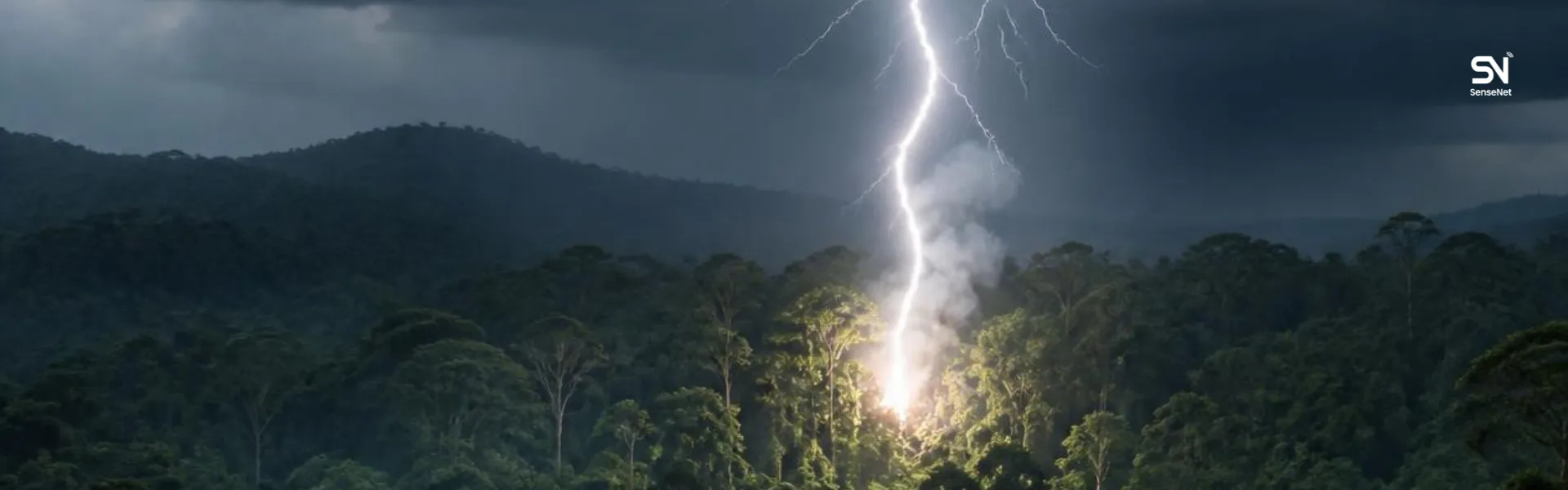
| Lightning | Grounding system and surge protection |
| Tree shade and uneven terrain | Careful site survey, mounting on a mast or high point |
| Limited communication bandwidth | Edge processing and sending only essential data |
| Theft and physical damage | Installation at height, secure locks, and concealment as far as possible |
Frequently asked questions
What happens if the sky is cloudy for several days in a row?
The system is designed with “days of autonomy,” meaning the battery has enough capacity to keep the station alive for several days without charging. If energy reaches a critical level, the station switches to a low-power mode: reduced imaging or transmission rate, but the core alert capability is preserved. This behavior must be built into the software design from the start.
What about dense forests where little light reaches the ground?
We don’t place the panel on the ground under the canopy. It’s usually mounted on a mast or a point above the canopy, or in a natural clearing. Sometimes the panel and the camera aren’t in the same place and are connected with a short cable.
How is the alert sent when there’s no mobile signal?
Options include LoRa networks with a gateway on a high point, a radio link, and satellite communication. The choice depends on distance, topography, and budget. If the stations are scattered across a region, a mesh network greatly reduces communication costs.
How serious is the risk of theft and physical damage?
This risk is real and must be taken seriously. Installing at height, using anti-theft bolts, and choosing spots away from traffic routes reduce the risk. Animals, especially birds and rodents, sometimes damage cables too, so protected cabling is essential.
How often should a station be inspected?
With proper design, periodic inspection once or twice a year is usually enough, for example before the high-risk season and after it. But device health alerts (battery voltage, internal temperature, communication status) should always be visible remotely so problems can be found before a complete failure.
How much of a problem are false alarms, and how are they reduced?
Fog, dust, steam, light reflections, and even smoke from local kilns can mislead the system. The solution is a combination: an algorithm tuned for that specific region, a mix of multiple data sources (images and sensors), and human confirmation at the monitoring center before dispatching crews.
Is one station enough to cover an area?
It depends on mounting height, terrain, and line of sight. A camera on a high point with an open view covers far more than a station in a valley. Before buying, a viewshed analysis on a topographic map can determine the real number of stations needed.
How does the cost compare to human patrols?
The initial installation cost is higher than that of a few patrols, but patrols have ongoing costs and never provide 24-hour, round-the-clock coverage. After installation, a solar system has very low running costs and provides continuous coverage in return. A fair comparison should also include the cost of an uncontained wildfire.
Can we relax now that the fire season is over?
We’ve left this year’s fire season behind, but that doesn’t mean “the danger is over.” There’s a common belief that forest fires are only a summer problem. This belief is dangerous, for these reasons:
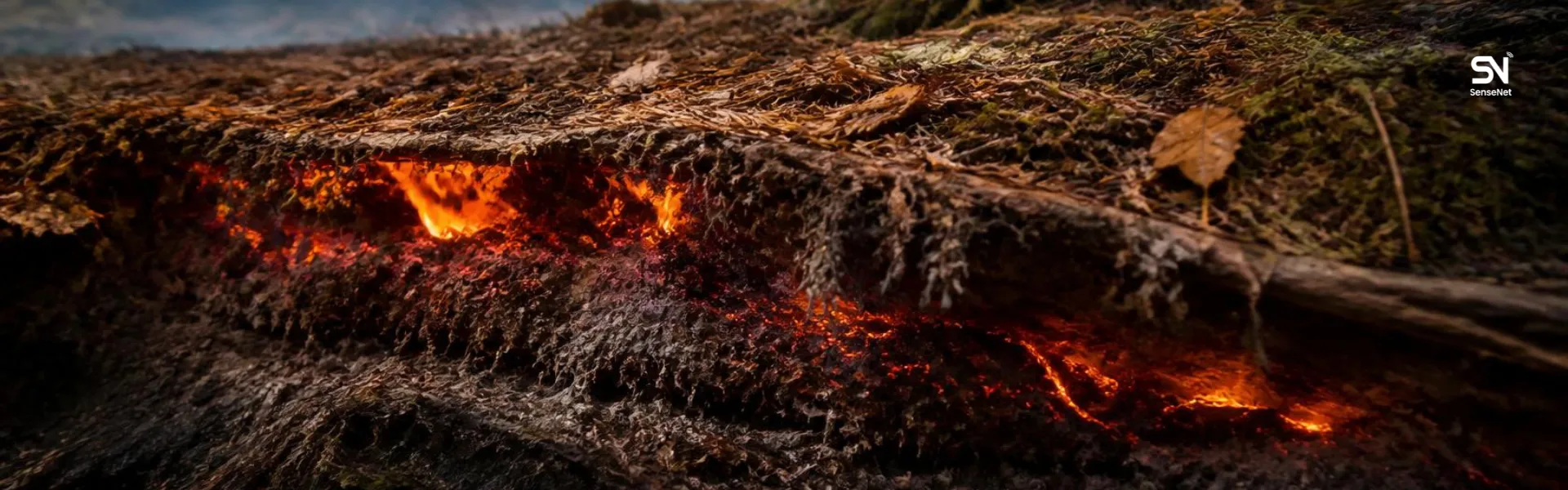
- Dry autumns and winters: When rainfall starts late or is low, dry leaf litter and vegetation make excellent fuel for fire.
- Hot, dry winds: In some regions, seasonal winds in autumn and winter can spread a fire at high speed.
- Human factors: A large share of fires are human-caused (agricultural burning, camping, abandoned fires, cigarettes), and these causes don’t depend on the season.
- Climate change: High-risk seasons have become longer and less predictable in many regions.
There’s a practical reason why right now is the time to act. Installing and commissioning a solar detection network takes time: site survey, viewshed analysis, equipment procurement, installation, communication testing, and tuning the algorithm for local conditions. If we wait until the weather warms up and the danger season begins, it’s too late. The off-season is the best time to install, test, and review existing stations, before we actually need them.
If you already have stations, clean the panels right now, check the battery status, and verify communications. If you don’t have any yet, start planning right now and fill out our contact form.
Conclusion
Solar-powered forest fire detection is the only practical way to protect areas that have neither electricity nor easy access. The key to success isn’t a stronger panel but the design of the whole system: calculating energy for the worst conditions, the right installation location, communication suited to the region, and an algorithm tuned to local conditions.
For a consultation on designing a solar-powered fire detection network for your region, contact the SenseNet team.r protecting human safety, but can also help protect the environment and everything that lives within it.
Author and Content Department Manager:
Neda Khanifar
Content Department Manager