Wildfires Affect Animals?
When we talk about the damage caused by wildfires, the first things that usually come to mind are the area of burned land, damaged homes, blocked roads, and the cost of firefighting. But no one talks about animal casualties.
Some of them die in the fire. Some escape and move to surrounding habitats. Some of the animals that survive the fire can no longer find their previous sources of food, water, or shelter after the fire is extinguished.
For livestock owners, the issue is even more direct. When a fire approaches pastures and agricultural land, livestock may become trapped in the fire, die, or face serious problems afterward because of the loss of grazing land and water.
So if the question is wildfires affect animals, the answer is not simply “wildfires cause animals to die.” The effects of wildfires on animals begin within the first few minutes and can continue for years.
In this article on the SenseNet website, we have discussed this subject in detail and examined its different dimensions. Keep scrolling to continue reading.
How do wildfires affect animals?
Wildfires affect animals in two main ways: direct and indirect effects.
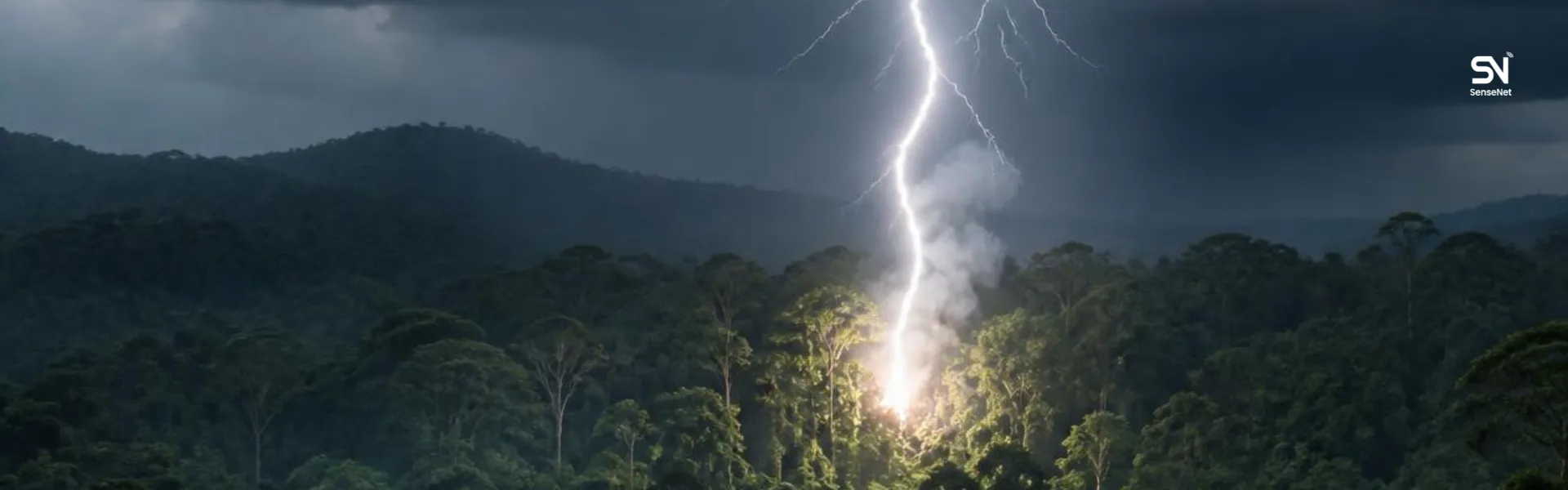
The direct effect is what is easier to see. Burns, suffocation, extreme heat, and being trapped in the path of a fire can cause animals to die.
But the larger part of the story begins after the fire front passes.
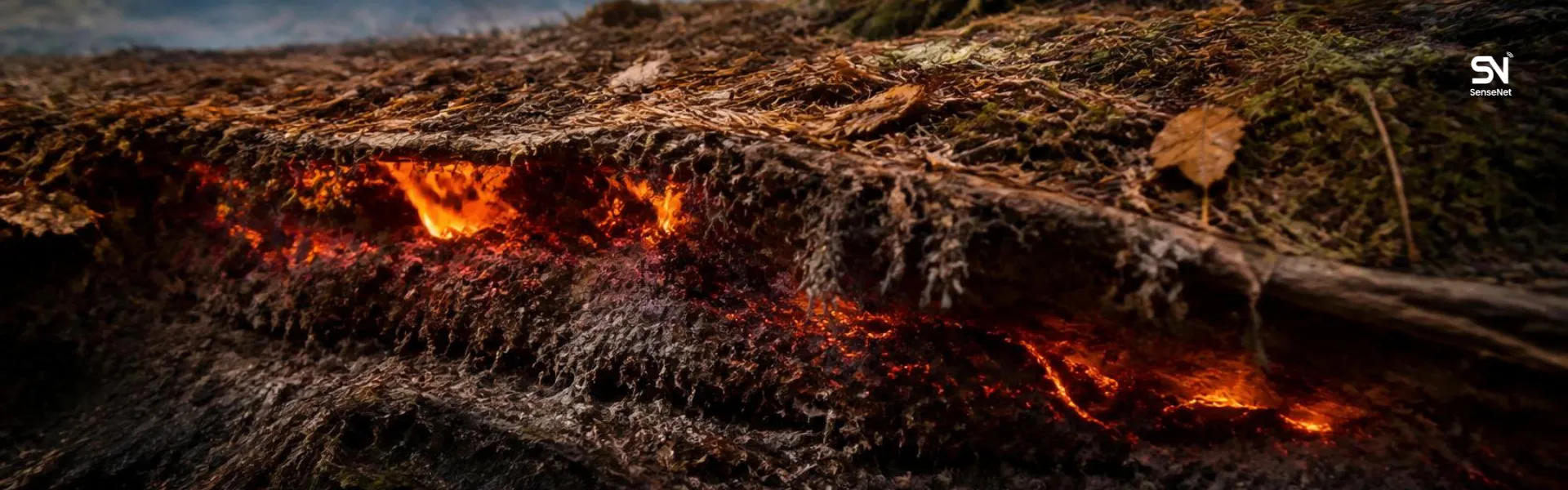
When vegetation, trees, shrubs, and surface soil layers burn, the structure of the habitat changes. Nesting sites disappear, food resources decrease, and access routes to water may change. In some areas, even animals that survive the fire may die in the following weeks and months because of food shortages or increased risk of predation in their new environment.
A scientific review of the effects of fire on animals shows that the extent of these changes depends largely on changes in habitat structure and plant species composition. Severe fires that destroy large parts of the vegetation usually create greater changes in animal communities.
Do animals escape during a wildfire?
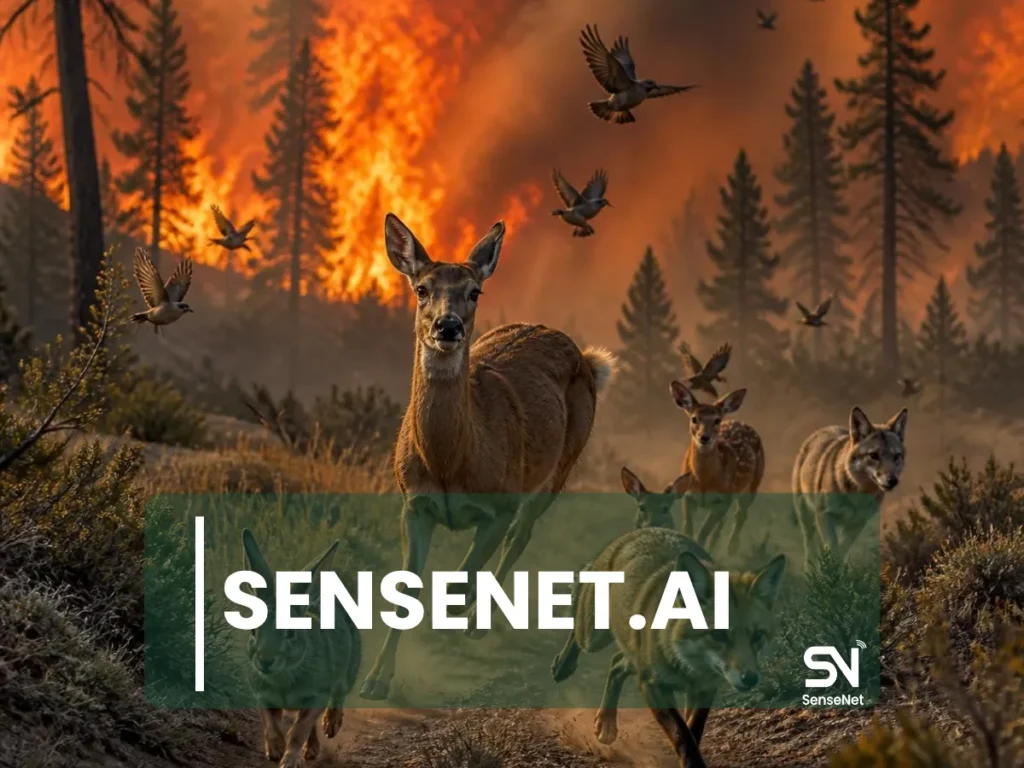
Some of them may escape during a wildfire, but escaping does not necessarily mean they have been saved from the consequences of the fire.
Different animals respond to fire in different ways. Some species move into underground shelters, some move toward unburned areas, and some species may simply be unable to get out of the path of the fire in time.
The speed and direction of the fire, the availability of refuge areas, the intensity of the fire, and the animal’s ability to move all determine how much chance a species has of escaping.
Research shows that animal movement in fire-prone areas is an important part of the ecological response to fire. Temporary or permanent changes in movement patterns can cause animals to enter new habitats, compete with other species, or become more exposed to predators.
In fact, what may appear on a map as simply a burned area may represent a much larger “displacement” from an ecological perspective.
Animals that have left an area need to find somewhere to feed, drink, rest, and reproduce.
If the surrounding areas also lack sufficient capacity, pressure on the entire population increases.
How many animals die in wildfires?
There is no reliable global number to answer this question.
The reason is simple: many small animals are never found, and indirect deaths are usually not recorded immediately.
But some studies have shown that the scale of animal mortality can be very large.
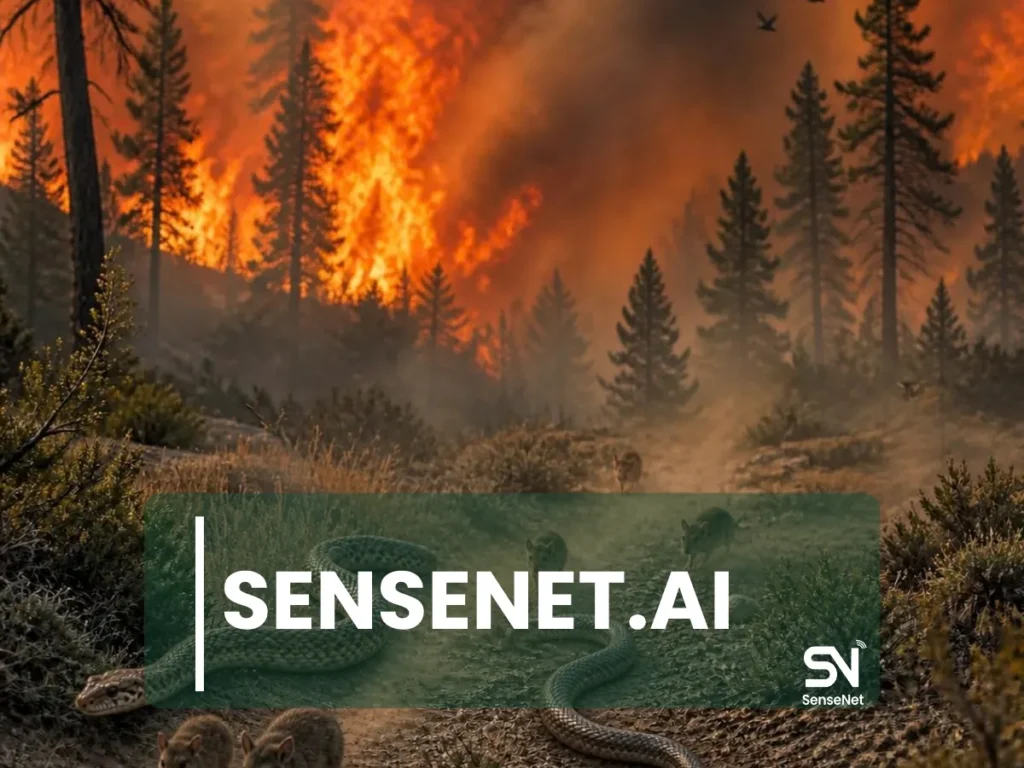
During the 2020 wildfires in Brazil’s Pantanal wetlands, researchers estimated through field sampling that approximately 16.95 million vertebrates were killed directly by the fire across the 39,030-square-kilometer burned area. Most of this number consisted of small animals such as snakes and rodents, but birds, mammals, reptiles, and larger mammals were also among the casualties.
And this number does not represent the full extent of the damage.
The researchers themselves emphasized that the deaths of animals that died in shelters or underground, delayed deaths, and animals that later died because of the loss of water and food were not included in this direct estimate.
Do wildfires cause animals to migrate?
Yes, but the word “displacement” should be used carefully.
Not every movement after a wildfire means permanent migration. Some animals move away from the burned area for a short period and return after vegetation grows back. Others may leave their habitat for a longer period.
The issue becomes more serious when repeated, large, and severe wildfires cause suitable habitat to continuously decrease.
In a large study in southern Australia, researchers examined changes in fire regimes across 415 reserves and habitat ranges of 129 threatened species between 1980 and 2021. The average vegetation cover with a history of at least 30 years without fire had decreased from 61 percent to 36 percent, while the coverage of areas that had experienced fire within the previous five years increased from 20 to 35 percent. The average frequency of fires also increased by 32 percent.
This change matters because older, less frequently burned habitats contain more than just a few additional trees. Tree hollows, fallen wood, shade, dense vegetation, and microhabitats develop there, and they may take decades or even centuries to form again.
So when fire destroys this structure, animals do not necessarily just “move a few kilometers away.” The habitat they depended on may no longer be the same habitat for years.
Does the animal composition of an area change after a wildfire?
Yes. And this is one of the most important long-term effects of fire.
Not all species respond to fire in the same way. A species that depends on dense forests and mature trees may face much worse conditions after a severe fire. In contrast, species adapted to open environments, shrublands, or young vegetation may increase afterward.
A 2026 study in Brazil’s coastal forests showed this very clearly. In burned forests, tree canopy cover was on average 56 percent lower, and the number of forest-dependent birds was 38 percent lower than in unburned areas. In contrast, herbivorous and seed-eating birds were more abundant in burned areas.
This means that the total number of animals in an area may not necessarily fall to zero after a wildfire, but which animals live in that area can change.
This distinction is important.
From an ecological perspective, it is not only the number of animals that matters. Their roles in the food chain, pollination, seed dispersal, insect population control, and other ecosystem functions also matter.
Another study conducted in 2026 on birds in a mixed forest in the southwestern United States found changes in the bird community after a severe wildfire, with reduced tree and understory cover and changes in tree species composition being important factors behind these changes.
Therefore, if we want to be more precise, wildfire can lead to species turnover, or the relative replacement of species within a habitat.
Are wildfires always bad for animals?
This is where we need to move a little away from a black-and-white view.
Fire is a natural part of many ecosystems, and some species have adapted to fire over the course of their evolution. In some ecosystems, fire with natural intensity and frequency can even create more diverse habitats and increase food resources for certain species.
The problem becomes serious when the natural fire regime changes, meaning fires occur too frequently, with too much intensity, over too large an area, or at the wrong time.
A systematic review of 566 studies on animal responses to different fire regimes has shown that fire intensity, frequency, and history can have very different effects on birds, mammals, reptiles, amphibians, and invertebrates.
What happens to livestock?
The story of livestock is somewhat different because, unlike wildlife, they are usually owned by people and their location can be predicted to some extent.
But this also creates a problem: large numbers of livestock, fences, buildings, and transportation limitations mean that evacuating them is not always easy.
A study on the effects of the 2020 wildfires on livestock operations in California, Oregon, and Nevada showed that cattle, sheep, and goat producers faced problems including loss of grazing land and mandatory evacuation, as well as reduced weight gain, decreased milk production, respiratory problems, reduced conception rates, and other health consequences. Among respondents, beef cattle producers also reported burns, direct deaths, and euthanasia due to burns.
In other words, even if livestock do not die directly in the flames, wildfires can affect the livelihood of livestock owners in several ways: loss of grazing land, smoke, stress, lack of water, respiratory injuries, and difficulty moving livestock.
For this reason, agricultural and emergency management agencies generally recommend that livestock evacuation plans be prepared before the fire arrives. For example, the EPA recommends that livestock owners identify evacuation routes, temporary holding locations, transportation resources, and the number and location of their animals in advance, and not wait until the last minute to evacuate.
This is where early detection becomes important.
Can early fire detection prevent animal deaths?
It cannot be said that a wildfire detection system can save all animals. Such a claim would not be scientific.
But one thing is clear: time is one of the most important resources in wildfire management.
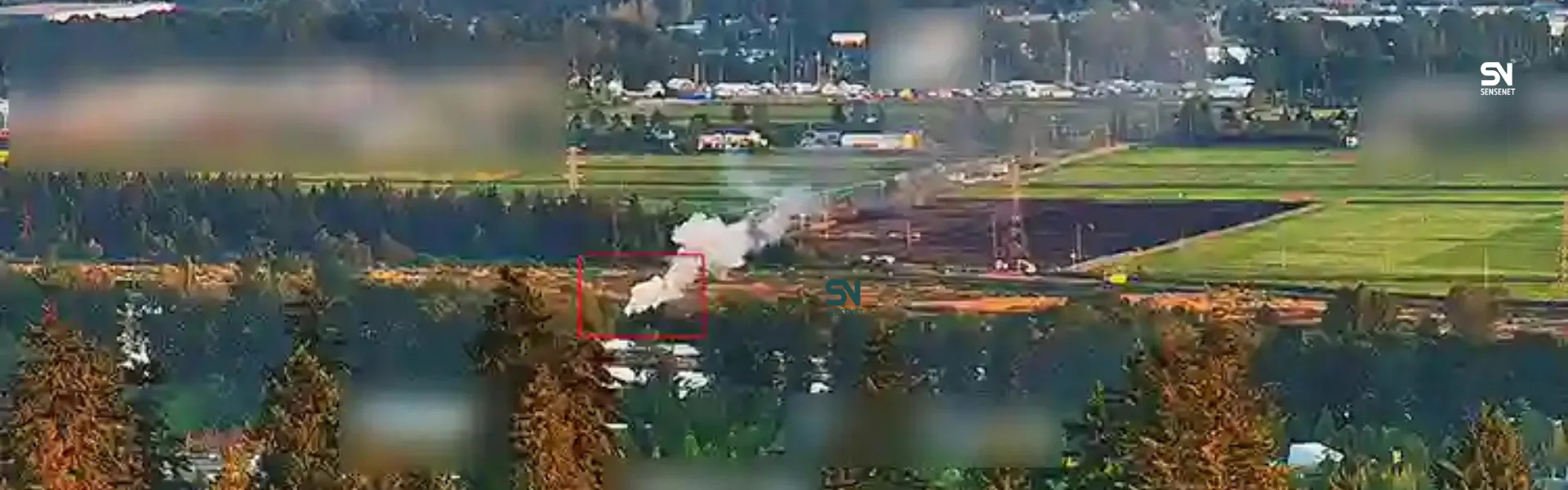
The sooner it is known where a fire has started, the sooner operational teams can respond, and livestock owners, residents, and local authorities have more time to make decisions.
For a livestock owner, even a few hours or even a few dozen minutes can make a major difference: moving livestock to a safer pasture, opening routes, preparing trailers, or coordinating with emergency responders.
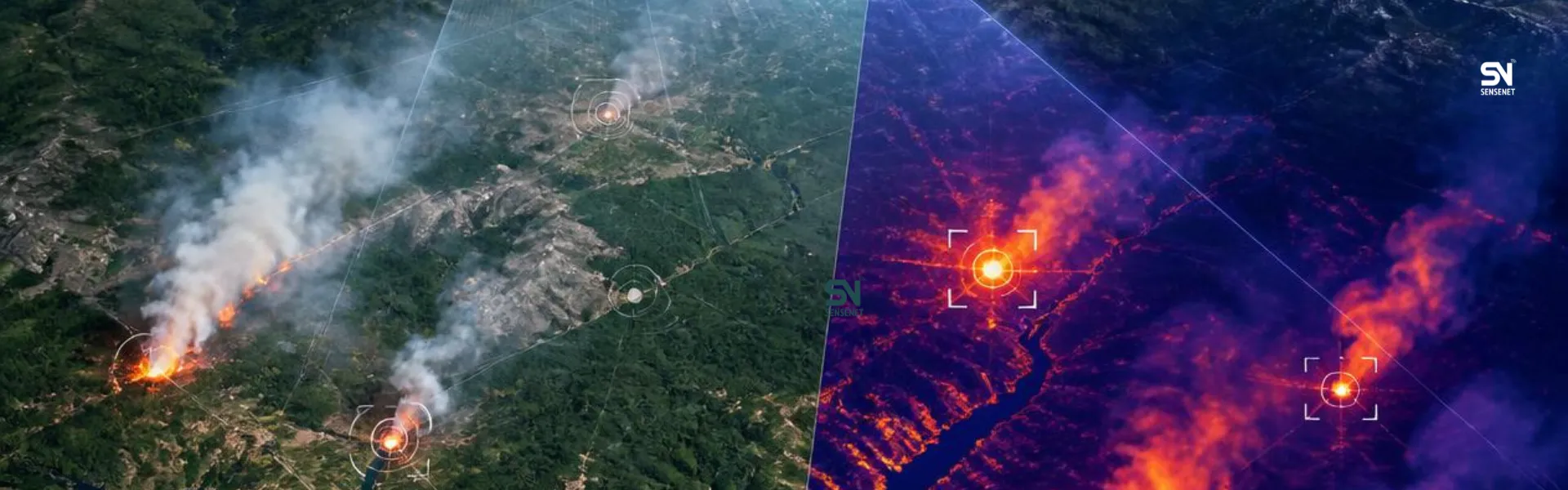
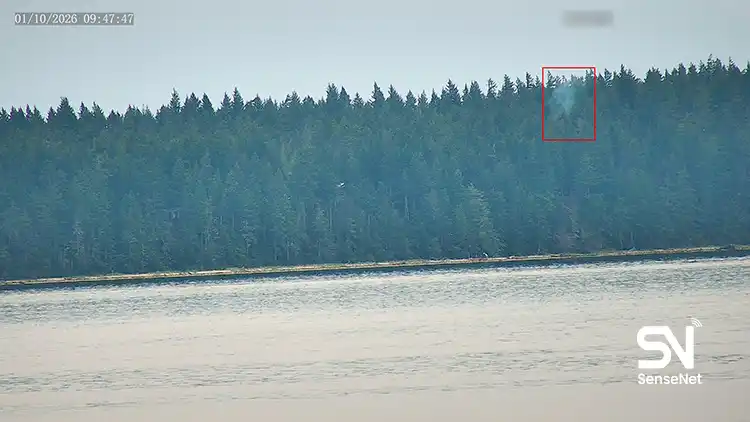
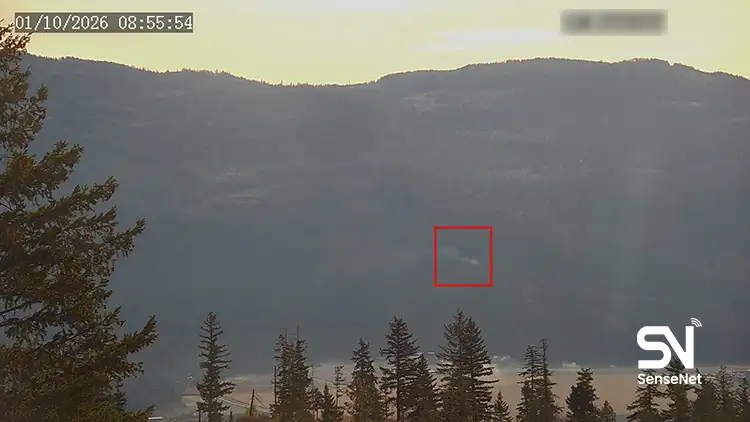
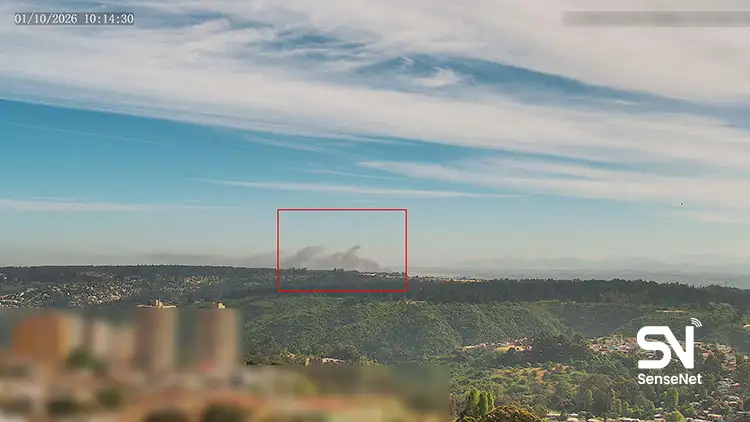
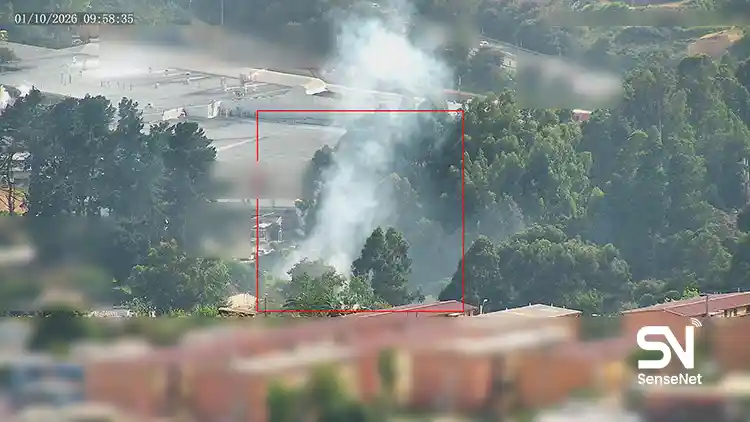
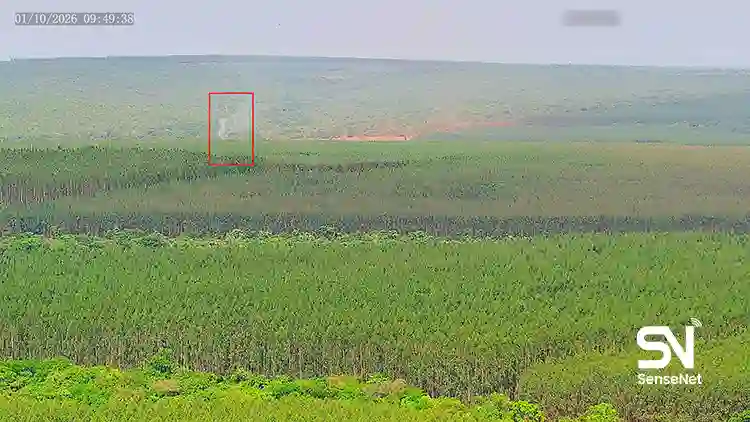
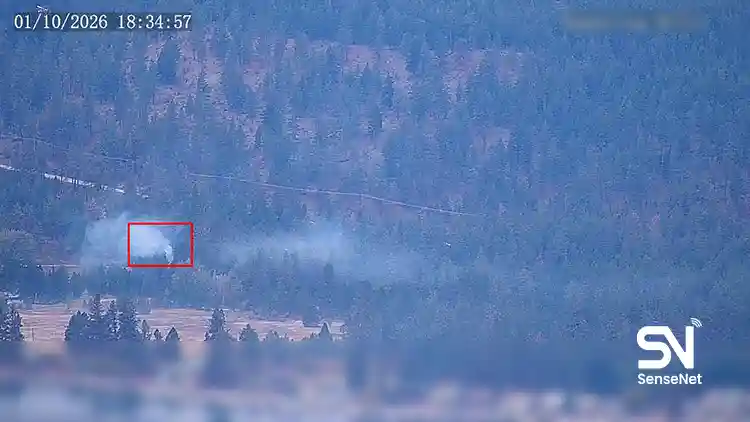
In modern monitoring systems, the goal is not simply to see a large flame. SenseNet uses AI-based smoke detection cameras, gas and thermal sensors, satellite communications, and other environmental data for early detection. Cameras can monitor designated areas around the clock, and under certain conditions, sensors can detect early signs of fire even before smoke becomes visible.
This is particularly important for rural and remote areas, where no one may pass by the point where a fire starts for hours.
In the field experience of the SenseNet team, we have repeatedly encountered livestock owners who have lost part of their animals in wildfires. This is not simply the loss of a few animals. For a livestock owner, it can mean the loss of capital, income, and part of their economic livelihood.
If a fire is detected earlier, it does not necessarily mean that the damage will be zero. But it can provide more time to respond.
And in a wildfire, time is not something that can easily be replaced.
Wildfire smoke is also dangerous for animals
Sometimes when a fire passes through an area, we assume that if an animal has not been burned, the danger is over.
That is not the case. Smoke can damage animals’ respiratory systems. Particulate matter and gases in smoke can irritate the eyes and respiratory tract, and prolonged exposure to smoke can cause more serious problems. Older animals, young animals, pregnant animals, and animals with heart or respiratory conditions are more vulnerable.
This issue is particularly important for livestock operations because the fire may be several kilometers away while the smoke still affects the area.
The study on livestock in the western United States also reported problems such as pneumonia and reduced reproductive performance among livestock producers.
What happens to animals after a wildfire?
Sometimes the most important ecological changes only begin after the fire.
Food resources change. New vegetation grows. Some species return and others do not. The relationship between predators and prey may change. Animal movement routes change, and the animals that remain may have to travel greater distances to find food and water.
In a seven-year study of forest birds following a 92,039-hectare wildfire in Australia, an initial decline in species richness and changes in the composition of the bird community were observed, followed by gradual recovery of part of the community.
This “recovery” does not necessarily mean that everything returns to the condition it was in before the fire.
Some species may return quickly. Other species depend on old forest structures and may take much longer to return.
In some areas, repeated wildfires can even change the trajectory of an ecosystem. Global research on the relationship between fire and habitat fragmentation has shown that fire can destroy and fragment habitat and, under some conditions, create a cycle that leads to permanent ecosystem change, such as the conversion of forest into grassland.
Final Words
Wildfires can affect the lives and habitats of animals even when they do not directly result in animal deaths. When we talk about wildfires, we need to consider something beyond human life. In fact, wildfires may have their greatest impact on the small and large animals that live deep within forests.
Therefore, forest monitoring systems are not only a necessity for protecting human safety, but can also help protect the environment and everything that lives within it.
Author and Content Department Manager:
Neda Khanifar
Content Department Manager