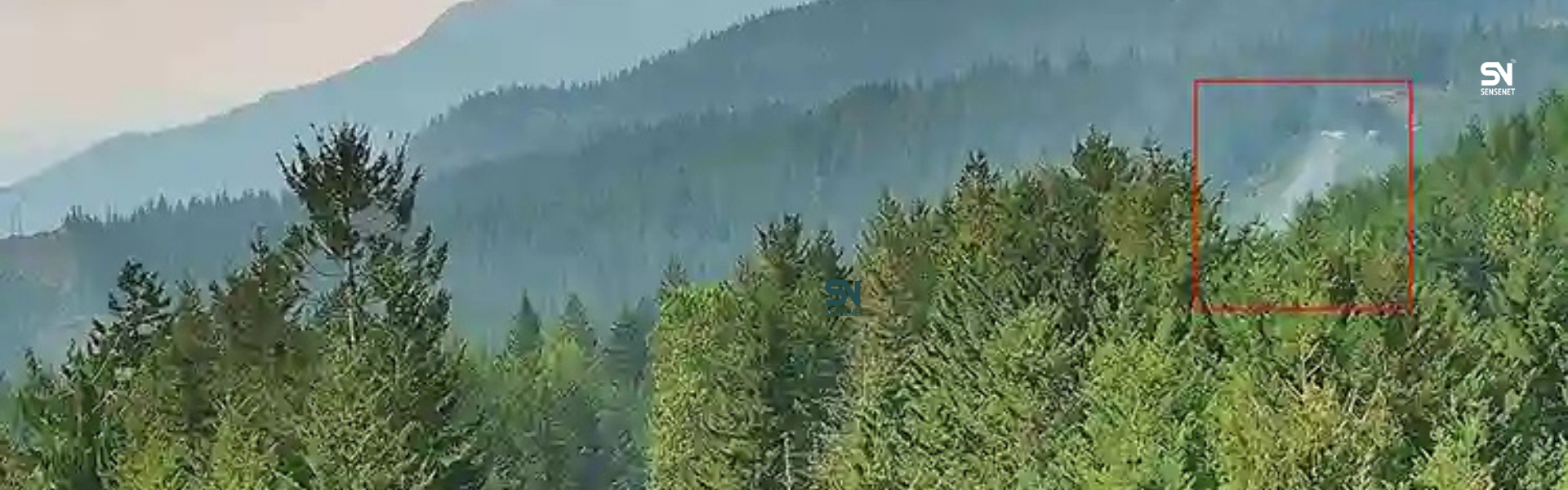
Wildfire Detection Technology
With a simple camera or by installing one at the first location we find, you cannot set up an early wildfire detection system and claim that you are equipped with wildfire detection technology.
When we talk about modern detection systems, we mean a type of technology that can identify the early signs of fire in real forest conditions, combine different types of data, minimize false alerts as much as possible, and provide actionable information to operational teams.
This becomes even more important in remote areas, where there may be no electricity, internet, personnel, or even access roads.
SenseNet technology uses several different layers for this purpose: gas and thermal sensors, AI-powered cameras, satellite communications, satellite imagery, weather data, and a central platform for data analysis.
But how exactly do these technologies work together? Let’s take a closer look at SenseNet’s early wildfire detection technology. Keep scrolling.
What Is Wildfire Detection Technology?
Wildfire detection technology is a combination of hardware and software used to identify the earliest signs of a fire as quickly as possible.
Older methods relied more heavily on humans spotting smoke, lookout towers, or aerial patrols. Newer systems aim to reduce this dependency and continuously monitor the environment automatically.
At SenseNet, this is done by combining multiple data sources:
- Gas and thermal SensorNodes
- AI-based smoke detection cameras
- Satellite imagery
- Weather and environmental data
- Communication Gateways
- Analytics and alerting platform
The advantage of this architecture is that if one data source provides incomplete information, the system can use other sources to create a more accurate picture of the situation.
What Are Gas and Thermal Sensors?
One of the most important differences between a multilayer system and a camera-only solution is that not everything depends on the camera’s field of view.
SenseNet SensorNodes use a combination of gas and thermal sensors. The core sensors include temperature, humidity, air quality, volatile organic compounds (VOC), and carbon dioxide. Depending on the project, sensors such as carbon monoxide, methane, nitrogen oxides, particulate matter, and thermal sensors can also be added.
This is particularly important in dense forests.
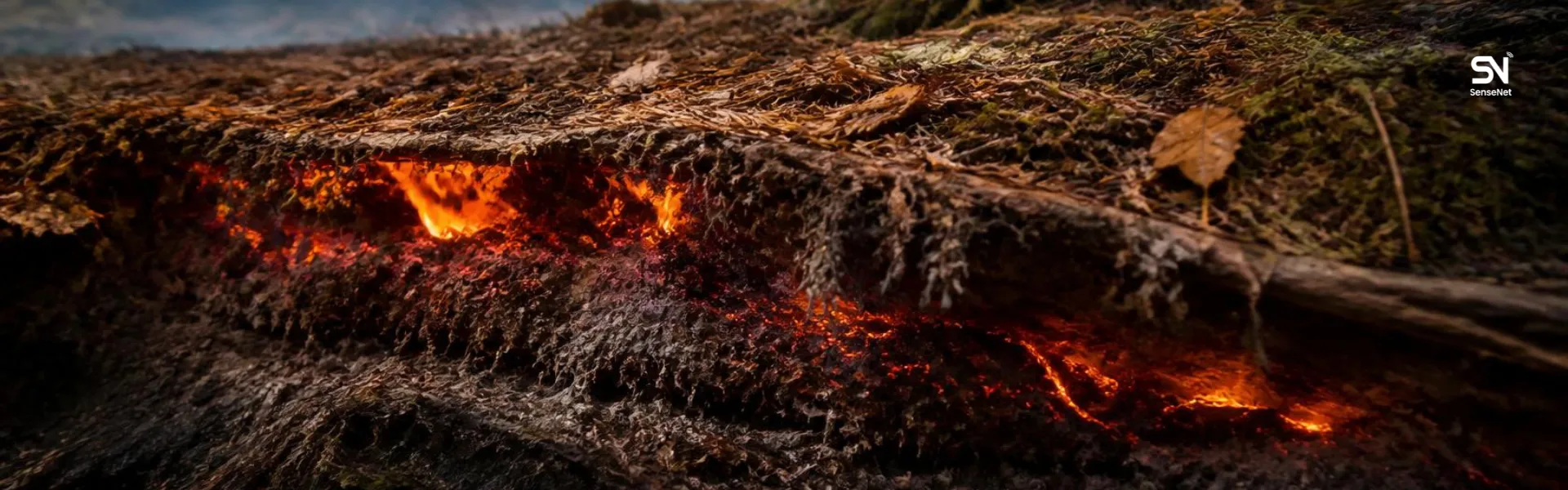
Smoke or flames may be hidden behind vegetation, leaving the camera without a clear line of sight. But changes in gases and heat can appear in sensor data as an early indication.
According to SenseNet specifications, SensorNodes are also designed to detect the smoldering stage and do not depend on a direct line of sight to operate in dense forest cover.
Smart, Solar-Powered Cameras
The camera in this system is not simply installed to record the forest.
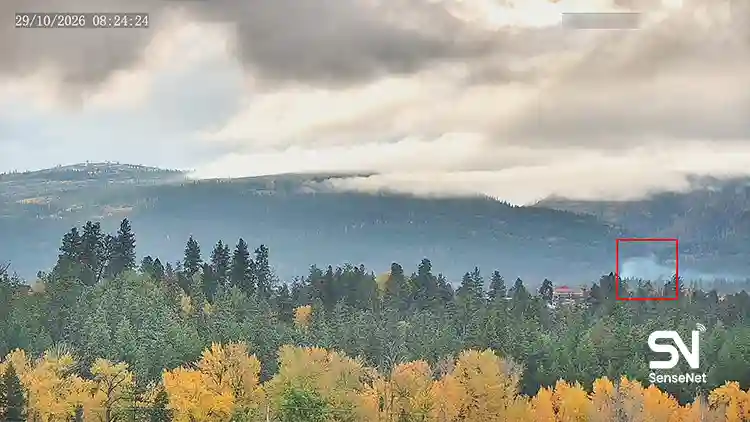
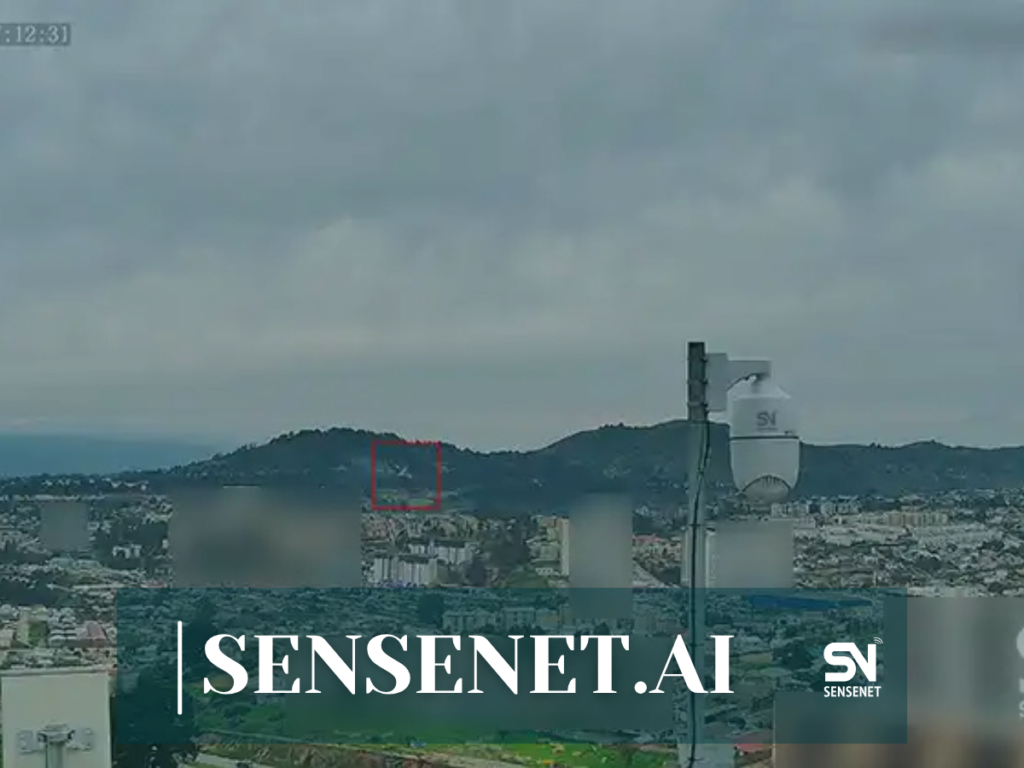
SenseNet Smoke Detection cameras have a 360-degree field of view, 40x optical zoom, and connectivity through Wi-Fi, LTE, and satellite. The detection range of these cameras is up to a 50-kilometer radius.
One of the interesting parts of the system architecture is that cameras and sensors can work alongside each other.
For example, if a SensorNode detects an unusual change in air composition or temperature, the camera can be used to examine that area more closely. AI can then analyze the image to determine whether the detected signal is caused by real smoke, normal forest activity, or another source.
Why Does Solar Power Matter in Wildfire Detection Technology?
One of the hardest parts of installing equipment in a forest is not detecting the fire itself.
It is providing power.
Data shows that recent wildfires in states such as British Columbia have started in remote locations without access to electricity or internet networks. As a result, fires have been able to spread without interruption, and fire stations have only become aware of the situation when it was already too late.
That is why a fire detection system designed for such areas must be independent of urban infrastructure from the beginning.
SenseNet equipment can operate on solar power, batteries, or AC power. According to the product specifications, SensorNodes have a very long operational battery life with solar power, while Gateways can also use solar and battery power.
As a result, equipment can be installed in locations where running power cables is impractical or even impossible.
This feature is particularly important for remote forests, transmission lines, remote infrastructure, and hard-to-access areas.
What Happens When There Is No Internet?
Solving the power problem is only half of the story.
In a remote area, there may also be no internet or cellular coverage.
SenseNet addresses this problem through a multi-layer communication architecture. Gateways can use LTE and satellite communication, while SensorNodes can transfer data between units through a Mesh network.
According to SenseNet specifications, SensorNodes have Peer-to-Peer communication of up to 2.5 kilometers, while Gateways can transmit data through LTE or satellite.
This architecture means that designing a wildfire detection network is not limited to areas with existing communication infrastructure.
Satellite Imagery for Wildfire Detection
Cameras and sensors operate at ground level, but satellites provide another perspective to the system.
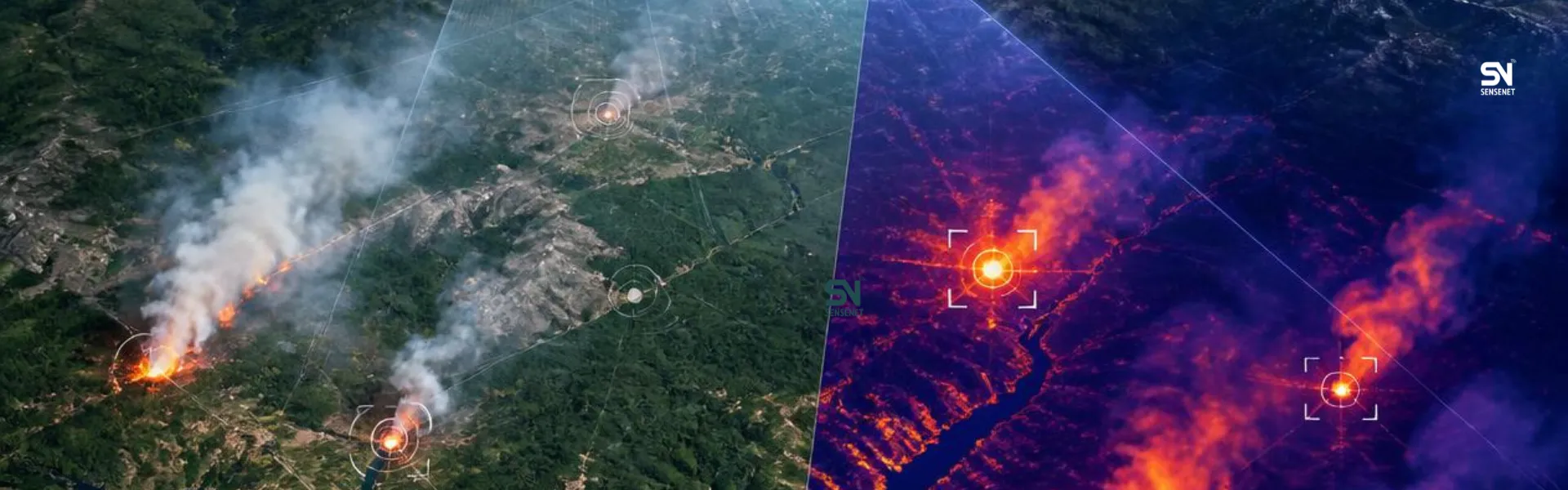
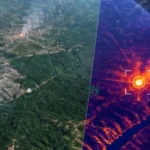
Satellite imagery can be used to monitor large areas, identify hotspots, monitor active fires, and analyze changes across an area.
At SenseNet, AI analyzes satellite imagery to extract information such as:
- Smoke
- Flame size
- Burned area
- Fire movement direction
- Rate of spread
This information becomes especially important during a large wildfire and provides decision-makers with important and actionable data.
What Exactly Does AI Do in Wildfire Detection Technology?
AI here is not simply a marketing label.
The amount of data generated by sensors, cameras, satellites, and weather sources is so large that manually analyzing all of it at scale is not practical.
SenseNet uses a Modular AI Engine to analyze environmental data and identify anomalies. The system is designed to reduce the likelihood of false alerts and missed alerts as well.
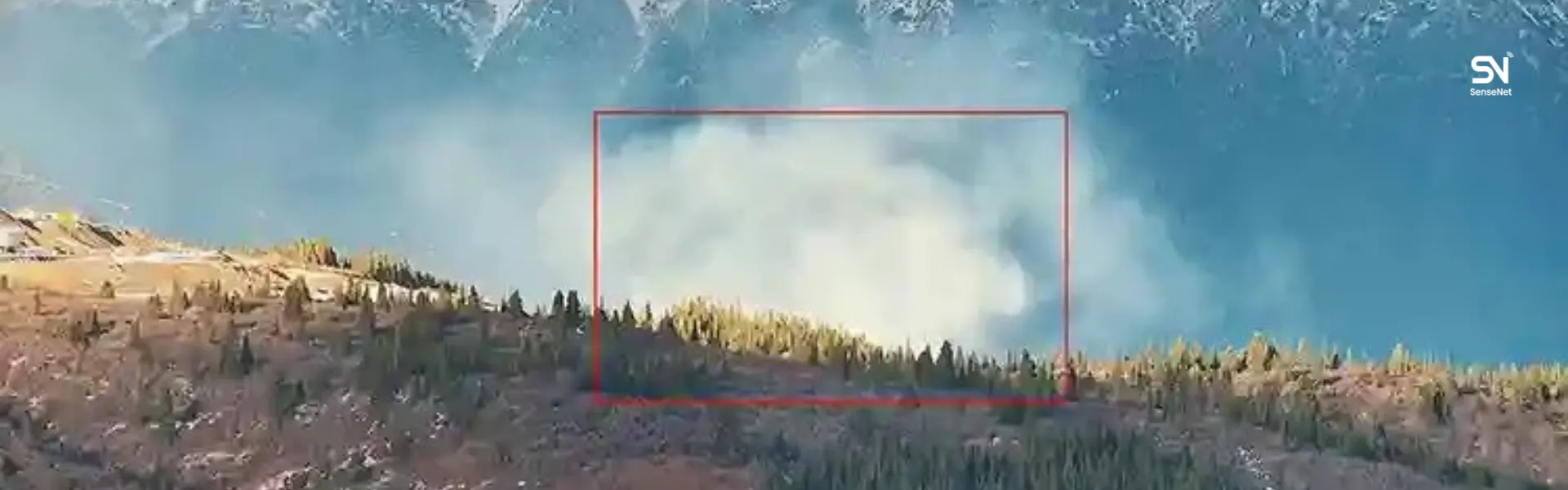
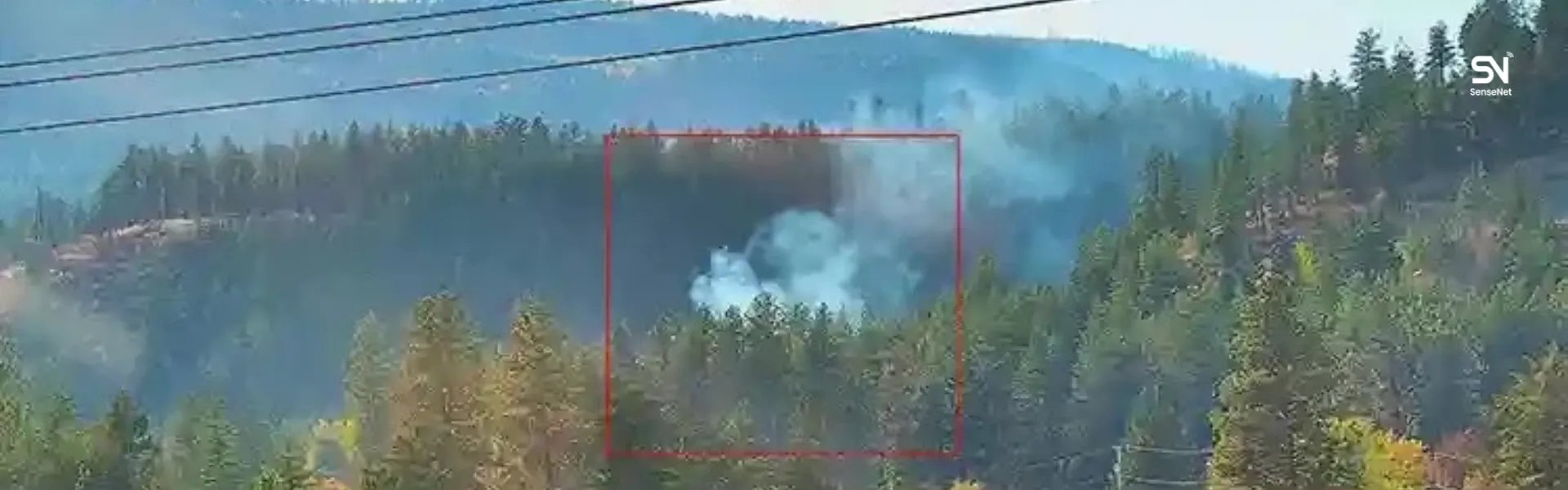
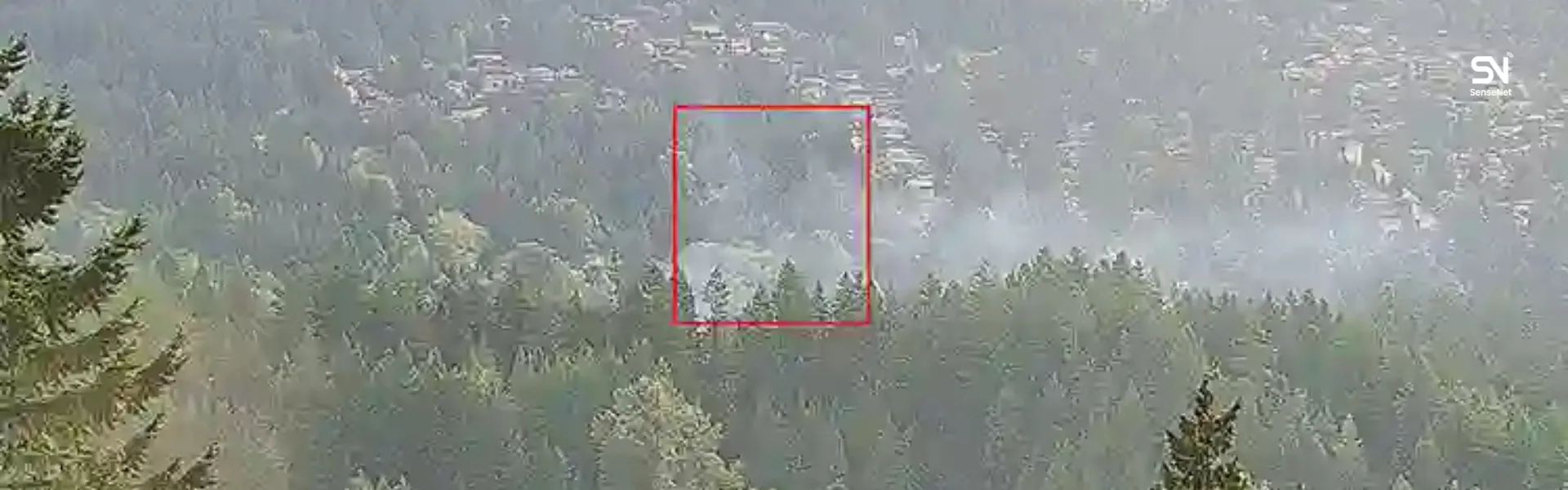
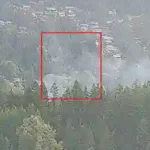
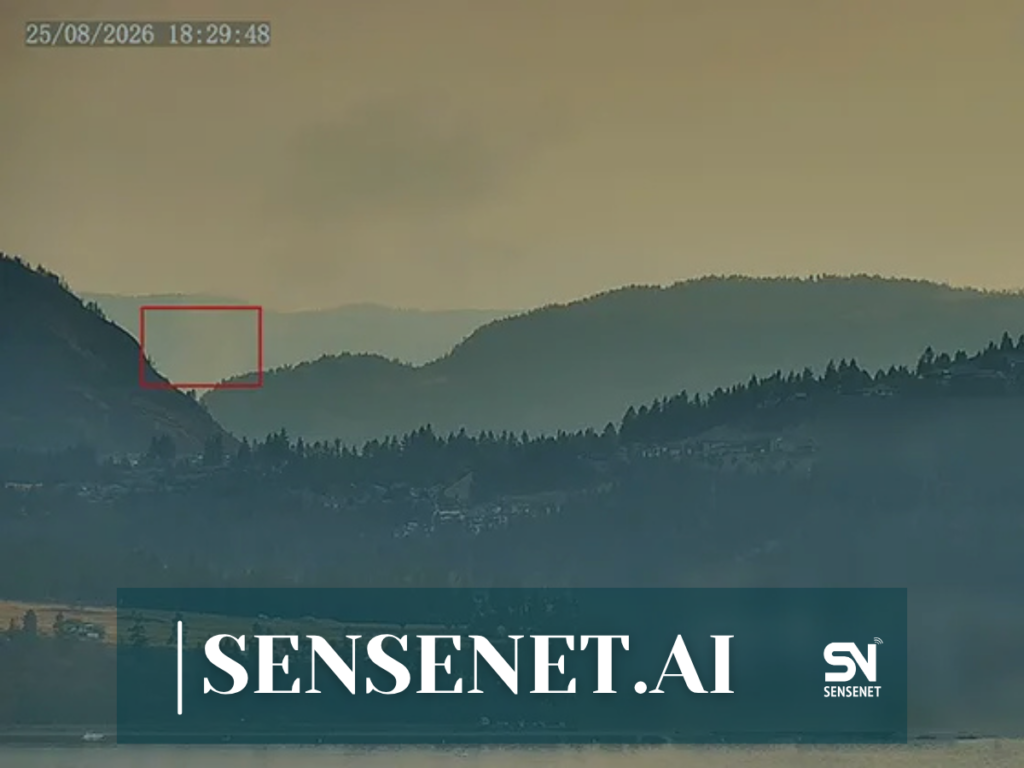
In the camera layer, AI can analyze images and distinguish between a real smoke column, smoke caused by a campfire, and normal environmental activity.
So the role of AI is not simply to “detect smoke.” It is interpreting data and turning it into an actionable alert.
Data Fusion: The System’s Main Strength
If we wanted to explain SenseNet technology in one sentence, perhaps the best description would be:
A Multi-Layer system for collecting and analyzing real-world environmental data.
Sensors provide one type of information.
The camera provides visual information.
Satellites provide a broader view of the area.
Weather data defines environmental conditions.
And AI analyzes all of these data sources together.
This architecture is technically important because no detection technology is perfect under every condition.
A satellite may not be suitable for a very small fire.
A camera may have limited visibility in dense vegetation.
A sensor may record an environmental anomaly that is not caused by fire.
But combining them can create a more accurate picture, and this is where SenseNet’s advantage lies.
The Technology Is Not Just About Detection; What Happens After Detection?
One of the important differences between modern platforms and simple alert systems is that the process does not end when an alert is sent.
In addition to Detection, the SenseNet platform is used for Fire Risk Modeling, Hotspot Monitoring, and Fire Spread & Behaviour Analysis.
Fire Risk models can use different types of data to identify high-risk areas.
When a fire occurs, Hotspot Monitoring provides operational teams with information about the active fire.
Then, Fire Spread & Behaviour models can examine the probable path of fire and smoke. These models use more than 30 data sources to provide forecasts ranging from several hours to several days.
So here, the technology goes beyond a “smoke detection camera” and becomes a Wildfire Intelligence Platform.
Does This Technology Replace Firefighters?
No. The goal of such a system is not to replace people.
The goal is to help firefighters or emergency managers make decisions earlier and with more information.
In SenseNet systems, alerts can be made available to fire crews, municipalities, and other users.
The important difference is that instead of an operational team first learning that there is a fire and then looking for its location, they can have information about the location, imagery, environmental data, and fire status available to them.
When it comes to wildfires, that difference can be extremely important.
What Features Should Good Wildfire Detection Technology Have?
If you are going to compare a wildfire detection technology with other options, do not look only at “detection range” or “AI-powered” capabilities.
These questions matter more:
Can the system operate without grid power?
What happens if there is no internet?
Does it only use cameras, or does it also have sensors?
Does it analyze satellite data as well?
How does the system handle false alerts?
Does it provide 24/7 monitoring?
Is the equipment built for harsh environmental conditions?
Does the system only detect fire, or can it also analyze its behavior and probable path?
Can it be scaled for a small forest or a very large area?
These are the questions that determine the real value of wildfire detection technology.
Conclusion
Wildfire Detection Technology no longer means installing a camera on a tower.
Modern fire detection technology is a set of interconnected systems that must be able to operate under real-world conditions, even in areas where electricity and internet access are unavailable.
SenseNet has created this architecture by combining Gas & Thermal Sensors, AI Smoke Detection Cameras, Solar Power, Satellite Connectivity, Satellite Imagery, Weather Data, and AI Analytics.
In this system, sensors can identify early signs, cameras can examine the visual situation, satellites can provide a broader view of the area, and AI can combine different types of data to generate alerts and analyze the situation.
And perhaps the most important advantage of this technology is this:
We are not supposed to wait for a fire to become large before we realize that there is a fire.
The goal is to find it while there is still time to respond.
SEO Title
Wildfire Detection Technology: How Modern Systems Detect Fires Early