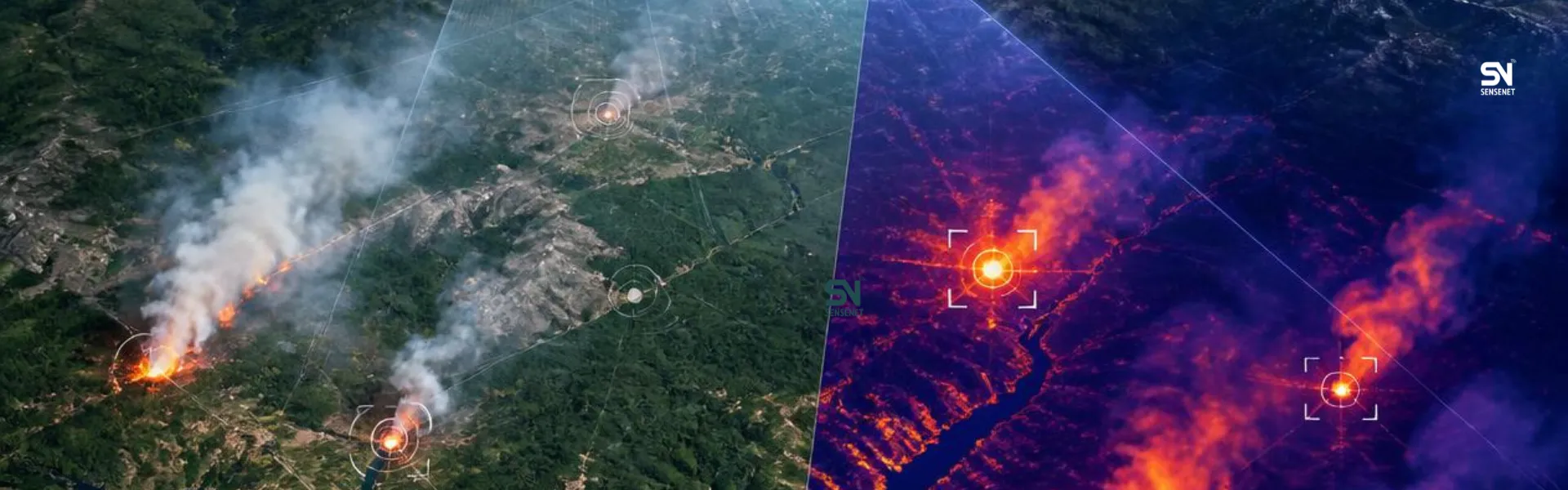
Off Grid Wildfire Detection
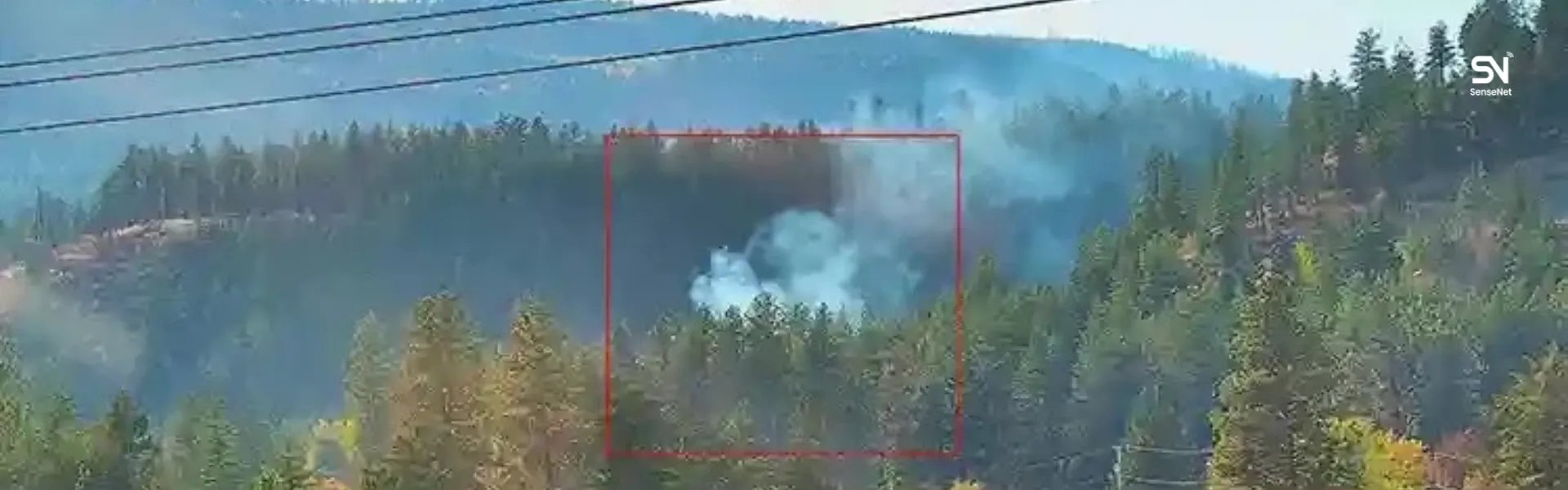
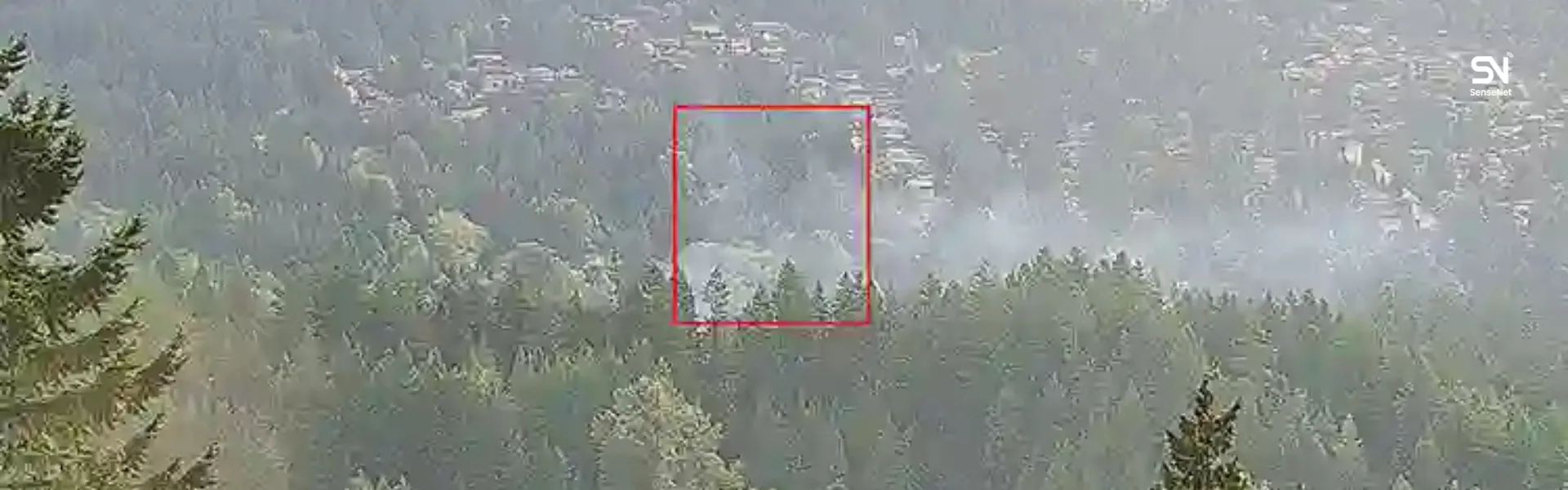
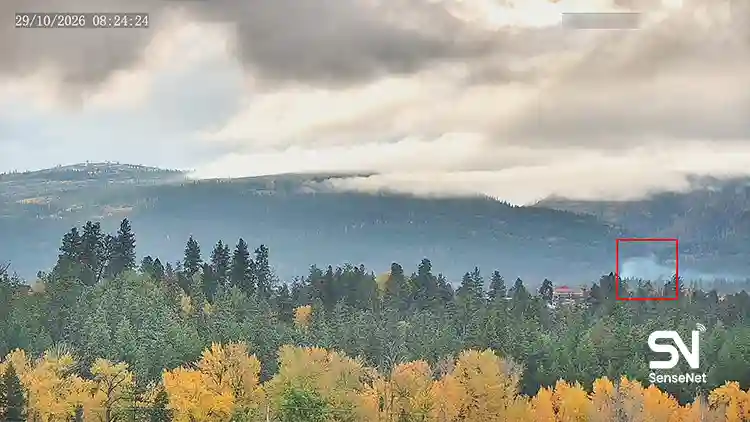
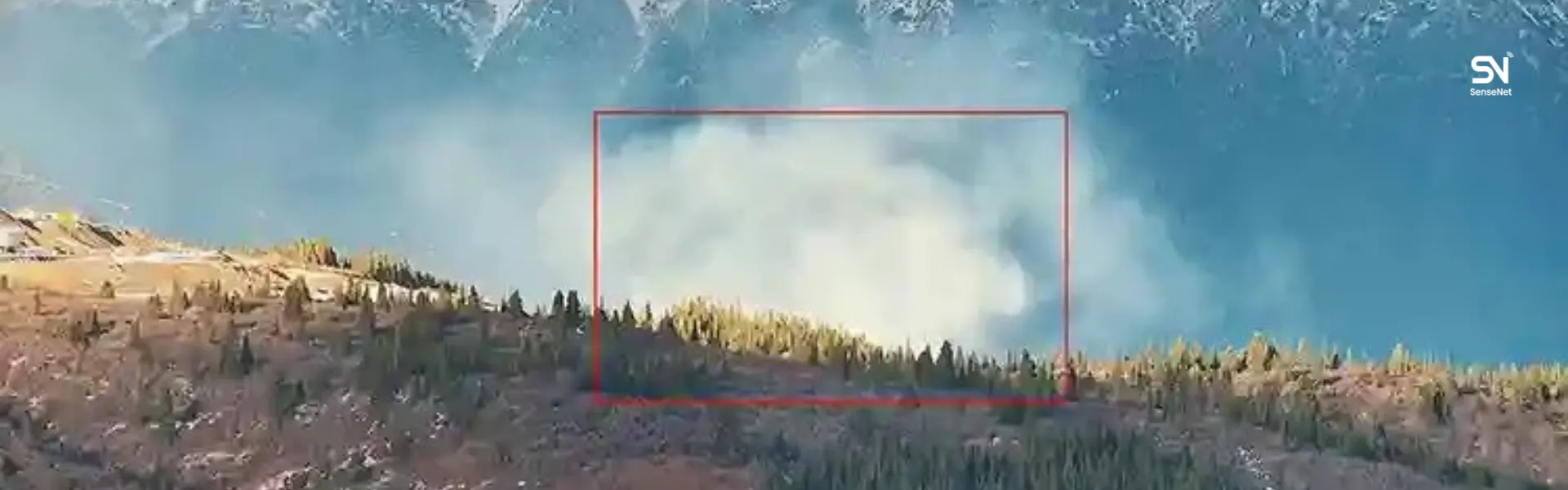
Anyone who has worked in the field of forest fires for a few years has seen the same pattern many times: the fires that turn into disasters usually start in a place with no infrastructure at all. No power line, no decent dirt road, no telecom tower. So if smoke rises in these places, there’s no one to see it, and it only becomes visible when it’s already too late and the fire has spread widely.
Off grid wildfire detection is built for exactly these places. It means a system that, without a connection to the power grid, without frequent maintenance, and sometimes even without a mobile network, watches the forest around the clock and, in the shortest possible time, sends the necessary alerts to the responsible authorities.
What gets far less attention is that being off grid isn’t just a technical feature, it’s a design condition. When your station is meant to work for months and years without human access, every decision, from choosing the sensor to the software, has to be tested against one question: “How much energy does this consume, and if it breaks, who can fix it?”
In this article, we explain how an off grid system is really designed, what needs to be anticipated in advance, and what SenseNet’s experience in the field has taught us. Keep scrolling.
What does off grid mean, and why isn’t it the same as “solar”?
Many people treat the two as the same, but they’re different. Solar energy is one way of supplying power, while off grid is an overall situation that carries three limitations together:
- No grid power: There is no external energy source.
- No easy access: Getting to the station may require a multi-hour hike, a motorbike, or a helicopter.
- No guaranteed communication: Mobile coverage may be weak or nonexistent.
In other words, in an off grid project the solar panel is not the only issue. You have to answer three questions at the same time: where do we get the energy to keep the detection devices running? How does the data reach the center? And if something goes wrong, how do we find out remotely?
The architecture of an off grid fire detection system
1. Power budget
The biggest mistake in off grid projects is choosing the device first and looking for power afterwards. The right way is the opposite: we calculate the consumption of each part (sensor, processor, communication, heater), and then build the energy source to match.
Low-power sensors and periodic wake-up (duty cycling), meaning the device stays in light sleep most of the time and measures only in the necessary windows, can cut consumption many times over. Usually the solar panel and battery are the main part of the energy supply, but in special conditions, such as very cold or low-light regions, a combination with another source is also considered.
2. Detection on the device itself (Edge Processing)
In an off grid environment, sending data is the most expensive thing. So the AI has to run on the station itself as much as possible, and instead of full video, only the “result” is sent: whether there is smoke or not, with what level of confidence, and in which direction.
3. Multi-layer communication
A single communication path is not enough. In practice, these combinations are usually used:
- Mobile network (LTE/5G) wherever there is coverage, because it’s cheaper and has more capacity.
- LoRa and low-power radio networks for transmitting light data between stations and the gateway.
- Satellite for places where there is no other option.
General rule: have a backup path. A station with only one communication route goes “blind” at the first problem.
4. Remote health monitoring
In an off grid system, the station has to report on its own condition: battery voltage, internal temperature, signal quality, sensor status. If you wait to find out about a failure from the absence of data, you may be in the dark for weeks, and in the meantime, dozens of small and large events may have taken place in the heart of the forest.
SenseNet’s field experience with off grid detection systems
At SenseNet, we’ve run early detection in many different environments, from residential communities and resorts to remote critical infrastructure. Here are a few public examples and what we learned from them:
From a remote hydroelectric facility. In collaboration with BluEarth Renewables, we installed a fire detection system for the Tyson Creek hydroelectric facility in Canada. Facilities like this are usually in valleys and remote areas, where both staff are at risk and the equipment is expensive. The lesson from that project was that in remote industrial environments, “being off grid” isn’t only about power, it’s also about the alert path: the alert has to reach someone who can make a decision, and fast.
From field trials with fire departments. Vernon Fire Rescue Services has been a research partner for testing emerging early fire detection technologies since July 2022. This long collaboration showed us that the algorithm has to be tuned to local reality, and that the trust of response teams matters more than accuracy on paper. An operations team only trusts a system that has given correct alerts many times.
A few practical lessons that have repeated themselves:
- A station you can’t get to has to be “simple.” Every moving part, or any part that needs manual adjustment, is a point of failure. We keep the design as simple as possible.
- Installation is a major part of the job. Failing to plan the logistics (equipment transport, weather on installation day, permits) causes lengthy delays. In practice, an initial site visit matters as much as the equipment itself.
- What the lab doesn’t show, the field does. Snow, moisture, sand and dust, birds, and even curious animals are things that don’t show up in workshop testing.
- Monitor the system’s health the same way you monitor the fire. An alert saying “Station X has low voltage” is just as important as an alert saying “smoke detected,” because it prevents the station from going dark before the danger season.
- Early detection works. Our systems today protect more than 130 million acres of wildland worldwide. The bigger this coverage has grown, the clearer one thing has become: in most cases, the gap between a “small incident” and a “disaster” is a few minutes.
Frequently asked questions
What’s the difference between a fire detection sensor and a camera, and which should I choose?
Each has different strengths. A camera “sees” and suits open areas with long sightlines, but it needs direct line of sight. Environmental sensors “feel” the air and can pick up early signs of fire before smoke or flames become visible, especially in dense forests where visibility is limited. The best results usually come from combining both. SenseNet also uses a combination of AI-based sensors, satellite data, cameras, and environmental monitoring in a single platform.
How quickly does an off grid system detect a fire?
It depends on the type of fire, weather conditions, distance, and technology, so there is no fixed universal number, and any provider who gives an unconditional number should be treated with suspicion. What can be said is that specialized early detection systems act faster than traditional methods such as lookouts or public reports. Before implementation, it’s best to ask the provider to demonstrate performance in conditions similar to your region.
How long does a station last, and how much does maintenance cost?
Most of the maintenance cost is in travel, not the components themselves. That’s why remote monitoring and rugged design matter, because every extra trip to the site multiplies the cost. The battery is usually the first component that needs replacing over the years.
How does snow affect the system?
It affects both energy and visibility. Snow on the panel reduces charging, and on the camera, it limits visibility. Solutions include a suitable panel angle, mounting height, and calculating energy for periods without charging. In areas with heavy snow, the installation location should be chosen with this in mind.
How is software updated when you can’t get to the station?
Remotely, and through the same communication path. The challenge is that updates have size and the connection is limited. That’s why updates need to be small, staged, and reversible, so that if something goes wrong, the station doesn’t go down.
Is a permit needed for installation?
In many regions, yes. Forests and national lands are usually managed by a government agency, and installing any equipment requires coordination. Radio frequency, land, and access issues also need to be clarified in advance. Starting this coordination before purchasing equipment prevents later delays.
How does the alert reach the response teams?
Detection without a response path is only half the job. The alert has to reach the same systems your team already uses. For example, SenseNet has partnered with Juvare so that fire detection data is added to their crisis management products. Before choosing any system, ask: exactly where and in what form does the alert arrive?
The end of fire season, the start of preparation time
We’ve left this year’s fire season behind, but that doesn’t mean the danger is over. The idea that forest fires are only a summer problem is a dangerous one. Dry autumns and winters, seasonal winds, human activity, and climate change have made high-risk seasons longer and less predictable.
For off grid projects this is critical, because these are systems you can’t get ready two days before the danger season starts. Site visits, connectivity checks, permits, equipment procurement, and installation logistics in remote areas take months, and snow and cold may also make access harder in many regions. Right now is the best time: if you have stations, check the health of the panels, batteries, and communications. If you don’t, start planning and the initial site visit.
Conclusion
Off grid wildfire detection isn’t just “installing a device in the forest.” It’s a complete design that starts with calculating energy, continues with multi-layer communication, and ends with continuous health monitoring and a clear response path. A system that can run for months without human intervention and send an alert at the moment it’s needed makes the difference between a fire that gets contained and a fire that gets out of control.
For a consultation on designing an off grid fire detection system for your region, contact the SenseNet team.otecting human safety, but can also help protect the environment and everything that lives within it.
Author and Content Department Manager:
Neda Khanifar
Content Department Manager