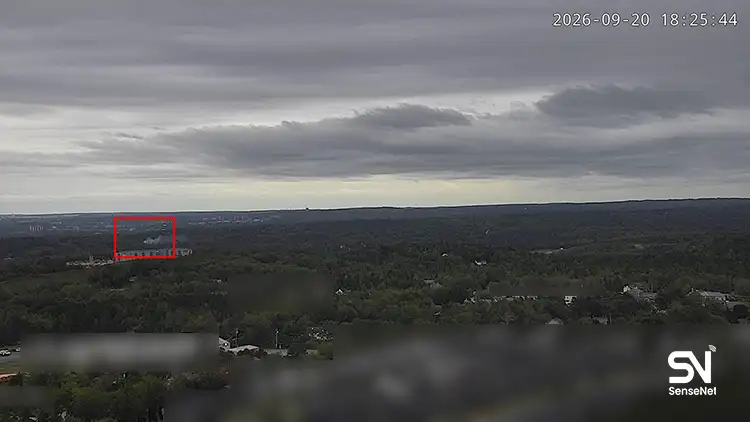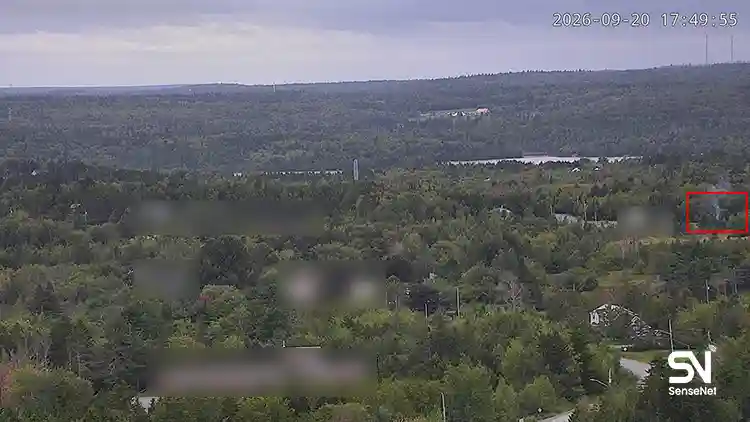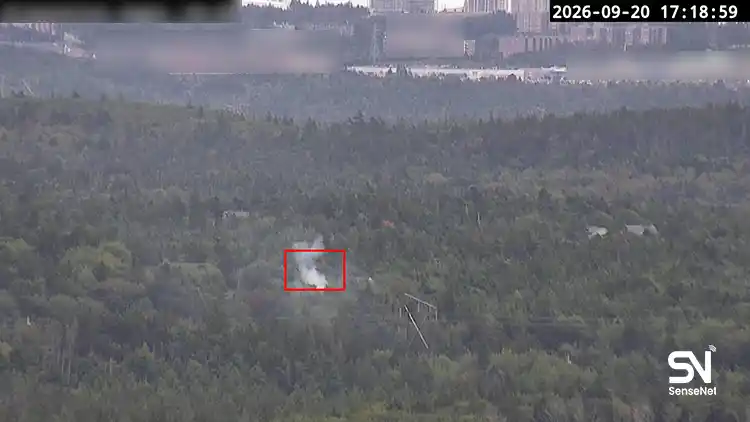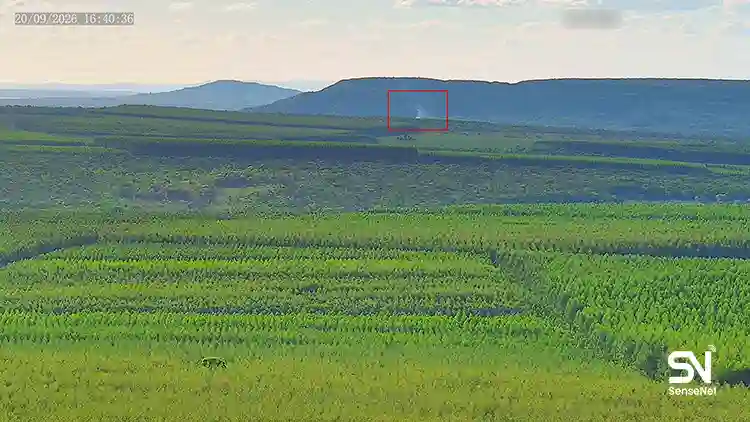
thermal blind spots in fire detection
Imagine you’ve installed an AI-based early fire detection system at a refinery. The algorithm is excellent, the cameras are 4K, and the installation team followed all the standards. Three months later, a small fire breaks out behind a large tank. The system gives no warning, and you might ask yourself: has the system become weak? But the reality is that the system has fallen victim to blind spots.
This might be the biggest challenge faced by installers of fire detection systems: how to find the best viewing angle for camera installation so that no blind spot remains.
In this article, we’re not going to talk about algorithms or the accuracy of AI models. We want to talk about a physical, down-to-earth challenge that trips up even the most advanced systems: viewing angle and blind spots. If you’re interested in this topic or want to learn more in this field, keep scrolling.
Why is this challenge so important?
Computer vision-based fire detection systems, no matter how smart, can only see what’s in their field of view. This simple sentence is the source of 80% of the problems installation teams struggle with.
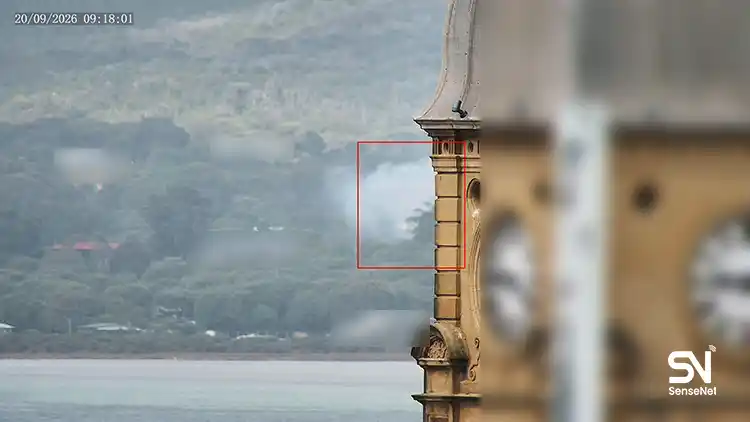
Unlike point heat sensors or smoke detectors that “smell” or “sense,” cameras depend on a direct line of sight. If something blocks the lens, that part of the world disappears for the system, and that’s exactly where you might get hit and the fire could spread.
Real-world examples of blind spots in industrial projects
1. Large equipment and tanks
In a refinery or industrial plant, large tanks, distillation towers, and air ducts create massive physical barriers. A small flame that starts behind a 20-meter tank might not be seen at all until it reaches the top of the tank. Although the resulting smoke might eventually be detected by sensors, by that time, it might be too late.
2. Warehouse racks
Multi-level warehouses with tall racks are one of the worst scenarios. Racks not only block the view, but their metal structures also create a ‘thermal shadow,’ meaning that even a thermal camera might not be able to detect heat behind several layers of metal.
3. Tree growth and green spaces
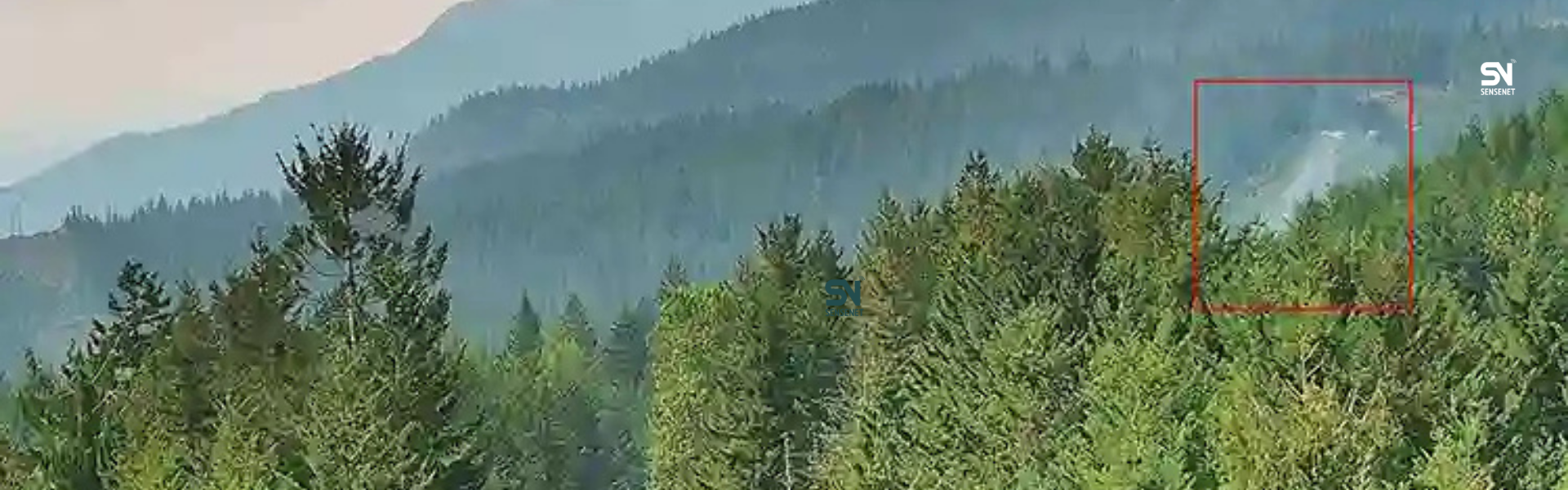
In forest projects or open plant areas, trees and bushes can become a major problem. Six months after installation, branches grow, and what was once an open field of view has now turned into a small forest. The client usually expects the system to work forever like it did on day one, but nature grows without caring about our blueprints.
4. Temporary and moving structures
Cranes, maintenance scaffolding, or even trucks parked in the plant yard create temporary blind spots. The challenge is that these obstacles change day by day, and no AI model can predict what will be placed in front of the camera tomorrow.
Practical solutions
Like any other problem, these challenges have solutions. One advantage of a dynamic team is that they keep their knowledge up to date and provide solutions based on the current situation. Let’s go through a few tested practical solutions:
1. Line of Sight Analysis before installation
Before installing even a single camera, you need to create a 3D model of the environment and simulate exactly what each camera will see. Tools like CAD or even Google Earth for large projects can save you. Of course, nothing beats “walking the environment and seeing with your own eyes.” You can’t leave everything to machines and AI.
2. Coverage redundancy
Never trust a single camera to cover a sensitive area. Always have at least two cameras with different angles covering the same spot. If one gets blocked, the other does the job. Yes, it costs more. But the cost of an undetected fire is much higher.
3. Installing at the right height (not always maximum height)
Many people think the higher the camera, the better it sees. But from above, you only see the “roof” of equipment, not their base. Fire usually starts from the bottom. A combination of high cameras (overview) and low cameras (detail view) works best.
4. Regular maintenance and periodic blind spot inspection
At least every six months, someone needs to go and check, with a camera or even the naked eye, whether a new obstacle has appeared. This is part of the maintenance contract, not extra work.
5. Using complementary technologies
Where the view might be blocked, you can use point sensors, such as cable hot spot sensors or heat sensors, as backups. AI is great, but if there’s no line of sight, it won’t fix anything.
Comparison table: methods for covering blind spots
| Method | Advantages | Disadvantages | Relative Cost |
| Multiple cameras with different angles | Full coverage, cross-validation capability | Higher processing needs, extra cabling | High |
| Complementary point sensors (wired or wireless) | Independent of line of sight, high reliability | Time-consuming installation, point coverage not area coverage | Medium |
| Periodic inspection and obstacle trimming (e.g., trees) | Low maintenance cost | Human-dependent, easily forgotten long-term | Low |
| AI-based change detection algorithms | Automated, alerts operator | Relatively new technology, needs training data | Very High |
Conclusion: AI is not a magician; it’s an engineer.
AI-based fire detection systems are fantastic tools, but they can still fall into blind spots. The challenge of “viewing angle and thermal blind spots” might seem simple at first glance, but in practice, it’s the most complex part of an installer’s job.
The key point: no algorithm can detect what it cannot see.
So if you want a truly effective smart fire detection system, before thinking about models and algorithms, go and look at the environment. Stand where the cameras will be installed. Look around. See what might block the view. That’s when you can be sure your system will see the fire — not just what it’s supposed to see.
Frequently Asked Questions
Do thermal cameras have blind spots?
Thermal cameras, like regular cameras, need a direct line of sight. The difference is in the wavelength they see, not in passing through physical obstacles.
What is the ideal coverage percentage?
In sensitive industrial projects, 100% coverage is almost impossible. The standard target is 95% to 98%, with redundancy considered for critical spots.
How much does fixing blind spots cost?
Depending on the environment, fixing blind spots may cost between 20% and 50% of the total project cost. But the cost of ignoring them could be millions of dollars in damages.