Wildfire Resilience in Mediterranean Forests
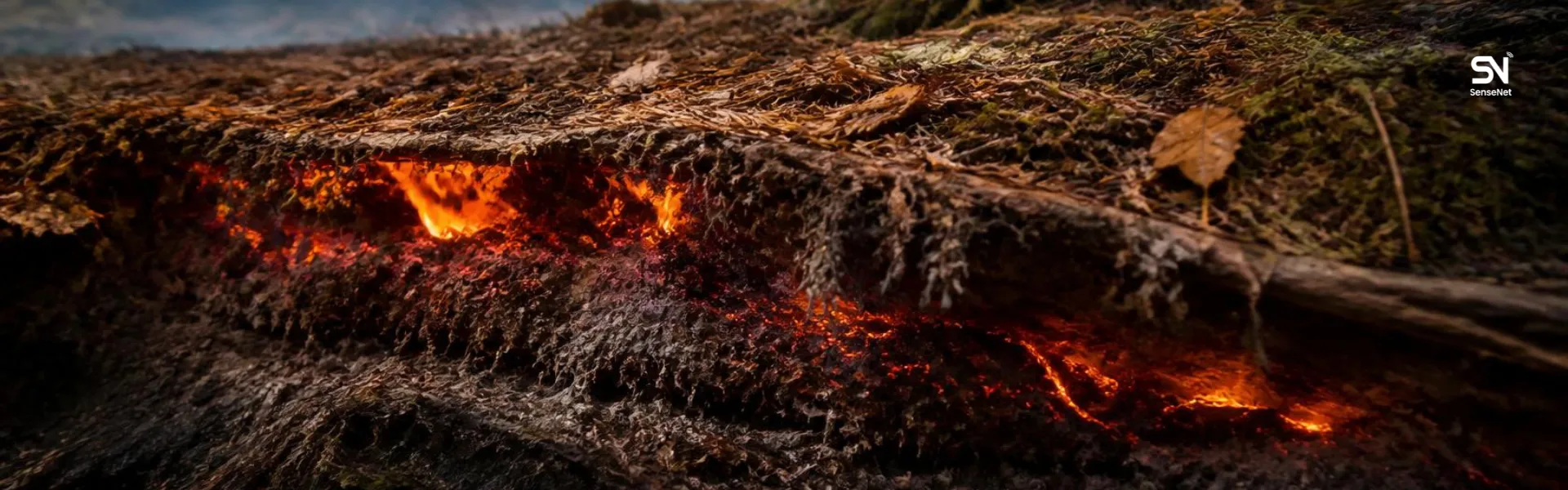
A lot has been said about wildfires and how to fight them in forests, but did you know that fire behavior itself has changed? This is especially visible in Mediterranean forests, which have coexisted with fire for years.
Over the past few years, you have probably noticed that summers have gotten hotter, and simple summer activities are no longer so simple to enjoy. On the other hand, it seems that hot weather now lasts longer and rainfall has decreased. Naturally, climate change cannot be blamed alone. But certain human behaviors, including the lack of forest management, the abandonment of agricultural and forest land, and the increase in dry ground vegetation, have compounded the problem and increased the number of wildfires.
Events in 2025 showed this issue more seriously. The European Commission reported that in the summer of 2025, in Portugal and Spain alone, 22 major wildfires during a prolonged heatwave burned around 460,000 hectares, nearly half of the EU’s total burnt area. The fire season also started earlier and lasted longer.
Now, in the summer of 2026, the situation has become even more serious. In Spain, firefighters who were present at one of this year’s record-breaking wildfires have described conditions in which direct confrontation with the fire front was no longer possible, and forces had to shift their focus to evacuating people and protecting buildings.
So the more important question is no longer “how do we put out the fire?”
The more important question is:
How can we manage Mediterranean forests so that when fire arrives, they have a better chance of surviving?
This is exactly what the concept of Wildfire Resilience in Mediterranean Forests is about.
What Does Forest Resilience to Fire Actually Mean?
When we use the word resilience, many people think we mean some magical way to make forests stop burning altogether. This is a misconception, and we should understand that wildfire has been part of the nature of Mediterranean forests for centuries. These forests have adapted to fire and become accustomed to it.
The problem begins where the intensity of fire, the interval between fires, and climatic conditions change so much that the forest no longer has the chance to rebuild itself.
So when we talk about a resilient forest, we mean a forest that can:
- limit the intensity and spread of fire to some extent;
- preserve a greater share of its valuable trees and vegetation;
- lose less soil and biodiversity;
- regrow after fire;
- and, most importantly, maintain or restore its ecological functions over time.
A new study published in 2026 on pine forests in the eastern Iberian Peninsula shows an important point: post-fire resilience is not the same across every point within a given geographic range, and climatic conditions before and after fire, along with a species’ position within its climatic niche, can affect the forest’s ability to recover.
This means that even if two forests are made up of the same tree species, they will not necessarily respond the same way after a wildfire.

Why Have Mediterranean Forests Become More Vulnerable?
At first glance, the Mediterranean climate has always had dry summers. So what has changed?
The issue is a combination of several factors.
On one hand, rising temperatures and drought make vegetation drier. On the other hand, in many regions, agriculture and traditional forestry activities have declined, and land that used to be regularly managed has been abandoned.
This means more fuel remains in the landscape.
Alongside this, homes and towns have increasingly expanded into forested areas. So today, a wildfire is not just a forest issue; it can simultaneously be an issue for homes, roads, power lines, infrastructure, and human lives.
A case study published in 2025 on Quinta da França in Portugal focused exactly on this issue and shows that combining forest management, fuel reduction, landscape management, and closer-to-nature approaches can be part of the solution for the resilience of Mediterranean forests.
A More Resilient Forest Isn’t Necessarily One with More Trees
This is one of the points that gets less attention in discussions of forest resilience.
Sometimes we assume that the denser and greener a forest is, the healthier it is.
But from the perspective of fire behavior, that is not always true.
If an area has a large amount of dry vegetation, shrubs, fallen branches, and dense young trees, fire can more easily move from ground level up into the higher canopy.
This is why fuel management is one of the important parts of increasing resilience.
But here, too, there is a common mistake: fuel management does not mean “completely clearing the forest.”
Not all dead wood or dry trees can be removed simply because of fire risk. Some of them are part of the habitat for insects, birds, and other organisms.
The goal is to find the balance point, where ecosystem health is preserved while the volume of dangerous fuel is kept under control.
Prescribed Burning in Mediterranean Forests
One method that has gained attention in the management of some Mediterranean ecosystems is prescribed burning, or controlled fire.
The idea seems simple: under conditions where the risk is manageable, part of the vegetative fuel is deliberately burned under a defined plan, so that when a severe wildfire occurs, there is less flammable material to feed the fire.
But this is not something that can be done simply by following a general set of instructions.
Timing, fuel moisture, wind, topography, proximity to residential areas, and even the availability of specialized crews all matter.
In fact, a successful controlled burn is not just a fire that has been put out; afterward, it must be possible to assess whether it actually reduced dangerous fuel and achieved its ecological and management goals.
What Does Spanish Firefighters’ Experience in 2026 Tell Us?
In one of the very severe wildfires of 2026, firefighters Javier García and Raúl Guerrero explained that the intensity and speed of the fire had reached a point where direct confrontation was no longer possible, and forces were forced to shift their focus to evacuation and protecting property.
This experience carries an important lesson for the concept of Wildfire Resilience in Mediterranean Forests:
Resilience means having done the necessary work before a fire reaches a stage where even specialized forces cannot confront it directly.
When a fire enters a state of extreme fire behavior, the number of fire trucks or aircraft is no longer the only determining factor.
The structure of the forest and the surrounding landscape also enter the equation.
A Resilient Forest Must Also Be Seen from Above
One of the important changes in recent years is that wildfire management is no longer carried out only by going into the forest.
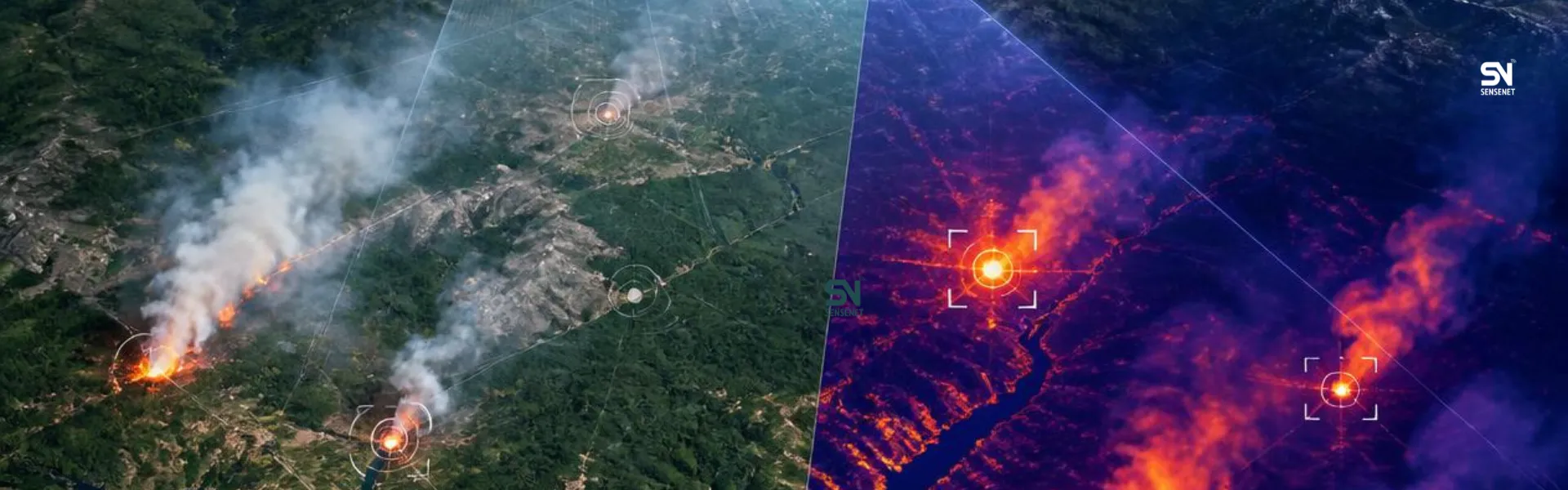
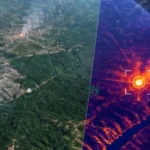
Satellites, cameras, GIS, and predictive models help provide a bigger picture of the forest’s condition.
For example, a new study in 2025 introduced the IberFire dataset for Spain, which combines information at a spatial resolution of one kilometer and a temporal resolution of one day, covering the period from 2007 to 2024. This dataset brings together factors such as fire history, topography, meteorology, vegetation, human activity, and land use.
This kind of data has an important advantage:
Instead of only asking “where has fire occurred before?”, we can ask:
Where is fire more likely? Why? And if a fire starts, which area is more important to manage?
A Fire-Detection Camera Isn’t Just for the Day of the Incident
From the experience of technical teams that install and maintain early wildfire detection systems, another practical point can be drawn.
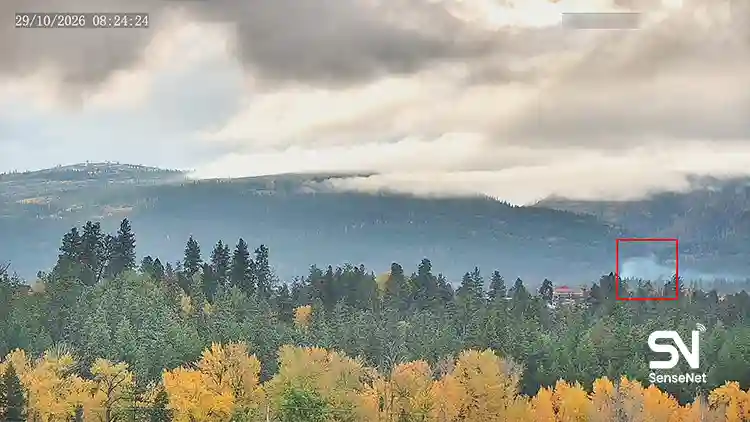
When a camera is installed at height, from below it may look like a simple device meant to spot smoke.
But for an operator or technician, the issue is more complex.
Morning fog, sun glare, dust, slight changes in camera angle, vegetation growth, and connection quality can all affect the system’s performance.
For this reason, forest resilience doesn’t simply mean installing a camera and then assuming everything is being handled correctly. The system must also be continuously and actively monitored to make sure it is performing at its best.

Can the Resilience of Mediterranean Forests Actually Be Measured?
Yes, and this matters a great deal for real-world management.
If we don’t know what condition a forest was in before a project and how it changed afterward, we effectively don’t know whether our program succeeded.
Metrics can include:
- fire intensity in managed areas;
- the survival rate of trees after fire;
- the speed of vegetation recovery;
- changes in surface fuel volume;
- the time needed for ecosystem recovery;
- the reduction in damage to residential areas;
- and the performance of monitoring and early-detection equipment.
Even “recovery time” itself can be an important indicator.
So Wildfire Resilience in Mediterranean Forests is less a single “project” and more an ongoing process.
Interestingly, this same idea is reflected in the EU’s new policy. After the 2025 fire season, the European Commission adopted a strategy in March 2026 that addresses fire risk management across the entire cycle of prevention, preparedness, response, and recovery, and which, alongside increasing firefighting capacity, also emphasizes sustainable land management, nature restoration, early warning, and monitoring.
Conclusion
Mediterranean forests are not going to become fire-free.
Perhaps that isn’t even the right goal.
The issue is that today’s wildfires, in many regions, occur with a speed, intensity, and set of conditions that leave the forest and even firefighting forces very little room to react.
Resilience means increasing that room to react.
Fuel management, biodiversity, landscape-scale planning, controlled burning, continuous monitoring, early detection, climate data, public education, and firefighters’ experience are all pieces of one puzzle.
Frequently Asked Questions About Wildfire Resilience in Mediterranean Forests
1. Are Mediterranean forests inherently resistant to fire? To some extent, some Mediterranean species and ecosystems have natural adaptations to fire. But this does not mean immunity. Climate change and the increasing intensity and frequency of wildfires can exceed an ecosystem’s natural capacity for recovery. New research on pine forests in the eastern Iberian Peninsula also shows that climatic conditions and a species’ position within its climatic range can affect post-fire resilience.
2. Is a denser forest always healthier? Not necessarily. Excessive density can, under certain conditions, increase the amount of fuel and the continuity of vegetation. That said, reducing density should not be done blindly either, since forest structure, biodiversity, and species habitats must be considered at the same time.
3. Does a forest need to be replanted after a severe wildfire? Not always. Some ecosystems have a natural capacity to regenerate, and rapid human intervention may not even be necessary or may not produce the desired result. The decision to replant should be based on fire severity, soil condition, existing species, future climate conditions, and the forest’s natural ability to recover.
4. Why do some forests turn green again very quickly after fire while others don’t? Fire intensity is not the only factor. Post-fire climatic conditions, moisture, soil condition, plant species, and the ecosystem’s position within its suitable climatic range can make a significant difference. 2026 research on Mediterranean forests addresses exactly these differences.
5. Can tree species diversity genuinely increase forest resilience? It can help, but it shouldn’t be treated as a standalone solution. New European evidence has shown that greater species diversity and greater landscape heterogeneity are associated with lower fire intensity and faster vegetation recovery.
6. Why can’t firefighters always contain a fire in its first hours? Sometimes fire behavior exceeds operational capacity. During the severe 2026 wildfires in Spain, firefighters reported that the fire’s speed and intensity reached a point where operations shifted from direct confrontation with the flames to evacuating and protecting people and buildings.
7. Can having more aircraft increase forest resilience? Aircraft and helicopters are very important for rapid response, but on their own they do not make a forest resilient. If vegetation and landscape structure are such that a fire quickly escalates into an extreme fire, firefighting capacity also has its limits. Europe’s recent experience has led to greater attention on prevention, land management, and data-driven monitoring, alongside increased firefighting capacity.
8. Is early fire detection part of forest resilience? Yes. Resilience isn’t only about what happens before a fire. If a fire starts, rapid detection can create more time to react. This is why satellite monitoring, cameras, and early-detection systems are meaningful alongside vegetation management.
9. Does a fire-detection camera always perform the same as it did on day one? No. A dirty lens, a slight change in angle, vegetation growth, dust, connectivity issues, or changing environmental conditions can reduce monitoring quality. For this reason, regular maintenance and evaluation of equipment is part of genuine resilience, not a side task.
10. Can wildfires in Mediterranean forests be managed with satellites alone? No. Satellites provide extremely valuable information, but satellite data needs to be used alongside local information, ground monitoring, operational forces’ experience, and, where needed, cameras and other systems. Even new fire-observation systems using Meteosat satellites can track fire behavior over short time intervals, but operational decisions still depend on local information and interpretation.
11. Why isn’t forest management alone enough to reduce fire risk? Because fire does not occur within a closed ecosystem. Abandoned agricultural land, rangelands, roads, homes, and infrastructure all play a role in fire behavior and spread. This is why the concept of landscape-scale resilience has become more important in recent years.
12. Does the abandonment of agricultural land really affect wildfires? Yes, it can. When land that used to be regularly managed is abandoned, vegetation can increase and fuel continuity across the landscape can grow. This is one of the major challenges in Mediterranean regions, which, combined with climate change, has made fire risk more complex.
13. Why can large wildfires also put pressure on the firefighting system itself? Because personnel and equipment are limited. In the 2025 and 2026 fire seasons, on some days dozens of major wildfires occurred simultaneously across several countries, and cross-border assistance among EU member states was also mobilized. When large fires happen at the same time, the very forces that should be available for prevention and fuel management may end up tied up in firefighting. This is why the EU’s new strategy, alongside increasing firefighting capacity, also addresses expanding the aerial fleet and examining firefighters’ long-term health.
14. How do we know whether a resilience-building project has actually succeeded? It can’t be judged simply by the number of hectares managed. What matters is how fire intensity changed after a wildfire, how many trees survived, how quickly vegetation returned, and how long the ecosystem needed to recover. In effect, the real result of a project has to be seen in how the forest behaves during and after fire.
15. Can the resilience of Mediterranean forests be designed for the next 20 or 30 years? It has to be attempted, but planning cannot rely solely on past climate. If future climatic conditions differ from the past, species and management methods need to adapt accordingly. This is why resilience must be a process that can be revisited, not a plan drawn up once and left unchanged for decades.
16. What is the main difference between resilient forest management and traditional wildfire management? In traditional management, a large share of attention may go toward reacting after a fire has started. The resilience approach aims to change the condition of the forest and landscape before a fire occurs, so that a future fire has less chance of turning into an uncontrollable crisis and if a fire does occur, the forest and the surrounding community have a better chance of getting through it and recovering.
17. Can increasing resilience stop forest fires altogether? No. No management method can guarantee that a forest will never burn. The more realistic goal is to reduce the likelihood of catastrophic fires, limit damage, and increase the capacity of both the forest and the community to recover.
18. Is the resilience of Mediterranean forests only an environmental issue? No. It simultaneously relates to public safety, the economy, infrastructure, public health, agriculture, crisis management, and even urban planning. This is why new European approaches to wildfire no longer treat it purely as a firefighting issue and instead consider the entire cycle from prevention to recovery.