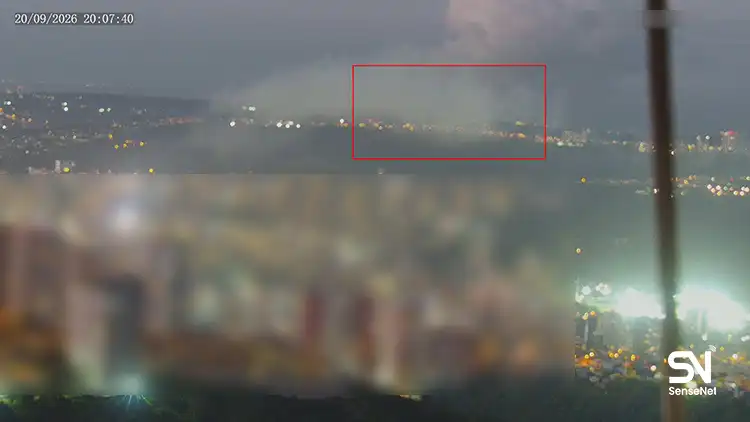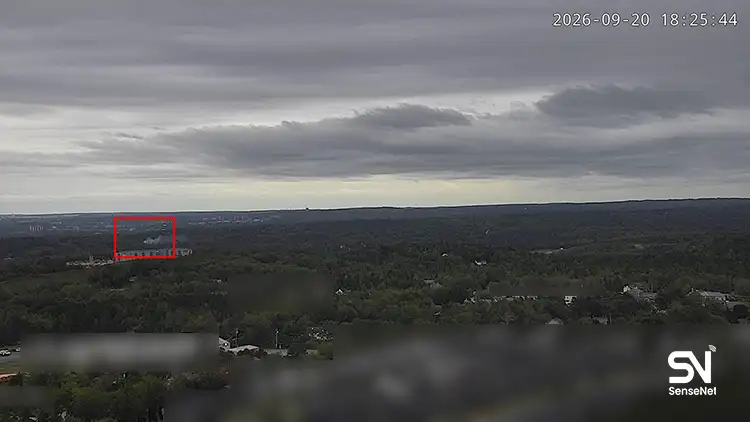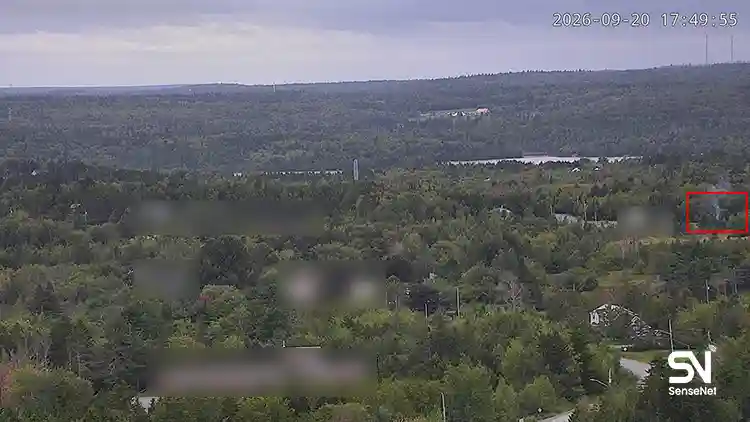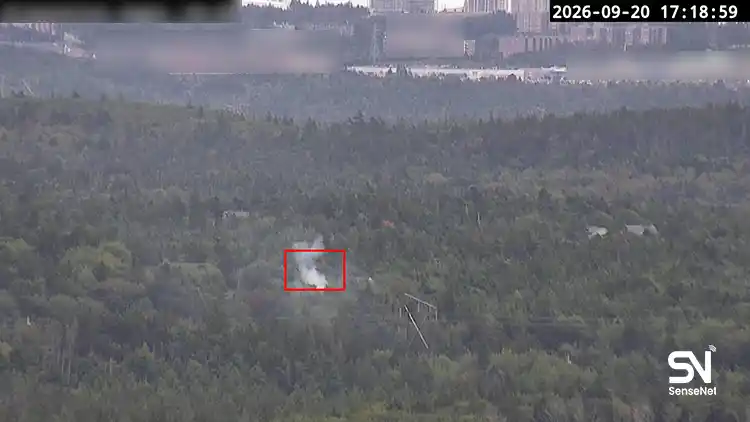
Forest Restoration After Wildfire
A wildfire does not end when the flames go out.
For a forest, the harder part may only be beginning.
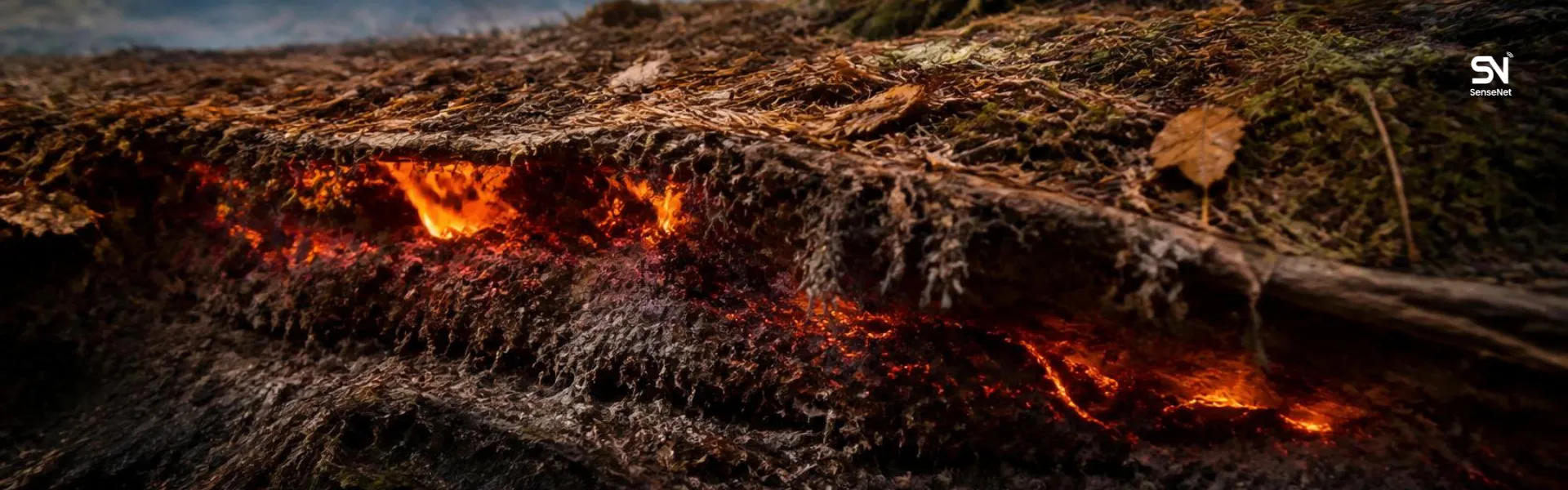
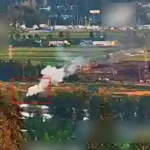
A few days or weeks after a fire, the scene can look deceptively simple. Burned trees, blackened ground, and gray ash covering the soil. But beneath that seemingly lifeless surface, a lot is still happening. Some roots may be alive. Seeds may still be present in the soil. Certain trees may be able to regenerate from their roots, while plants and wildlife slowly begin to return.
At the same time, a burned forest can become extremely vulnerable. Heavy rain can wash away the soil. Ash and sediment can enter rivers and streams. Invasive plants can take over areas where native vegetation once grew. A burned landscape may also become even more vulnerable to another wildfire in the future.
This is where forest restoration after wildfire becomes important.
But restoring a forest does not simply mean planting trees again.
The real question is not:
How many trees were here before the fire, and how many should we plant now?
The more important question is:
What does this ecosystem actually need to recover, and where should humans step in?
Recent research and restoration projects show that there is no single answer. Fire severity, soil conditions, rainfall, natural regeneration, climate change, biodiversity, and the likelihood of future wildfires all need to be considered.
Sometimes the right answer is to plant trees.
Sometimes the first priority is protecting the soil and water.
And sometimes the best decision is to plant nothing at all and let nature take the lead.
This guide looks at how forest restoration after wildfire really works, when replanting makes sense, why some traditional approaches can backfire, and what recent restoration projects around the world can teach us about rebuilding forests for the future.
What Is Forest Restoration After Wildfire?
Forest restoration after wildfire refers to a range of actions designed to help a damaged ecosystem recover its ecological functions, biodiversity, and long-term resilience.
Depending on the site, restoration may involve:
- Stabilizing soil and preventing erosion
- Managing runoff
- Protecting water resources
- Supporting natural vegetation recovery
- Planting native tree species
- Controlling invasive plants
- Restoring wildlife habitat
- Removing hazardous trees near roads and infrastructure
- Restoring streams and wetlands
- Repairing damaged roads and drainage systems
- Reducing the risk of future wildfires
- Monitoring recovery over the long term
It is important to distinguish between forest restoration and reforestation.
Reforestation generally focuses on bringing trees back.
Restoration has a broader goal. It aims to bring an ecosystem back to a functioning state.
A landscape covered with thousands of newly planted seedlings may look green, but that does not necessarily mean it has recovered ecologically. It may still have poor soil, low biodiversity, or a forest structure that makes it highly vulnerable to another severe fire.
On the other hand, an area that regenerates naturally may develop a more diverse and resilient ecosystem.
That distinction is becoming increasingly important in modern approaches to forest restoration after wildfire.
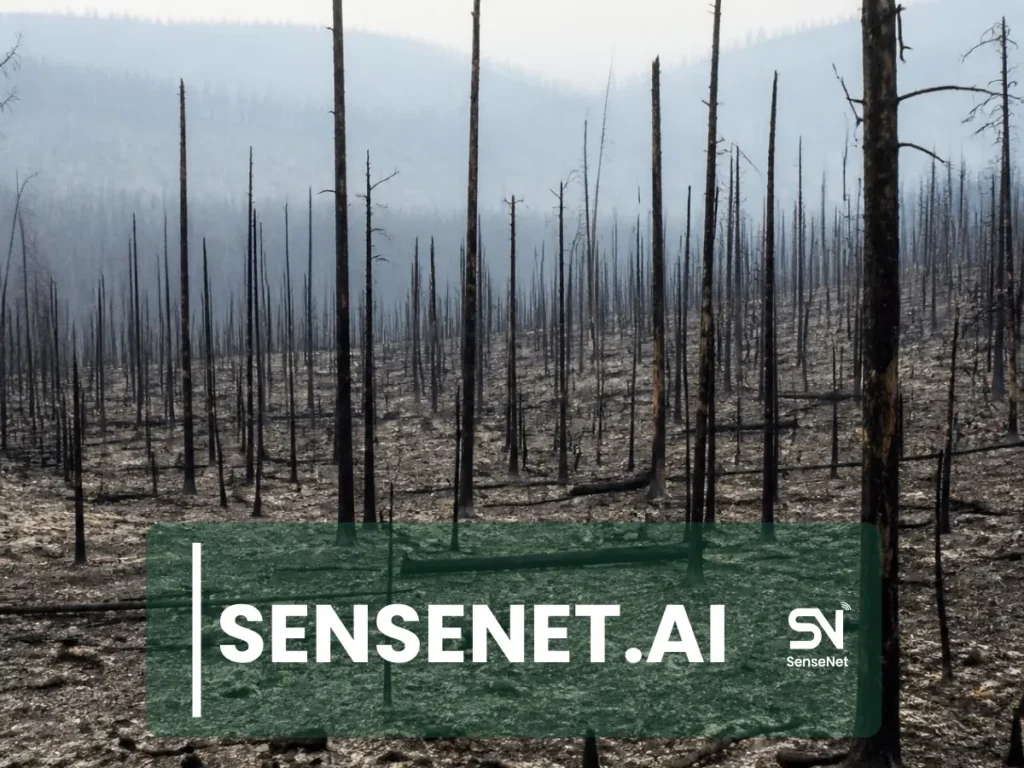
What Happens to a Forest After a Wildfire?
The damage caused by wildfire depends on many factors, including how intensely and how long the fire burned and how much vegetation was destroyed.
A low or moderate severity fire may kill some trees while leaving roots, seeds, and parts of the soil structure intact.
In these cases, the forest may be able to recover largely on its own.
A high severity wildfire can be very different.
It may:
- Destroy most of the vegetation
- Kill seed-producing trees
- Severely damage the soil
- Leave the ground exposed to erosion
- Increase surface runoff
- Raise the risk of flooding and landslides
- Reduce water quality
- Allow invasive species to spread
- Destroy important wildlife habitat
This is why even within the same wildfire perimeter, one part of a forest may need little or no intervention while another area may require urgent action to protect its soil and water resources.
Put simply:
Before deciding what to plant, we need to understand what the fire actually destroyed.
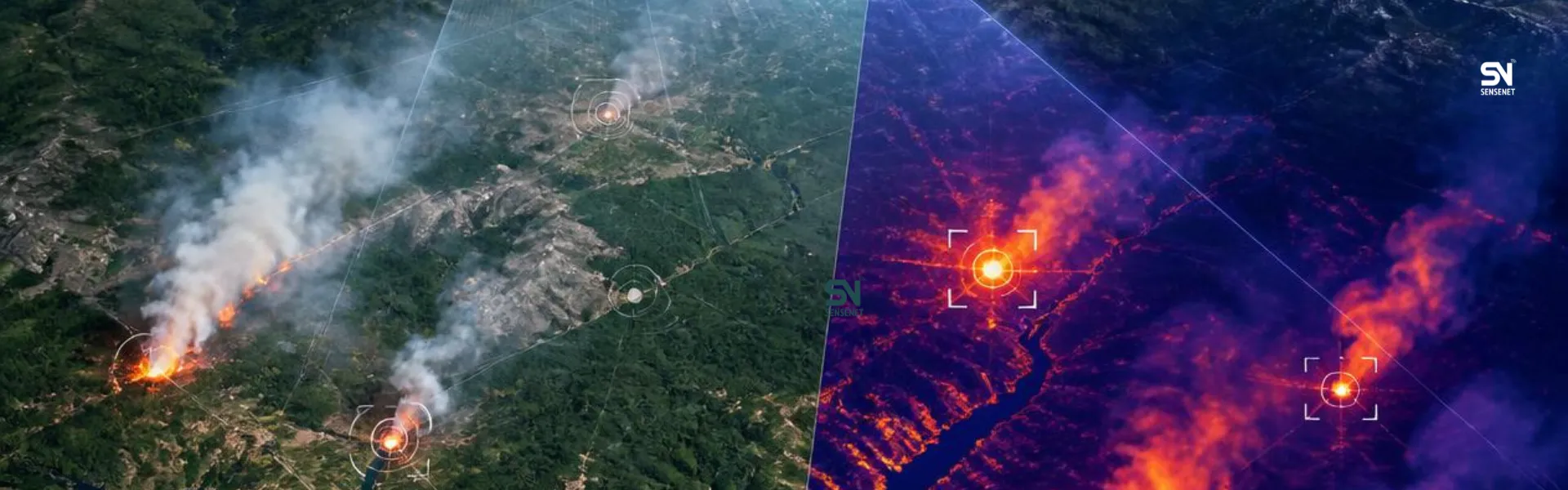
Today, land managers increasingly combine field assessments with satellite imagery, burn severity maps, and analytical tools to understand what happened across a burned landscape.
That assessment becomes the foundation for every decision that follows.
Step 1: Assess the Damage Before Doing Anything
One of the most common mistakes in forest restoration is rushing to plant trees.
After a major wildfire, there can be enormous pressure to make the landscape green again. But if restoration begins without understanding what is actually happening on the ground, resources may be wasted on actions that are unnecessary or even harmful to natural recovery.
A proper assessment should answer several basic questions.
How severe was the fire?
Was the entire area severely burned, or are there patches that survived?
Are any mature trees still alive?
Did the fire damage roots and underground vegetation?
What condition is the soil in?
Is the soil now vulnerable to erosion?
Does water run quickly across the surface?
Has the structure of the soil changed?
Can the forest regenerate naturally?
Can surviving trees still produce seeds?
Are there enough seeds in the soil?
Are native plants already beginning to return?
What is happening to water and streams?
Could heavy rain carry ash and sediment into rivers?
Have slopes become unstable?
What happened to wildlife?
Has the habitat been completely destroyed, or are parts of it still usable?
Are invasive species spreading?
This is especially important because invasive plants can sometimes establish faster than native vegetation and interfere with natural recovery.
The answers to these questions determine whether the priority should be planting trees, stabilizing the soil, controlling invasive species, or simply allowing the ecosystem more time to recover on its own.
Step 2: Protect the Soil First
After a severe wildfire, one of the biggest threats may not be the fire itself. It may be soil erosion after the flames are gone.
When vegetation disappears, rain can hit the exposed ground directly and carry soil, ash, and sediment into rivers and lower areas.
Depending on local conditions, restoration teams may use methods such as:
- Mulching
- Using logs and fallen trunks to slow runoff
- Erosion control barriers
- Covering exposed soil with appropriate materials
- Targeted seeding
- Small structures to slow water flow
- Stabilizing stream banks
- Repairing drainage systems
But there is an important point to keep in mind:
There is no single treatment that works for every burned forest.
One recent example comes from research following the Hermits Peak-Calf Canyon Fire in New Mexico, one of the largest wildfires in the state’s history.
Researchers compared different herbaceous seeding approaches with areas that were allowed to recover naturally. The goal was to understand which combinations of plant species could improve ground cover and help control erosion.
The broader lesson from this kind of research is simple:
Not every plant that grows quickly is a good restoration plant.
Species selection, plant mixtures, and compatibility with the local ecosystem all matter.
A treatment that appears useful for erosion control in the short term can sometimes create new problems in the long term if it introduces unsuitable species or allows them to compete with native vegetation.
Step 3: Do We Really Need to Plant Trees?
This may be the most important question in post-wildfire forest restoration.
And the answer is not always yes.
In some places, nature has a remarkable ability to rebuild itself.
If:
- Seed-producing trees have survived
- The soil remains relatively healthy
- The fire was not extremely severe
- There is enough water
- Nearby healthy forests can provide seeds
natural regeneration may work surprisingly well.
In these cases, large-scale tree planting may not be necessary.
Natural regeneration also has an important advantage. The species that return on their own are often well adapted to local conditions.
However, human intervention may be necessary when:
- All seed-producing trees have been destroyed
- The burned area is isolated from healthy forests
- Fire severity was extremely high
- Repeated fires have occurred
- Drought has reduced natural regeneration
- Invasive species are spreading rapidly
This is why modern forest restoration is increasingly moving toward targeted intervention.
In simple terms:
Where nature can recover on its own, give it the chance. Where it cannot, step in.
Step 4: Choose Trees for the Future, Not Just the Past
Once it becomes clear that planting is necessary, the next question is:
What should we plant?
In the past, the answer seemed fairly straightforward.
Plant the same species that were there before the fire.
But climate change has made that decision much more complicated.
A tree that has survived in a particular location for decades may struggle in the future if temperatures rise, drought becomes more severe, or wildfires become more frequent.
That is why modern forest restoration projects are paying more attention to seed sources and tree genetics.
For example, the U.S. Forest Service uses tools that help land managers consider future climate conditions when selecting seeds and planting material.
The question is no longer simply:
What tree used to grow here?
It is also:
What tree can survive here under the conditions this place may face 30 or 50 years from now?
That shift in thinking is one of the most important developments in post-wildfire forest restoration.
Step 5: Don’t Forget the Water
A forest is not just made of trees.
It is also a water system.
When vegetation disappears, the way water moves through the landscape can change dramatically.
That can affect:
- Rivers
- Springs
- Watersheds
- Reservoirs
- Drinking water
- Flood risk
- Aquatic ecosystems
Forest restoration therefore needs to look beyond the boundaries of the burned area.
Depending on the situation, restoration may involve:
- Repairing drainage systems
- Stabilizing stream banks
- Reducing sediment entering waterways
- Restoring vegetation along rivers
- Restoring wetlands and meadows
- Monitoring water quality
A restoration project that focuses only on planting trees while ignoring the water system may solve one problem while creating another downstream.
Step 6: Don’t Assume Restoration Ends When the Trees Are Planted
One of the biggest mistakes in restoration projects is measuring success too early.
A landscape may look green two years after a wildfire and still be far from ecological recovery.
Long-term monitoring should look at:
- Seedling survival
- Natural regeneration
- Species diversity
- Invasive species
- Soil condition
- Erosion
- Water quality
- Wildlife recovery
- Forest structure
- Fuel accumulation
- Resilience to future wildfires
A forest may appear green from a distance while being dominated by only one or two species.
That does not necessarily mean the ecosystem is healthy.
Forest restoration should therefore be treated as a long-term, adaptive process, not a one-time project.
A Real-World Example: Lessons From the Caldor Fire
The Caldor Fire burned more than 220,000 acres in California in 2021, affecting large areas of forest, wildlife habitat, water resources, roads, and recreation areas.
But restoration planning for the area did not focus solely on planting trees.
The plans also considered:
- Watershed health
- Forest resilience
- Wildlife habitat
- Reducing hazardous fuels
- Restoring forested areas
- Restoring streams and meadows
- Reducing the risk of future wildfires
Mechanical fuel reduction and prescribed fire were also included as part of the longer-term management strategy.
The experience offers an important lesson:
Forest restoration after wildfire and future wildfire prevention are not always separate issues.
If a burned forest is restored to the same dense and vulnerable structure it had before the fire, the landscape may face the same problem again years or decades later.
Should All Burned Trees Be Removed?
One of the most debated questions after a wildfire is what to do with dead trees.
At first glance, the answer seems obvious:
The tree is dead, so remove it.
Ecologically, however, things are more complicated.
Standing dead trees, known as snags, can be important habitat for:
- Woodpeckers
- Cavity-nesting birds
- Insects
- Fungi
- Small mammals
- Other wildlife
Fallen logs can also contribute to nutrient cycling and provide habitat.
That does not mean every burned tree should be left standing.
A tree located next to a road, home, power line, or other infrastructure may pose a serious safety risk and need to be removed.
But removing every burned tree across a large landscape can damage soil, eliminate habitat, and interfere with natural regeneration.
For that reason, a better approach is often selective removal based on careful assessment, rather than clearing everything.
A New and Different Example From Spain: When Animals Help Restore the Landscape
One interesting and recent example comes from Galicia in northwestern Spain.
Following widespread wildfires in 2025, some local communities have been using native livestock such as goats, sheep, and Cachena cattle to manage excess vegetation.
The idea is fairly simple.
By grazing on highly flammable vegetation, animals can help reduce the amount of fuel across the landscape.
Some projects are even using GPS collars to track the animals’ movements, while combining grazing with other vegetation management methods.
This is not forest restoration in the traditional sense.
But it offers an important lesson:
Restoring a fire-resilient landscape can sometimes mean restoring ecological processes, not simply planting trees.
Depending on the ecosystem, those processes might include:
- Grazing
- Prescribed fire
- Natural regeneration
- Selective thinning
- Reintroducing native species
- Restoring wetlands
- Reconnecting fragmented habitats
The right approach depends entirely on the ecosystem.
The Biggest Mistake in Forest Restoration After Wildfire
The biggest mistake is assuming that every burned forest should be restored in exactly the same way.
A burned forest is not empty land.
It is a damaged ecosystem.
Before taking action, three questions should be answered.
What survived?
Look at surviving trees, roots, seeds, soil, and wildlife habitat.
What is at risk now?
Identify erosion, invasive species, landslides, water pollution, and damaged infrastructure.
What will this landscape face in the future?
Consider drought, climate change, repeated wildfires, and changes in species composition.
Only after answering these questions should we decide:
What should be planted?
What should be removed?
And where is it better not to intervene at all?
How Long Does It Take for a Forest to Recover After a Wildfire?
There is no single timeline.
A forest affected by a low-severity fire may begin showing signs of significant recovery within months or a few years.
A severely burned forest may take decades to recover.
Different ecological functions return at different speeds.
For example:
- Ground vegetation may return within months.
- Shrubs and grasses may establish within a few years.
- Young trees may need decades to begin forming a developing forest structure.
- A mature forest may take many decades to return.
- Developing characteristics similar to an old-growth forest may take centuries.
This is why a restoration project should not be judged by a single photograph taken two years after a fire.
A green landscape does not necessarily mean a forest has recovered.
A Better Model for Forest Restoration After Wildfire
The old model looked something like this:
Wildfire → Clear the land → Plant trees → Project finished
A more modern and science-based approach looks more like this:
Wildfire → Assess the damage → Stabilize soil and protect water → Protect natural regeneration → Intervene where necessary → Restore the ecosystem → Monitor over time → Adapt the strategy
This model accepts an important reality:
Forests are living, dynamic systems.
Sometimes the most effective action is planting trees.
Sometimes it is erosion control.
Sometimes it is invasive species management.
Sometimes it is prescribed fire several years later.
And sometimes the most scientifically responsible decision is to step back and let nature recover.
The goal should not be to make a burned landscape green again as quickly as possible.
The goal is to help rebuild a healthy, diverse, resilient ecosystem that can also cope with the conditions and wildfires it may face in the future.
Frequently Asked Questions About Forest Restoration After Wildfire
Should every burned forest be replanted?
No.
Some forests have a strong capacity for natural regeneration and may not need large-scale planting.
If seed-producing trees have survived, the soil remains healthy, and climatic conditions are suitable, nature may be able to handle much of the recovery process on its own.
The first step should always be determining whether planting is actually necessary.
How soon after a wildfire should trees be planted?
There is no universal timeline.
In some places, erosion control measures need to be implemented quickly, especially when heavy rain is expected.
Tree planting, however, should generally follow an assessment of soil conditions, natural regeneration potential, water availability, and species selection.
Planting quickly does not always mean planting well.
Can a forest recover naturally after a wildfire?
Yes.
Many ecosystems have evolved with fire and have natural mechanisms for recovery.
Some plants regenerate from surviving roots, while others return from seeds stored in the soil or dispersed from nearby areas.
However, severe fires, drought, climate change, and repeated wildfires can weaken this natural recovery capacity.
Is natural regeneration better than planting trees?
Not necessarily.
Natural regeneration can preserve local genetic diversity and bring back species that are already adapted to local conditions.
But in places where seed sources have been destroyed or fire severity was extremely high, targeted planting may be necessary.
In many cases, the best approach combines natural regeneration with selective planting.
What trees should be planted after a wildfire?
It depends entirely on the ecosystem.
Species selection should consider:
- Local conditions
- Soil type
- Elevation
- Water availability
- Current climate
- Future climate projections
- Natural fire regimes
- Biodiversity
- Genetic suitability
The goal should not simply be to bring back the exact species that existed before the fire.
We also need to ask:
Which species are likely to survive the conditions of the future?
Should all burned trees be cut down?
No.
Dead trees can provide important habitat for birds, insects, and other wildlife.
However, trees that pose risks to people or infrastructure may need to be removed.
In many cases, selective removal based on careful assessment is better than clearing the entire landscape.
Does removing all burned wood help forests recover?
Not necessarily.
Large-scale removal of burned wood can damage soil and eliminate wildlife habitat.
In some places, removing certain trees may be necessary. In others, leaving dead wood in place can benefit the ecosystem.
The decision should be based on the conditions of each specific site.
Should a burned forest be seeded immediately?
Not always.
Seeding can help control erosion in some areas, but species selection is critical.
If unsuitable or invasive species are introduced, they may compete with native vegetation and create new ecological problems.
Seeding should therefore be based on local ecological conditions rather than simply on the goal of making the land green as quickly as possible.
What is the biggest threat to a forest after a wildfire?
It depends on the location.
Common threats include:
- Soil erosion
- Flash flooding
- Landslides
- Sediment entering rivers
- Invasive species
- Loss of natural regeneration
- Damaged infrastructure
In some areas, protecting soil and water may be far more urgent than planting trees.
Can a wildfire permanently destroy a forest?
It can permanently change an ecosystem.
For example, repeated severe fires combined with drought may push a forested landscape toward shrubland or grassland.
In such cases, returning the area to exactly the same forest that existed before the fire may no longer be realistic.
This raises an important question:
Should restoration try to recreate the past, or build an ecosystem that can survive the future?
This is becoming one of the most important questions in post-wildfire forest management.
How does climate change affect forest restoration?
Climate change can make recovery more difficult.
Higher temperatures, drought, water shortages, and more frequent or severe wildfires can make it harder for some species to survive.
This means species and seed sources need to be selected with future conditions in mind, rather than relying only on the historical conditions of the site.
Can planting trees increase future wildfire risk?
Yes, if it is done poorly.
Dense, uniform, single-species plantations can increase the amount of flammable fuel over time.
Successful restoration should also consider:
- Tree spacing
- Species diversity
- Forest structure
- Surface fuels
- Vegetation management
- Natural fire regimes
The goal should not be to plant the largest possible number of trees.
The goal should be to build a healthy and resilient forest.
What happens to wildlife after a wildfire?
Some species may die or leave the area, but fire does not affect every species in the same way.
Some animals depend on the open habitats created after fire.
Dead trees can also provide important habitat for cavity-nesting birds and many insects.
A burned landscape is therefore not necessarily a worthless one.
It may become a new stage in the ecological cycle.
Can people make a burned forest worse through restoration?
Yes.
Poorly planned restoration can:
- Damage the soil
- Destroy natural regeneration
- Introduce invasive species
- Remove wildlife habitat
- Plant unsuitable tree species
- Increase future wildfire risk
The larger the project, the more important scientific assessment and careful planning become.
How do we know whether forest restoration has succeeded?
The number of surviving trees is not enough.
A successful restoration project should also look at:
- Natural regeneration
- Species diversity
- Soil stability
- Erosion
- Water quality
- Wildlife recovery
- Invasive species control
- Forest structure
- Flammable fuel levels
- Resilience to future wildfires
A forest with thousands of surviving planted trees may still be ecologically weak.
A naturally regenerating forest with greater diversity may perform much better.
Can technology help restore burned forests?
Yes.
Today, restoration projects increasingly use:
- Satellite imagery
- Remote sensing
- Burn severity maps
- GIS
- Drones
- Climate modelling
- Artificial intelligence
- Seed genetics
- Long-term monitoring systems
These tools can help land managers make better decisions.
But technology cannot replace field experience.
A satellite image may show that vegetation has returned, but field assessments are needed to understand which species are growing, whether invasive plants are spreading, and whether the ecosystem is actually moving in a healthy direction.