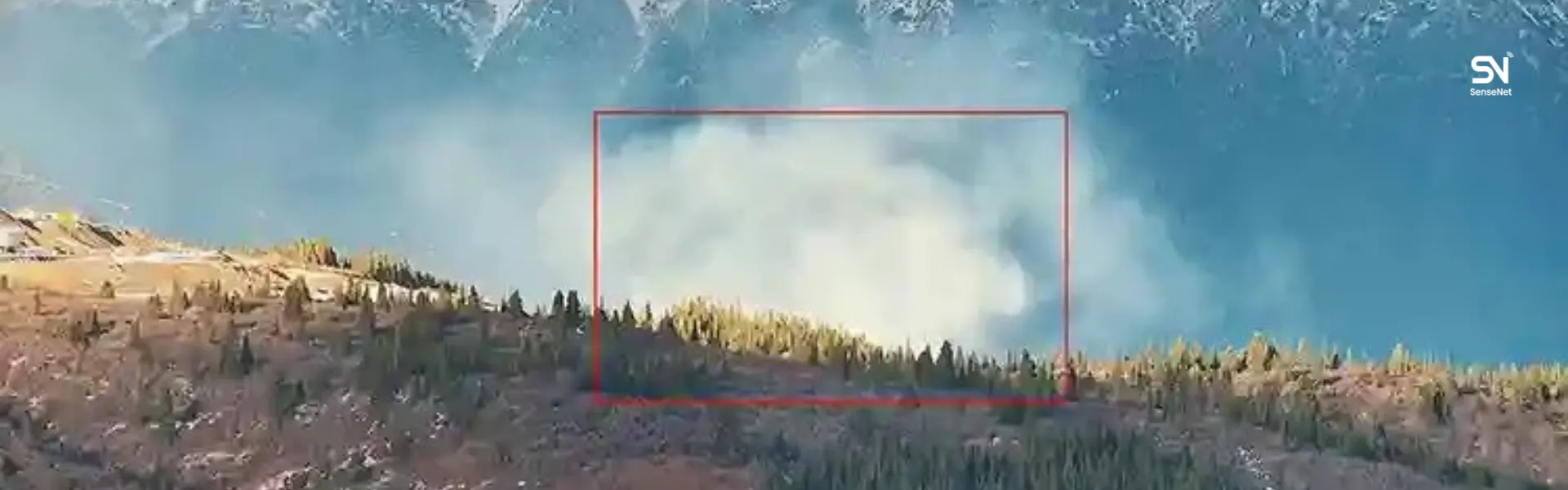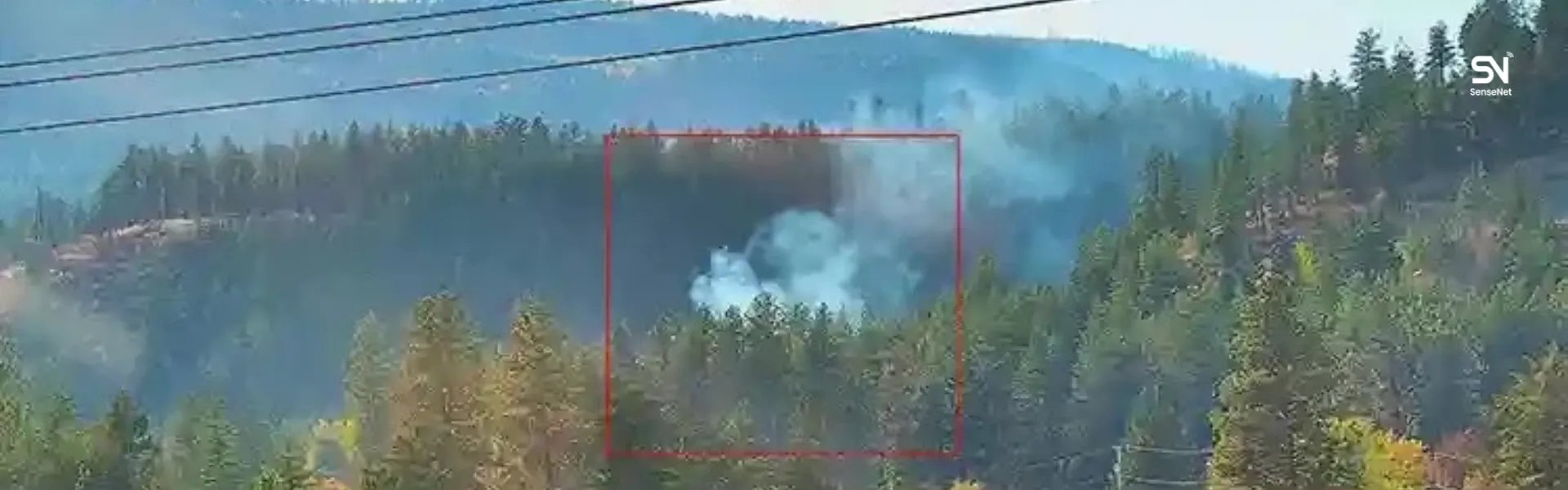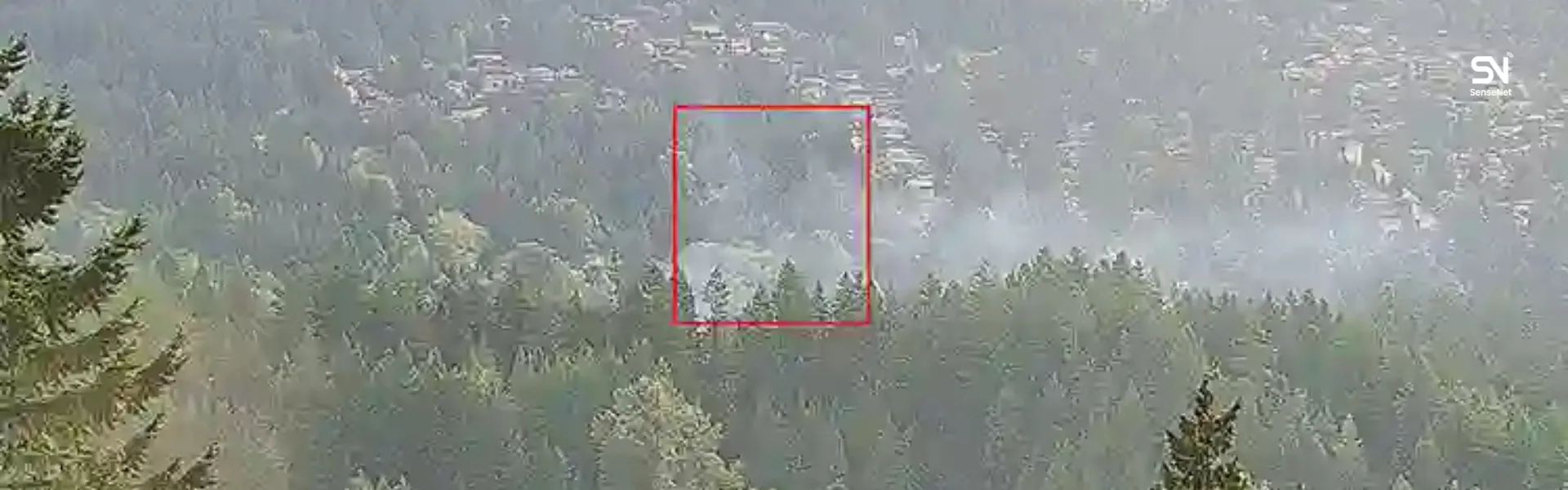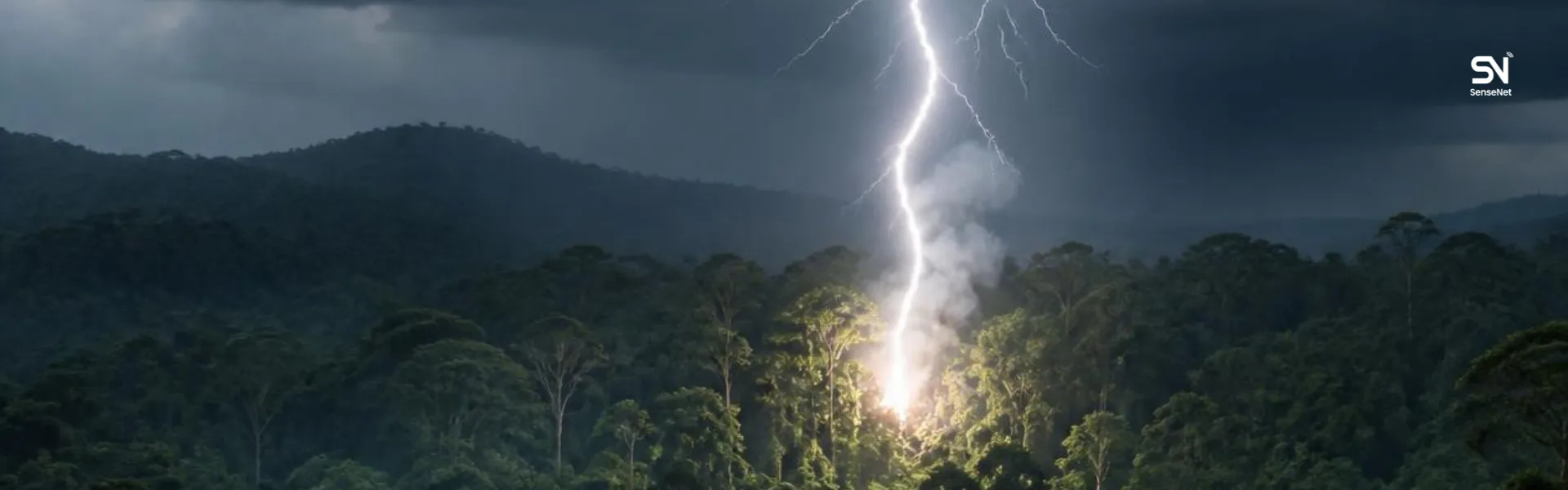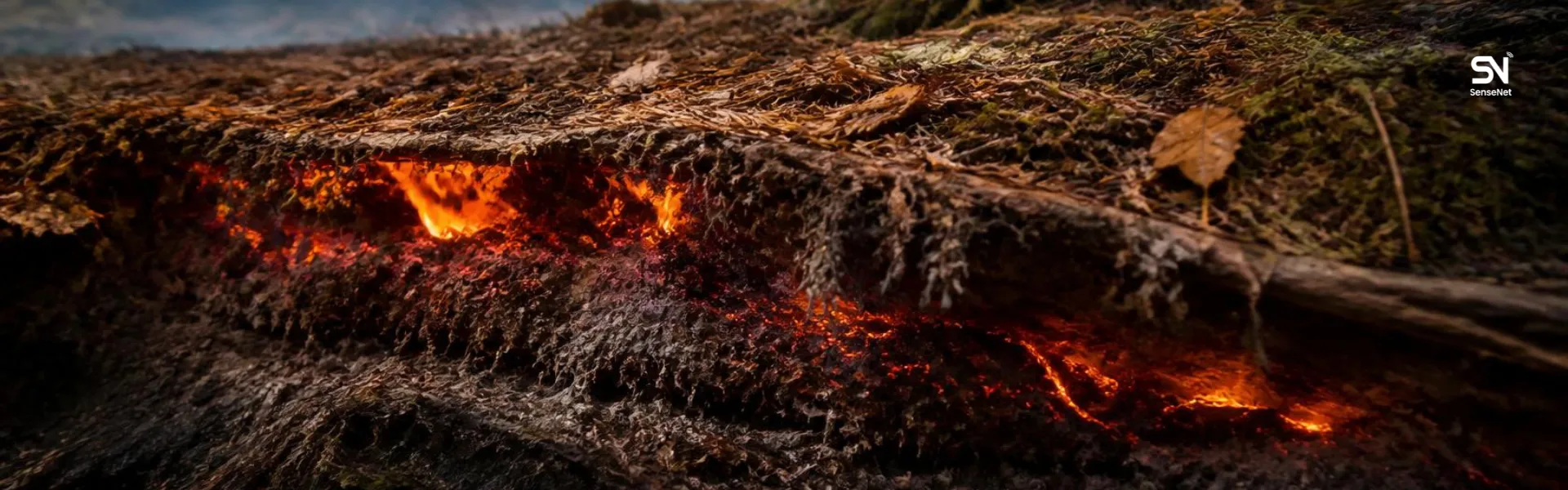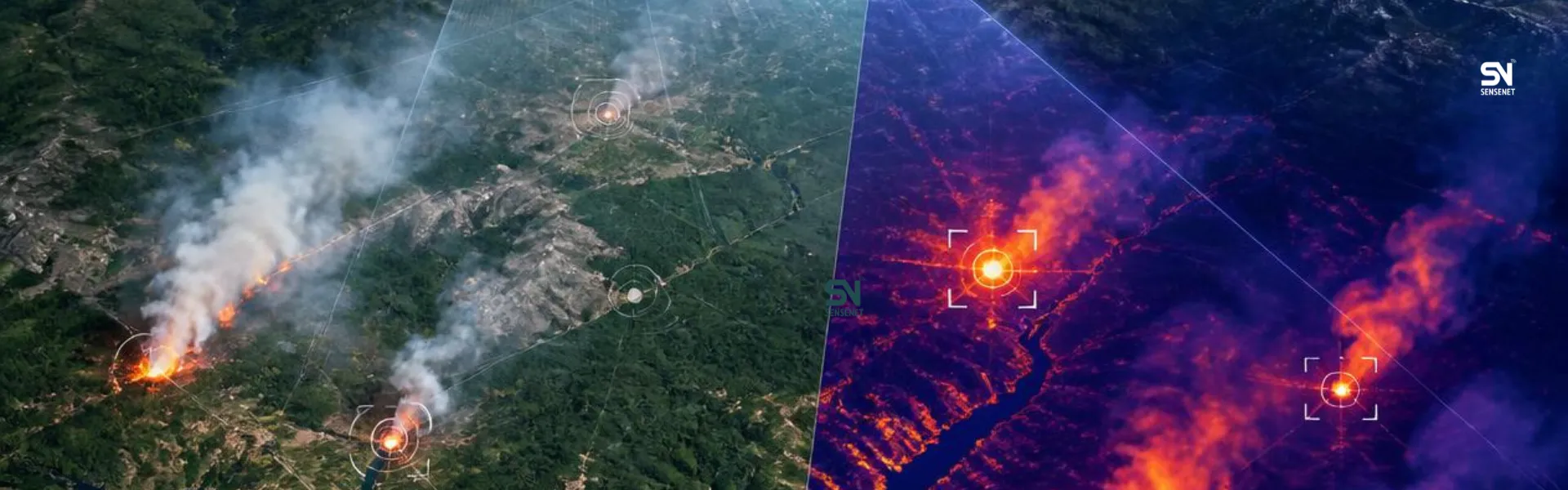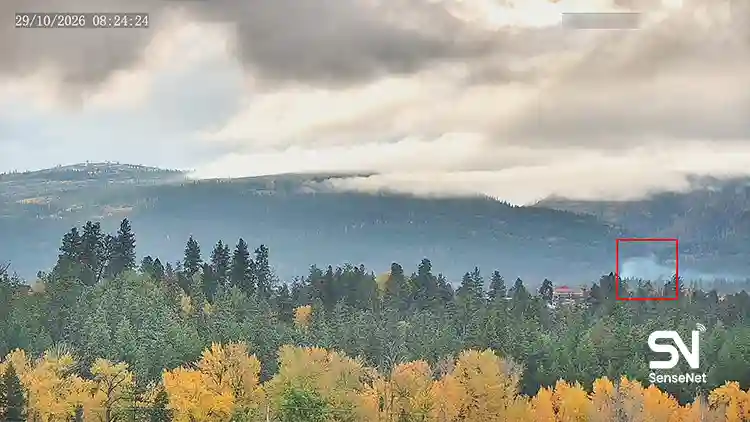
The issue is no longer limited to early wildfire detection. Early detection, while vital and capable of saving hundreds of trees, thousands of animals, and human lives, is no longer enough. At some point, the next step must be taken: moving toward predicting wildfires before they happen.
In this context, the emergence of a relatively new phenomenon over the past years, artificial intelligence, has provided a powerful tool for such predictions. If AI enters the field and enables preventive intervention, we can begin to hope for a future with less smoke and fire.
In this article on the SenseNet website, we aim to discuss this topic in depth and explore the role of artificial intelligence in predicting wildfires. Keep scrolling to continue reading.
The Difference Between Wildfire Prediction and Early Detection
Many existing intelligent systems, including camera-based and sensor-based solutions, focus on the rapid detection of smoke or flames. These systems become active once a wildfire has already begun. So while they do detect fire at very early stages, they lack the ability to predict conditions in advance.
When we talk about prediction, we mean answering questions such as:
Where will a wildfire occur? When will it happen? And with what probability?
The table below illustrates the difference between early detection and wildfire prediction:
| Early Detection | Wildfire Prediction |
| Reactive | Proactive |
| Based on smoke/heat observation | Based on environmental data analysis |
| Reduces response time | Reduces likelihood of occurrence |
| After fire ignition | Before fire formation |
Data: The Backbone of Intelligent Prediction
Artificial intelligence has no meaning without data. Accurate wildfire prediction requires combining multiple data sources:
1. Climatic and Meteorological Data
- Temperature
- Relative humidity
- Wind speed and direction
- Recent precipitation and drought patterns
These data are collected from weather stations, climate models, and short- and long-term forecasts. The more accurate and comprehensive the data, the more precise and reliable AI predictions will be.
2. Vegetation (Fuel) Data
- Type of vegetation
- Level of vegetation dryness
- Density of combustible fuel
Satellite data and multispectral imagery play a key role in analyzing this layer.
3. Topographic Data
- Slope
- Aspect (slope orientation)
- Elevation
Topography has a direct impact on the speed and direction of wildfire spread. By examining maps of recent global wildfires, it becomes clear that many share similar topographic characteristics, with specific factors contributing to fire intensification.
4. Human and Historical Data
- Historical wildfire records in the area
- Proximity to roads and residential zones
- Human movement and activity patterns
A large portion of wildfires have human origins. Ignoring this data significantly reduces model accuracy, which is why collecting it from relevant sources is essential.
Artificial Intelligence Algorithms in Wildfire Prediction
Machine Learning
Models such as:
- Random Forest
- Gradient Boosting
- XGBoost
are highly effective for estimating the probability of wildfire occurrence within a specific time window, especially when large volumes of structured data are available.
Deep Learning
- Deep Neural Networks (DNN)
- Temporal networks such as LSTM for trend analysis
- Convolutional Neural Networks (CNN) for extracting patterns from satellite imagery
Combining numerical data with visual data is one of the most powerful approaches in wildfire prediction. Images captured by cameras, drones, and satellites play a major role in deep learning models.
Hybrid Models
The most advanced systems use a combination of physical climate models and AI models, merging scientific knowledge about fire behavior with the learning power of machine learning.
Key Challenges in AI-Based Wildfire Prediction
- Data Imbalance
Wildfires are relatively rare events. Most days are normal days with no fires, which introduces bias into predictive models. - Climate Variability
Past patterns are not always representative of the future. Every climate system is subject to change. - Incomplete or Noisy Data
Especially common in remote or underdeveloped regions. - Model Explainability
Decision-makers need to understand why a region is classified as high-risk, not just that “the model says so.”
The Role of Intelligent Platforms Like SenseNet
Platforms such as SenseNet can act as the bridge between prediction and action by:
- Integrating environmental data, sensors, and imagery
- Translating predictive model outputs into understandable risk maps
- Sending preventive alerts to crisis managers
- Supporting optimal resource allocation (personnel, equipment, increased monitoring)
Prediction only becomes valuable when it leads to practical decisions.
The Future of Wildfire Prediction: From Alerts to Intelligent Management
In the near future, AI systems will:
- Identify high-risk areas weeks in advance
- Simulate multiple wildfire spread scenarios
- Update dynamically as weather conditions change
The ultimate goal is no longer just seeing fire, but preventing its birth.
Conclusion
AI-based wildfire prediction represents a shift from crisis management to risk management.
By combining environmental data, advanced algorithms, and intelligent platforms, it becomes possible not only to reduce damage, but also to protect human lives and ecosystems.
If used correctly, artificial intelligence can become our first line of defense against one of the most destructive natural disasters of this century.