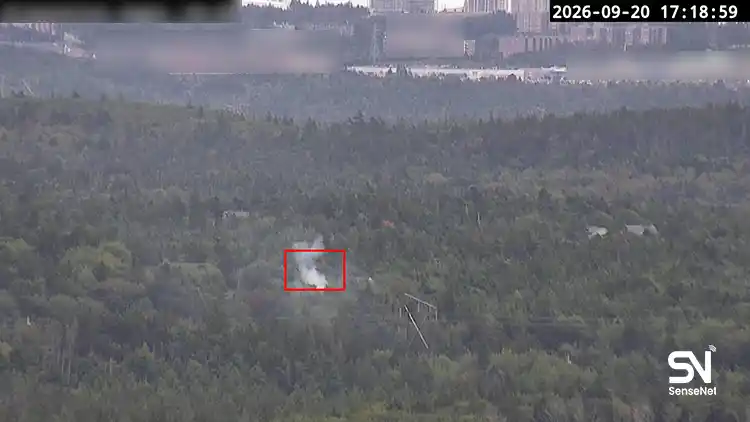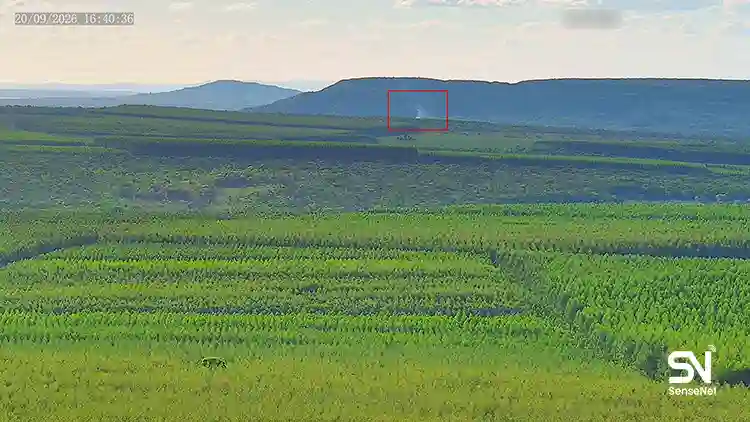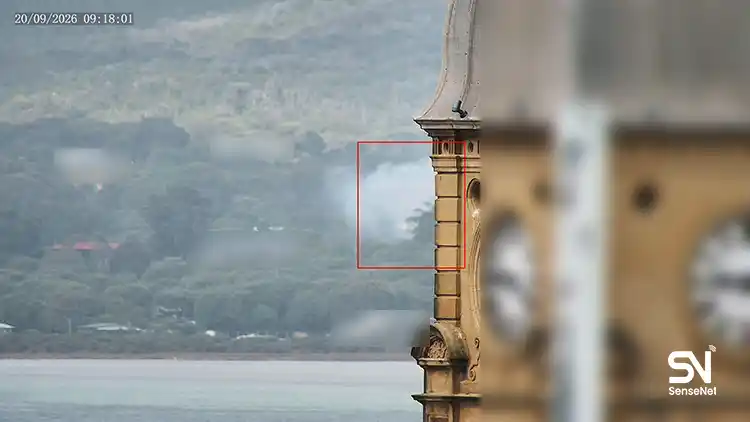
let’s talk about Railway wildfire detection sensors! Imagine a train carrying 500 passengers and cargo worth millions of dollars racing through the forests of northwestern Canada. Suddenly, the locomotive engineer sees thick smoke on the horizon. But it is already too late. The rails ahead have warped due to the intense heat of a wildfire, and even emergency braking cannot prevent disaster.
This frightening scenario repeats itself in different parts of the world every year. In the summer of 2025, uncontrollable wildfires in Manitoba, Canada threatened 16 railway bridges along a 250‑kilometer section of the Keewatin rail line. Railway crews had to rush into the fire zone with water tankers to prevent the region’s only vital transportation artery from being destroyed. In the same year, wildfires in British Columbia and Alberta burned more than 1.3 million hectares of forest, forcing rail transport giants such as Canadian National and Canadian Pacific to suspend services on some routes.
The question is: can we warn operators before the train reaches the fire? Is there a way to detect wildfires in their earliest moments, kilometers away from the tracks?
The answer is yes. Early wildfire detection technology using smart sensors has been developed precisely to solve this problem. In this article, we explore how advanced sensor networks can revolutionize railway safety and prevent disasters that each year claim human lives and cause billions of dollars in damage.
Why Railways Are Vulnerable to Wildfires
Railways are inherently exposed to wildfire threats. But why? Three main factors intensify this vulnerability.
1. Vast and Remote Routes
Railway lines often pass through remote regions, dense forests, and mountainous areas where access for firefighting teams is extremely difficult. In Manitoba, the Sheridan wildfire burned more than 300,000 hectares, and access to railway bridges was possible only by helicopter.
2. Trains Themselves Can Become Sources of Ignition
Sparks caused by heavy braking, friction between wheels and rails on sharp curves, and even mechanical failures in diesel engines can create small sparks. When these sparks come into contact with dry vegetation near the tracks, they can quickly grow into large wildfires.
3. Catastrophic Economic Consequences
Railway shutdowns mean far more than the cancellation of a few trips. In Canada, wildfire-related rail disruptions in the summer of 2025 left the Port of Vancouver facing massive backlogs of idle containers and disrupted supply chains. Every hour of railway downtime can cost the economy millions of dollars.
Traditional Fire Detection Methods and Their Limitations
Before discussing smart solutions, it is important to review existing methods and their weaknesses.
Human patrols inspect rail corridors on foot or by vehicle, but they provide limited coverage, detect fires slowly, and expose personnel to danger in remote areas.
Fire lookout towers rely on observers scanning the landscape from elevated positions, yet they suffer from blind spots and depend heavily on direct visibility.
Thermal satellites can detect hotspots from space, but detection may take hours or even days, and smaller fires often go unnoticed.
Public reporting relies on citizens noticing and reporting fires, which introduces delays, inaccuracies, and dependence on human presence.
The common limitation of all these approaches is that none can reliably detect fires within the first few minutes after ignition. Yet those early minutes are critical—the difference between a manageable incident and a national-scale disaster.
Early Fire Detection Sensors Along Railways
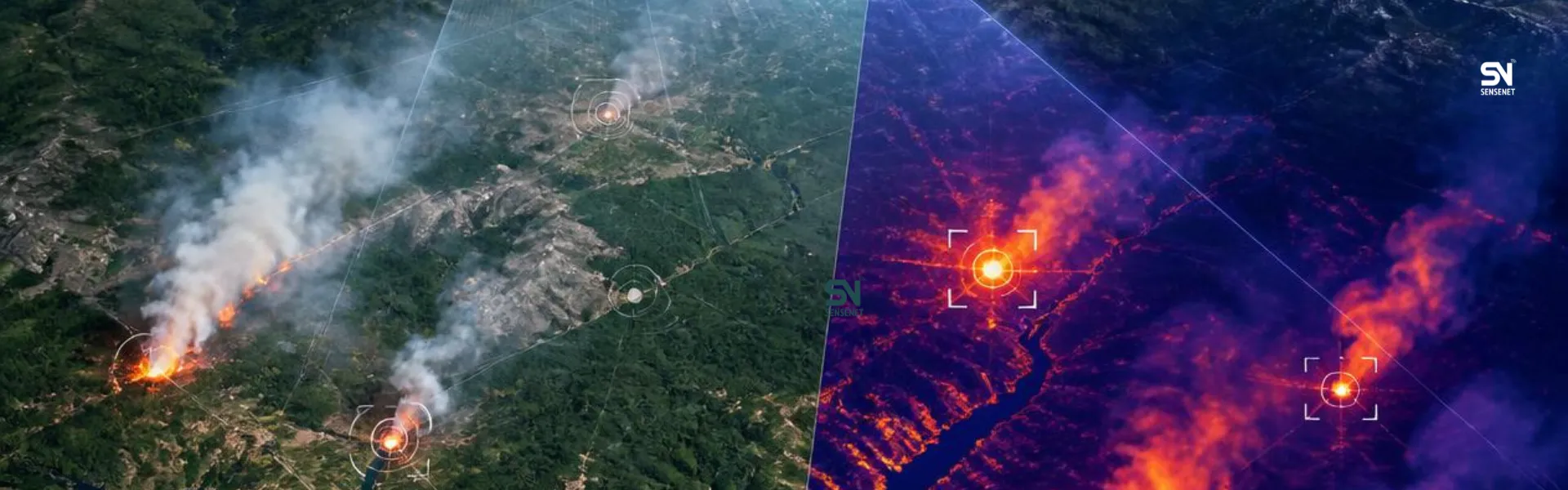
New technologies offer a completely different approach: deploying a network of smart sensors along railway corridors that automatically monitor early signs of fire 24 hours a day.
What Do the Sensors Measure?
Modern sensors simultaneously monitor several early indicators of fire:
- Ambient temperature – sudden increases may indicate a nearby fire
- Combustible gases (CH₄, VOCs) – released during the early stages of vegetation burning
- Toxic gases (CO, CO₂, NOx) – byproducts of combustion detectable before visible flames
- Particulate matter (PM1, PM2.5, PM10) – smoke particles that appear in early fire stages
Operation Without Infrastructure
One of the biggest challenges along remote railway corridors is the absence of electricity and internet connectivity. Smart sensor systems address this problem through two key features:
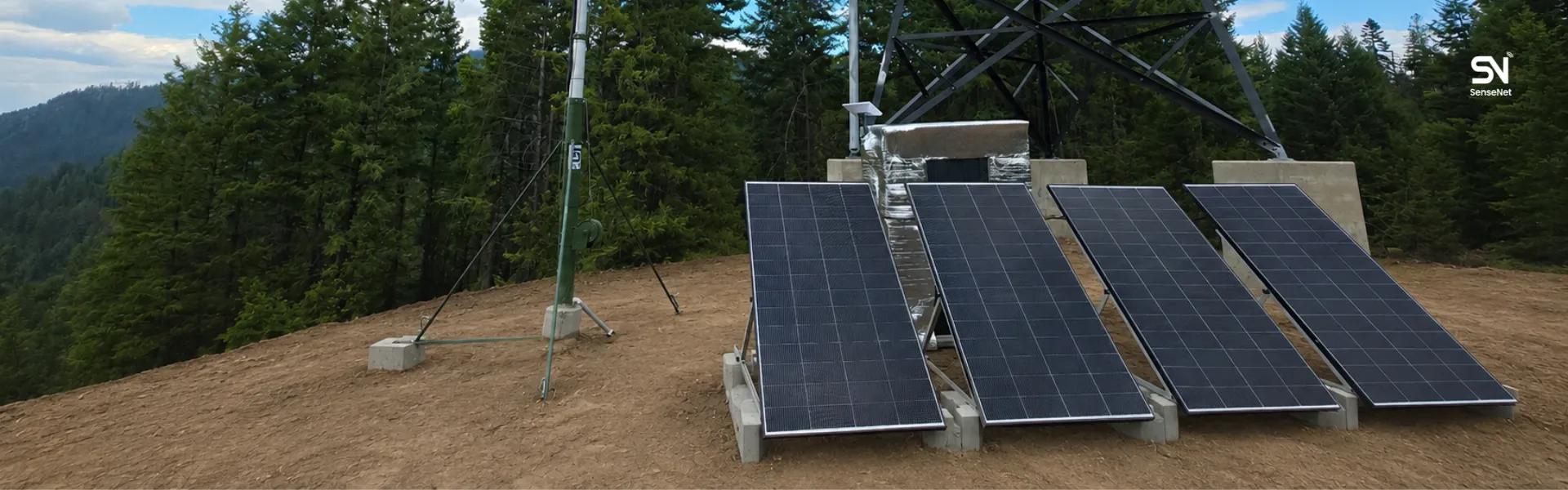
- Long‑life batteries (5–10 years) eliminating the need for external power sources
- Mesh networking, where sensors communicate with each other and relay data across the network until it reaches a central station, without requiring cellular or internet coverage
AI for Accurate Detection
Raw sensor data alone is not sufficient. Intelligent systems use machine learning and AI algorithms to analyze environmental changes and determine whether they indicate an actual wildfire or simply normal environmental fluctuations.
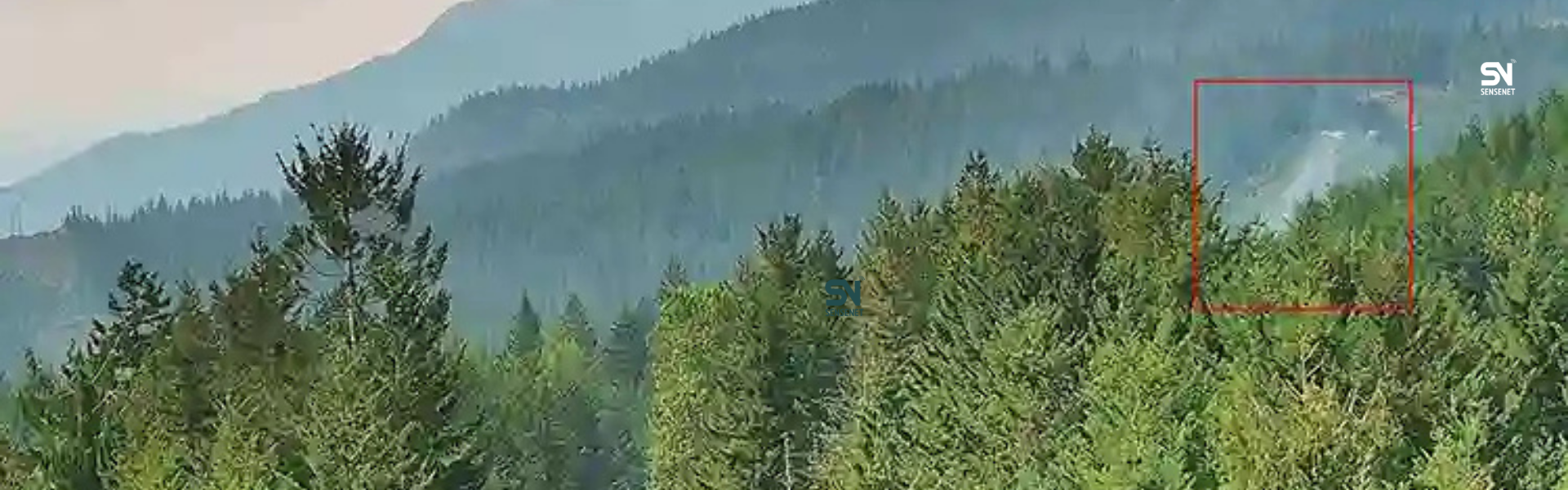
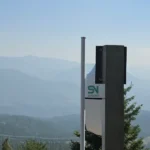
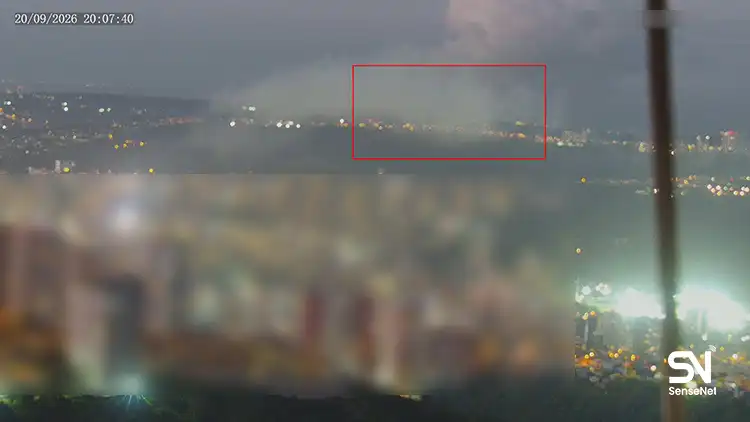
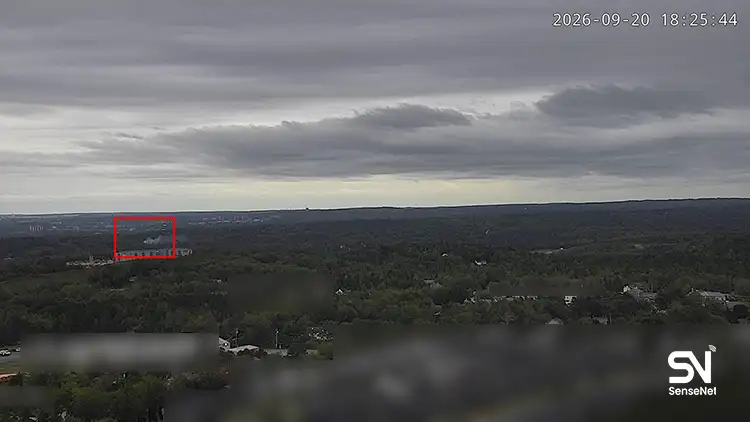
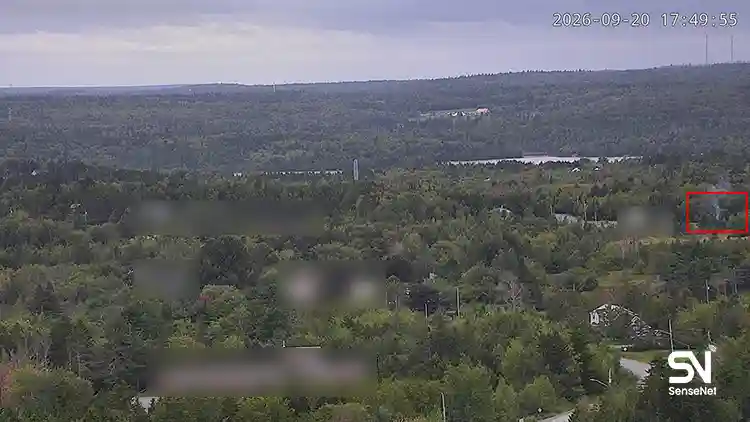
In field tests conducted by SenseNet in several locations, the technology successfully generated alerts in less than one minute after fire ignition. Such detection speed is unprecedented and could fundamentally change how wildfire threats are managed.
Practical Deployment of Early Fire Detection Sensors
Where Should Sensors Be Installed?
Based on operational experience, the following locations are high priorities:
- Sharp curves where friction and sparks are more likely
- Bridges and tunnels that represent critical infrastructure points
- Areas with dense vegetation close to the tracks
- Remote sections without cellular coverage
Operational Challenges and Solutions
A lack of electrical power can be addressed through ultra‑low‑power sensors equipped with batteries lasting five to ten years.
Limited internet connectivity can be overcome using mesh networking, allowing sensors to relay data to one another.
Harsh environmental conditions are handled by ruggedized sensor designs resistant to extreme temperatures, humidity, and dust.
Long installation distances can be managed by optimizing sensor placement through risk‑based analysis to reduce the number of units required.
Why Is the Investment Worth It?
Field studies and computer simulations show that deploying early wildfire detection systems along railway corridors can:
- Reduce detection time from hours to less than five minutes
- Prevent up to 80% of wildfire-related damage to railway infrastructure
- Significantly lower the risk of long-term railway shutdowns
- Improve safety for passengers and railway personnel
In simple terms, the cost of implementing these systems is negligible compared with the financial and human costs of a major disaster.
Conclusion
Wildfires pose a serious threat to the safety and reliability of railway networks worldwide. Traditional fire detection methods, including human patrols, lookout towers, and satellite monitoring, are limited by inherent delays and blind spots.
Smart early wildfire detection sensors offer a powerful solution with several key advantages:
- Continuous 24/7 monitoring of multiple fire indicators (temperature, gases, smoke)
- Operation without external power or internet connectivity through long-life batteries and mesh networks
- AI-powered analysis enabling detection within minutes
- Significant reduction in infrastructure damage and railway disruptions
Leading companies in this field, such as SenseNet, have already taken major steps forward. Successful field tests and plans for large-scale deployment across Canadian railway networks indicate that this technology has moved beyond the experimental stage and is ready for industrial adoption.
The real question is no longer whether we should use this technology.
It is whether we can afford not to.