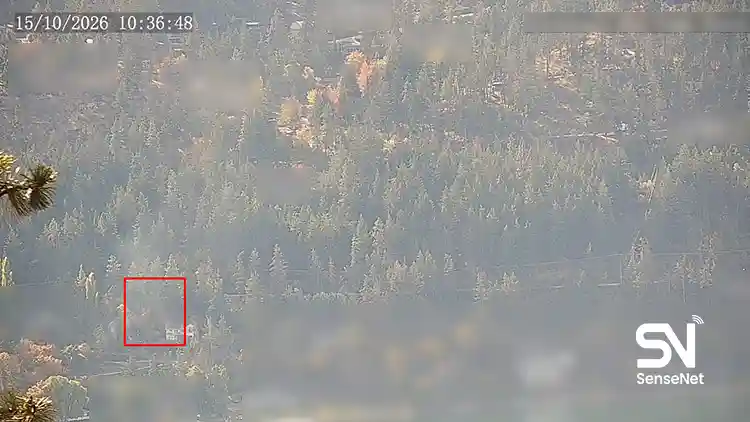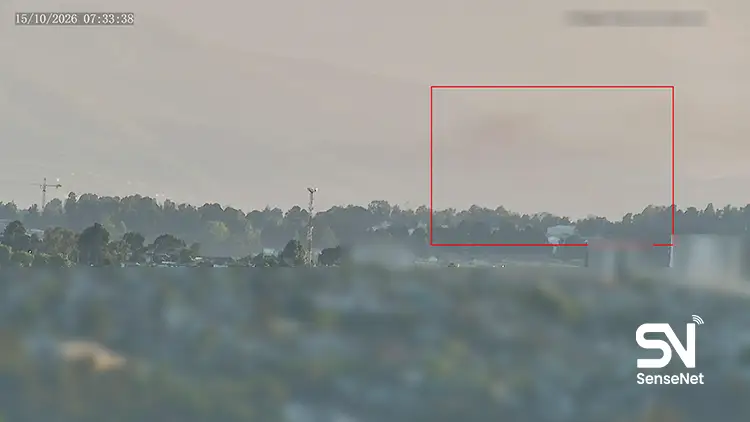
Wildfire Detection in Remote Areas
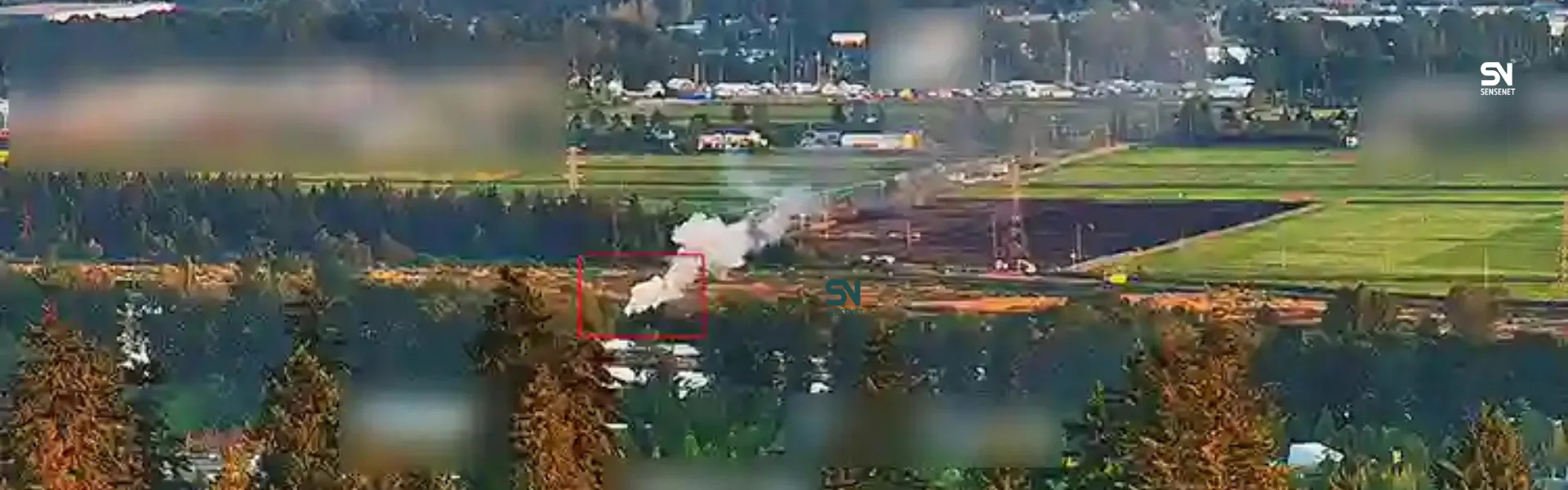
If a fire starts near a city or a major road, sooner or later, someone will see it and report it, giving firefighters a good opportunity to put it out. But imagine a fire starting deep inside a forest or in a remote area where no one passes by, there are no homes nearby, and there is not even access to electricity or the internet.
In that case, it is clear that the fire has plenty of time to grow. Before firefighters become aware of it, it may reach the outskirts of cities and populated areas, become out of control, and burn forests and grasslands along the way.
This is where wildfire detection in remote areas becomes a serious issue.
Research into recent wildfires across different Canadian provinces has shown that many large fires start in areas that are difficult to access. In British Columbia, a significant share of wildfires also starts with lightning, and in recent years, fires in remote and sparsely populated areas have become a serious challenge for traditional detection systems. BC Wildfire Service itself says that fires in remote areas may not be immediately seen by people, which is why methods such as aerial patrols, infrared technology, computer software, and lookout towers are used.
But the problem is not just about “seeing the fire.”
How do you detect a fire in a place where there is no electricity or internet and no one is around? In this article from SenseNet, we look at wildfire detection solutions using solar-powered cameras. Keep scrolling.
Why Is Wildfire Detection in Remote Areas More Difficult?
Traditional wildfire detection systems depend heavily on human presence or communication infrastructure.
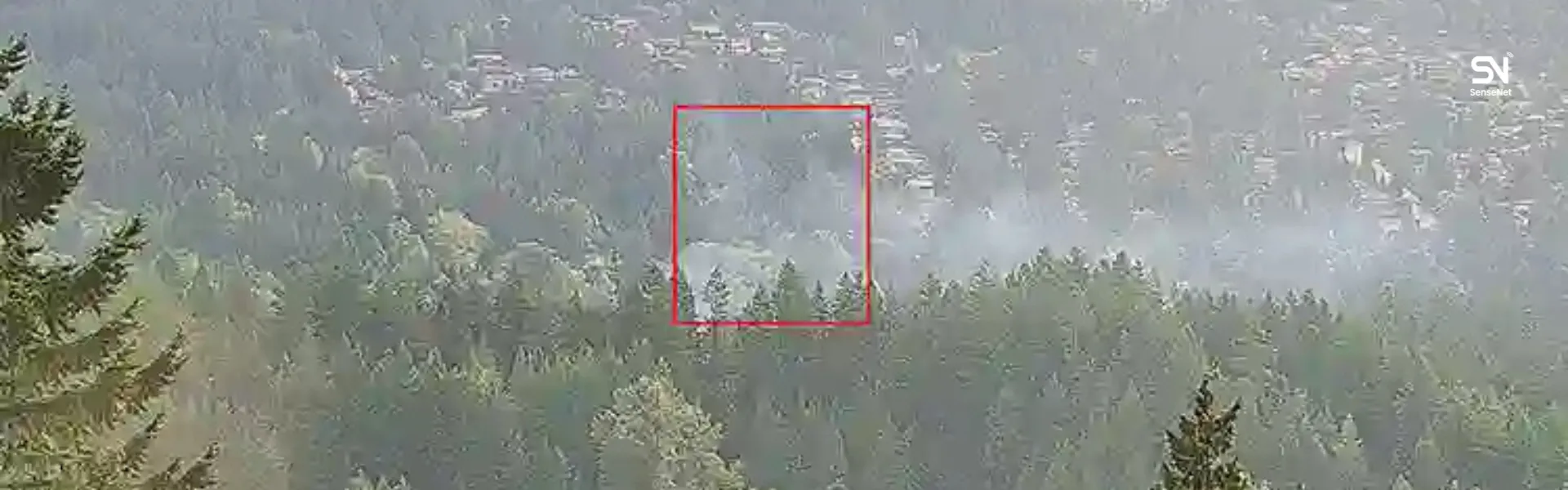
In urban areas, a small amount of smoke may be spotted by a resident, or a driver may report a fire along a road. But in a remote forest, hours may pass without anyone coming near the point where the fire started.
This delay matters. A small fire may still be controllable during its first few minutes, but if it is detected several hours later, the situation can be completely different.
This issue is particularly important in British Columbia. In recent years, parts of the province have faced extensive wildfires along with hot and dry conditions, and in 2026, major fires have spread across different parts of the province, including remote areas.
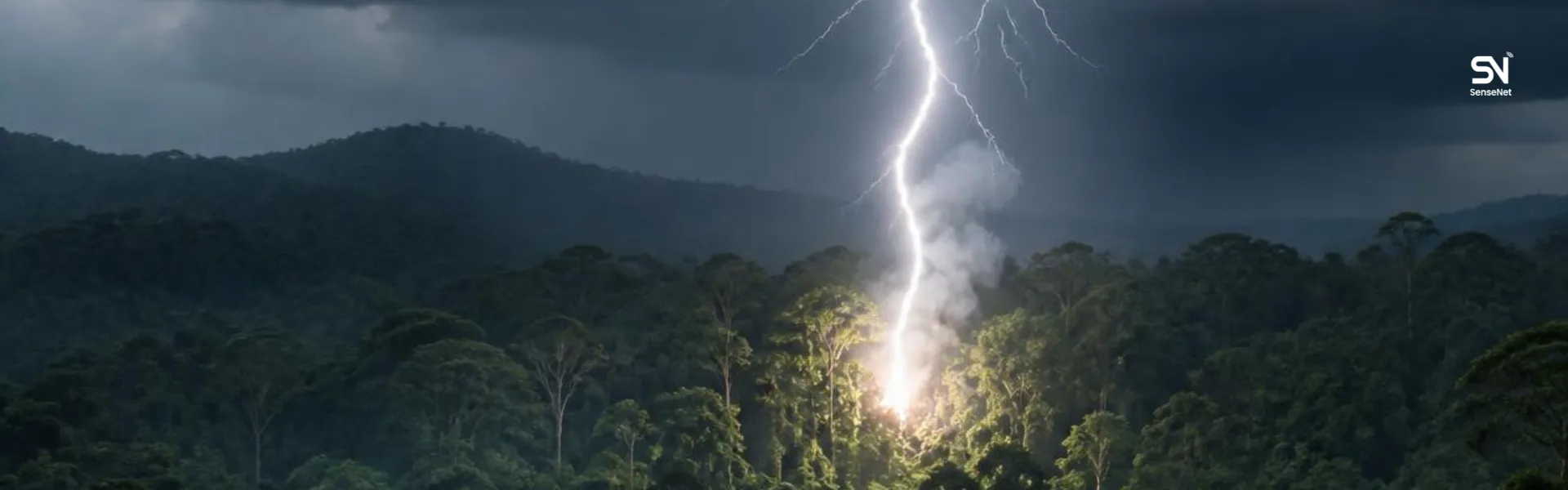
On the other hand, data from BC Wildfire Service shows that lightning plays a very important role in starting wildfires in the province. In a recent summary, around 55% of fire starts were attributed to lightning, yet these fires were responsible for 87% of the total area burned.
That means the spark may happen exactly where no one is present.
Why Are Public Reports Not Enough for Remote Areas?
Public reporting remains an important method of wildfire detection, but it has one simple limitation:
Someone has to be there to report it!
In large forested areas, that assumption does not always hold.
Even when a fire is not far from a populated area, topography, trees, or weather conditions can keep smoke hidden from human sight for a long time.
That is why remote areas need a detection layer that does not depend on human presence.
This is where cameras, sensors, satellites, and artificial intelligence become part of the system.
The Bigger Challenge: When There Is No Electricity or Internet
Let’s assume we have found a suitable location for wildfire monitoring.
Now there are two simple questions: How do we keep the camera powered? And how do we transfer camera data to monitoring centers?
In many remote projects, these two questions can be just as important as wildfire detection itself.
In remote areas, there may be:
- No electrical grid
- Weak or no cellular coverage
- Extremely difficult physical access
- Expensive equipment maintenance
Even a highly accurate detection system cannot do its job if it stops working a few days later because of a power or connectivity problem.
For remote areas, the right solution needs to be designed around the conditions of that specific location from the beginning.
Instead of installing a standard camera in the middle of a forest and thinking about power and connectivity afterward, the entire system needs to be viewed as an integrated solution:
Detection + Power + Connectivity + AI + Alerts
This is one of the key differences between modern systems and traditional methods.
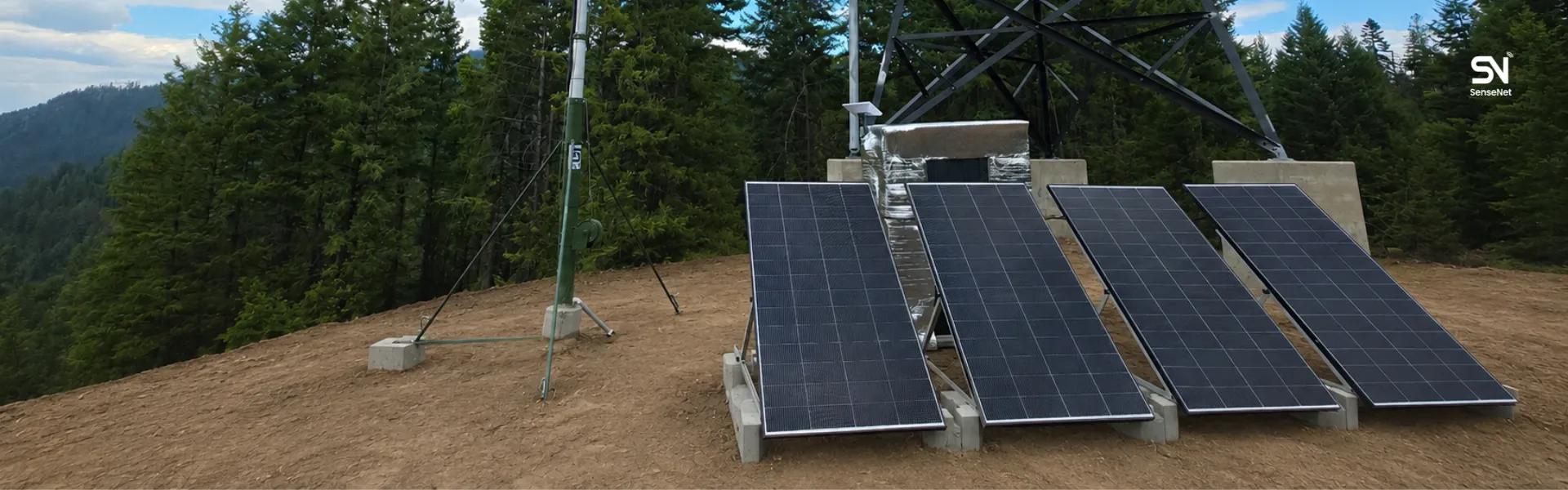
Solar-Powered Cameras for Remote Area Monitoring
One important solution to the power challenge is the use of solar-powered equipment.
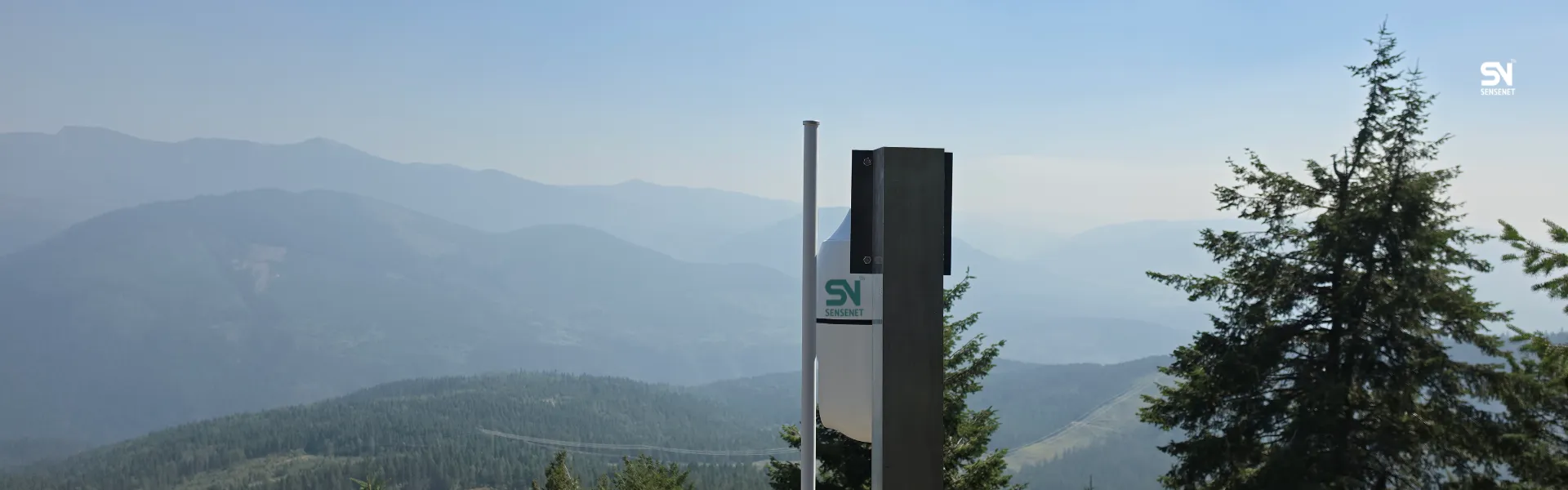
Solar-powered cameras can be installed in remote areas without direct dependence on the electrical grid.
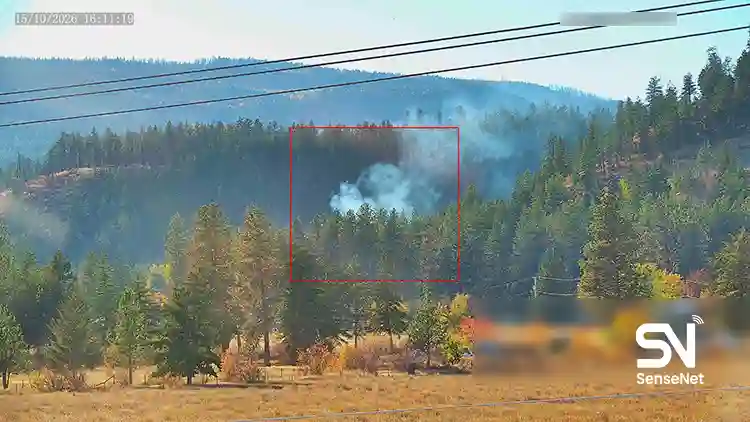
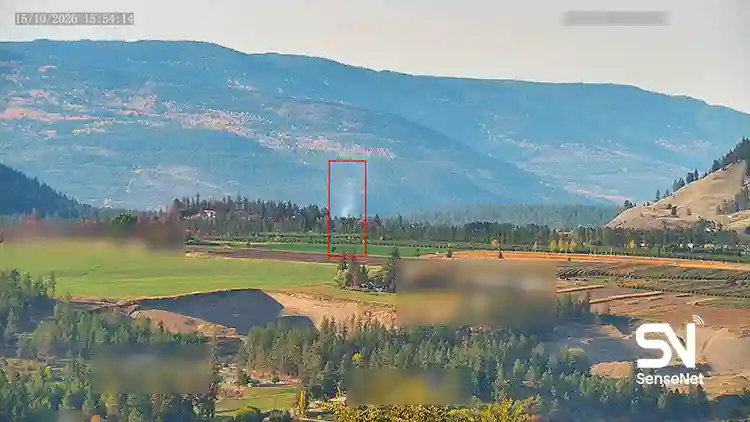
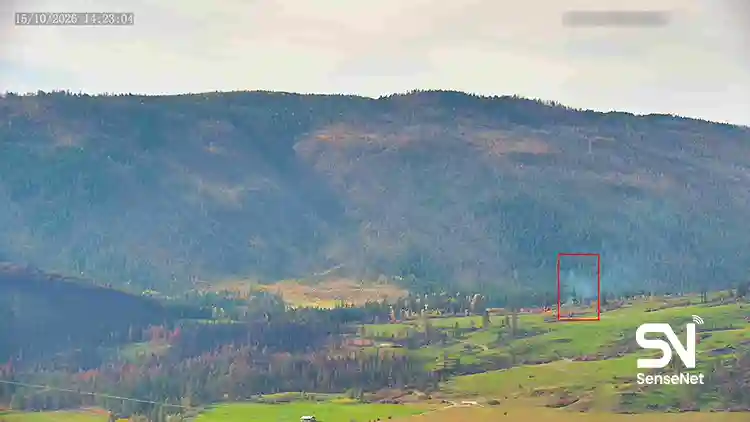
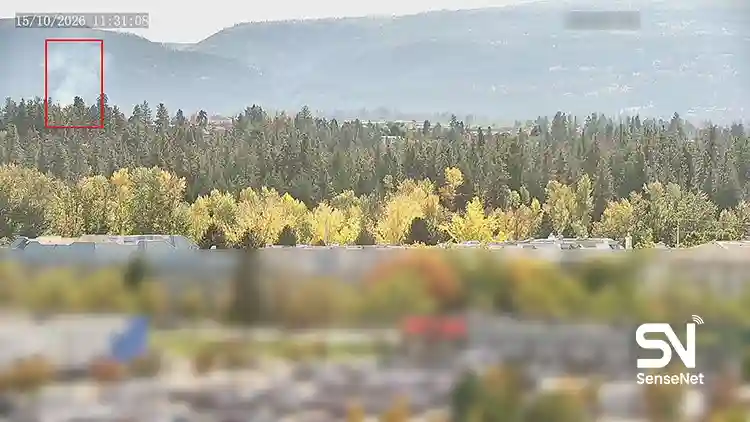
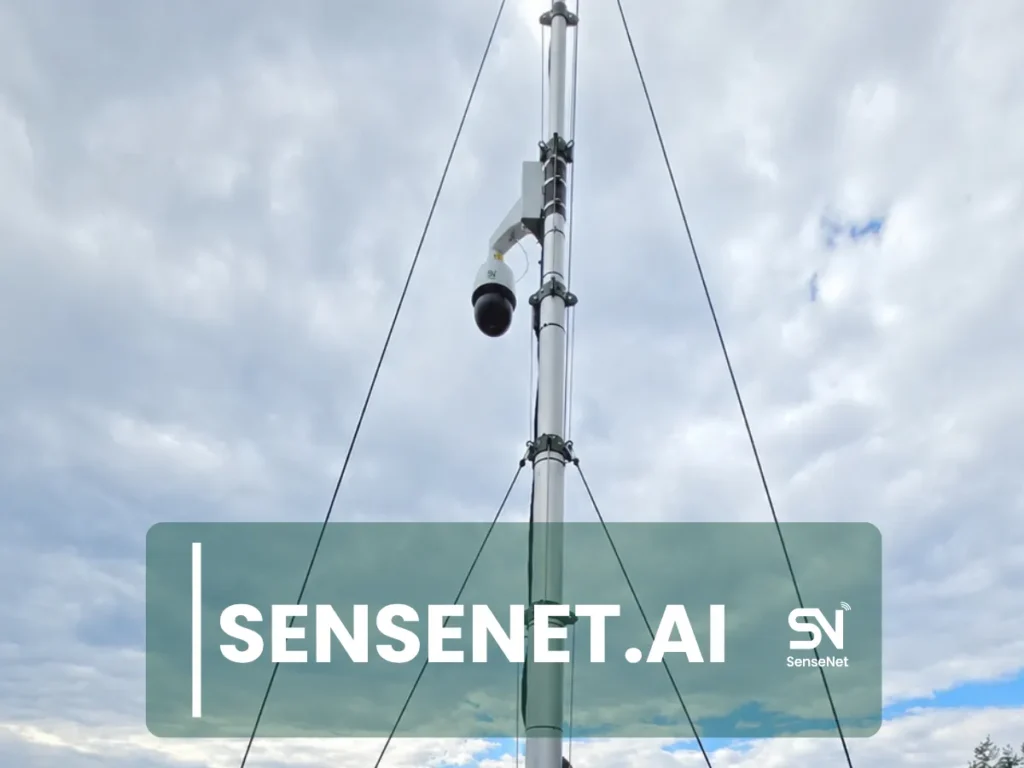
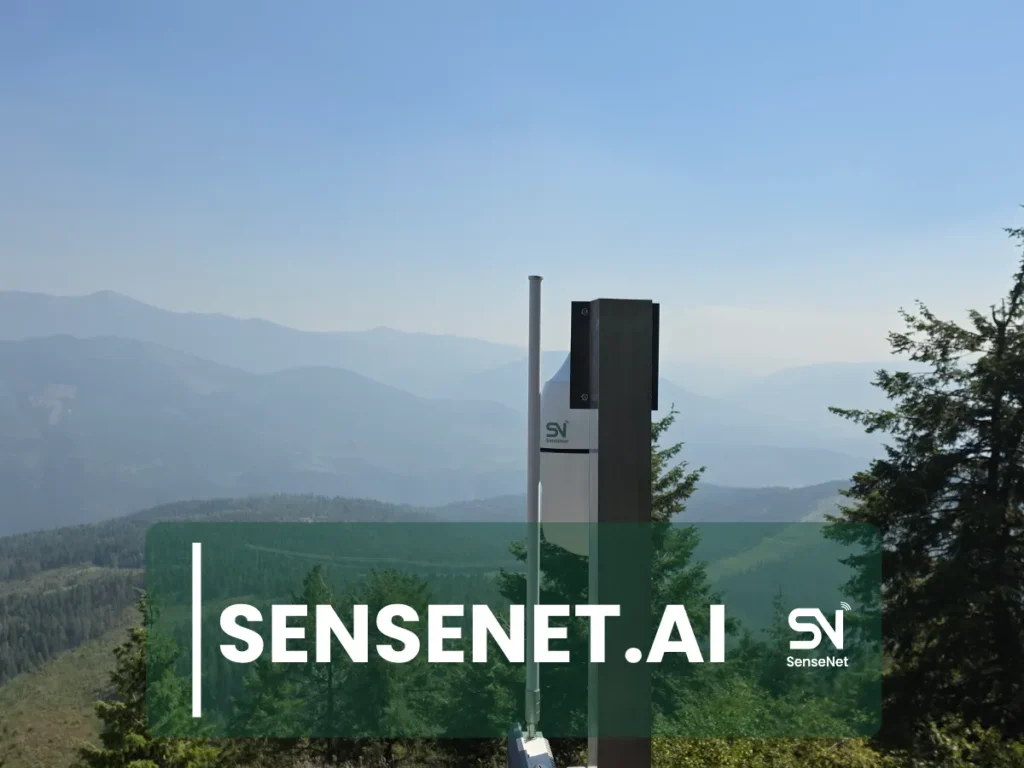
In the SenseNet solution, smoke detection cameras are designed for 24/7 monitoring and can use solar power. These cameras are intended for remote areas, forests, and isolated infrastructure.
This offers a simple but very important advantage:
A location that was previously unsuitable for system installation because there was no electricity can now be monitored.
Of course, solar power alone is not enough. The system needs to be designed for cloudy days, harsh weather conditions, and extended periods without direct sunlight.
What If There Is No Internet Either?
This is where the second part of the challenge begins.
In a remote area, you cannot always rely on Wi-Fi or cellular networks.
That is why modern systems can use different communication methods, from cellular connectivity to Mesh networks and satellite communications.
In SenseNet products, Gateways can use LTE and satellite connectivity, while SensorNodes can create a Mesh network to transfer data in remote areas.
This means system design is not centered around the “camera” alone.
The camera needs to generate data, the network needs to transfer it, and the platform needs to analyze that data and turn it into a useful alert.
SenseNet’s Real-World Experience in British Columbia
One important example is the SenseNet project at Tyson Creek Hydro Facility in British Columbia.
This area is geographically remote and topographically challenging. To monitor a 20-kilometer transmission line corridor, a network consisting of 60 sensors and two satellite-connected cameras was installed.
This project shows that wildfire detection in remote areas is not simply a laboratory concept.
When a system needs to operate across a large and difficult-to-access area, it needs to be designed for those conditions from the start.
What is even more interesting is that SenseNet does not rely on just one type of data in British Columbia and other parts of Canada. The system combines sensors, cameras, AI, and satellite data for wildfire detection and management.
The Role of AI in Wildfire Detection in Remote Areas
When the number of cameras and sensors increases, a new problem appears:
Who is going to review all that data? The answer is AI.
Artificial intelligence can analyze data received from sensors, cameras, satellites, and environmental information and generate an alert when it detects an unusual pattern.
At SenseNet, sensor data is analyzed by AI algorithms, while cameras can also be used for closer inspection when an abnormal signal is received.
This model has another advantage: reduced dependence on continuous human monitoring.
An operator does not need to watch every camera at the same time. The system should bring suspicious events to the operator for review. for more information read AI- Powered Solutions for wildfire detection
What Role Does Satellite Technology Play?
Satellites are not a replacement for ground-based cameras.
They provide two different levels of monitoring.
A camera can continuously monitor a specific location with a high level of detail, while a satellite provides a much broader view of an area.
That is why combining the two can be more valuable.
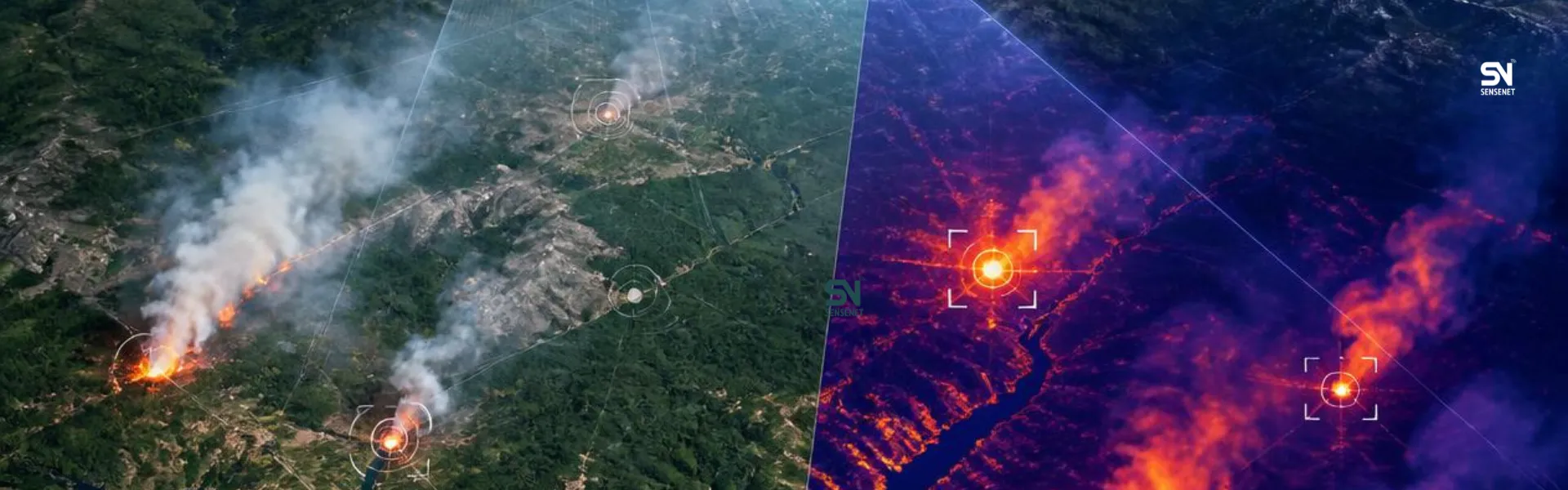
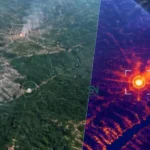
At SenseNet, satellite imagery is used alongside camera data, sensor data, and weather information to improve not only detection but also the analysis of fire conditions and behavior.
What Should a Good Remote Area Wildfire Detection System Offer?
If we are choosing a wildfire detection system for a remote area, we should not only ask how far the camera can see.
There are more important questions:
- How does the system work without grid electricity?
- What happens if mobile internet coverage is unavailable?
- How often does the equipment need servicing?
- How does it perform in harsh weather conditions?
- Can the sensors and cameras work together?
- Is satellite communication available?
- How does an alert reach the operator or firefighters?
- How does the system reduce false alerts?
- Can the network be expanded across a large area?
If these questions do not have clear answers, simply buying a camera does not mean you have a Wildfire Detection System.
Conclusion
Wildfire detection in remote areas is one of the most challenging parts of modern wildfire management, not only because of geographic distance, but also because of the lack of infrastructure on which conventional systems depend.
In British Columbia, this is a very real issue. Remote and sparsely populated areas may be detected later by the public while also facing fires that can spread rapidly under hot and dry conditions.
The right solution for these areas needs to be designed from the beginning to operate independently of conventional infrastructure: cameras, sensors, solar power, suitable connectivity, AI, and satellite data.
Ultimately, the challenge is not simply to see the fire. It is to find it where no one is present, while it is still small.
Frequently Asked Questions
Can a wildfire detection system be installed in a forested area without grid electricity?
Yes. Equipment with solar power and batteries can make this possible. However, battery capacity, sunlight levels, weather conditions, and equipment power consumption need to be considered when designing the system. SenseNet also offers Solar and Battery options for its equipment.
How are alerts sent if an area has no internet or mobile coverage?
This depends on the network architecture. In areas without suitable coverage, Mesh networks and satellite communications can be used to transfer data. SenseNet also offers Gateways with LTE and satellite connectivity, as well as Mesh networking for SensorNodes.
Can a camera detect a fire behind trees and dense forest cover?
Visual detection depends on line of sight, and dense vegetation can limit a camera’s view. This is why using gas and thermal sensors alongside cameras can provide another layer of detection. These sensors can detect some early indicators without relying on a direct line of sight.
How many cameras are needed for a very large area?
There is no fixed number. The number of cameras depends on topography, installation height, vegetation, detection range, blind spots, and the area that needs to be monitored. In large areas, network design should be carried out before installation by analyzing coverage and blind spots.
Can satellites replace ground-based wildfire detection cameras?
Usually, no. Satellites are highly valuable for large-scale monitoring, while ground-based cameras can continuously monitor a specific area in detail. Combining the two can provide better coverage and situational awareness.
Can an early wildfire detection system detect a fire before smoke becomes visible?
Depending on the technology used, yes. Some sensor-based systems can identify environmental or gas-related indicators associated with the beginning of a fire before smoke or flames become visible. SenseNet also uses gas and thermal sensors alongside smoke detection cameras.
What is the biggest challenge when installing a wildfire detection system in a remote area?
It is not just wildfire detection. Power, connectivity, maintenance, access for repairs, weather conditions, and network coverage design all need to be considered from the beginning. A system may be highly accurate on paper, but if it cannot operate 24/7 in a remote area without depending on existing infrastructure, it cannot be considered a complete solution for that environment.